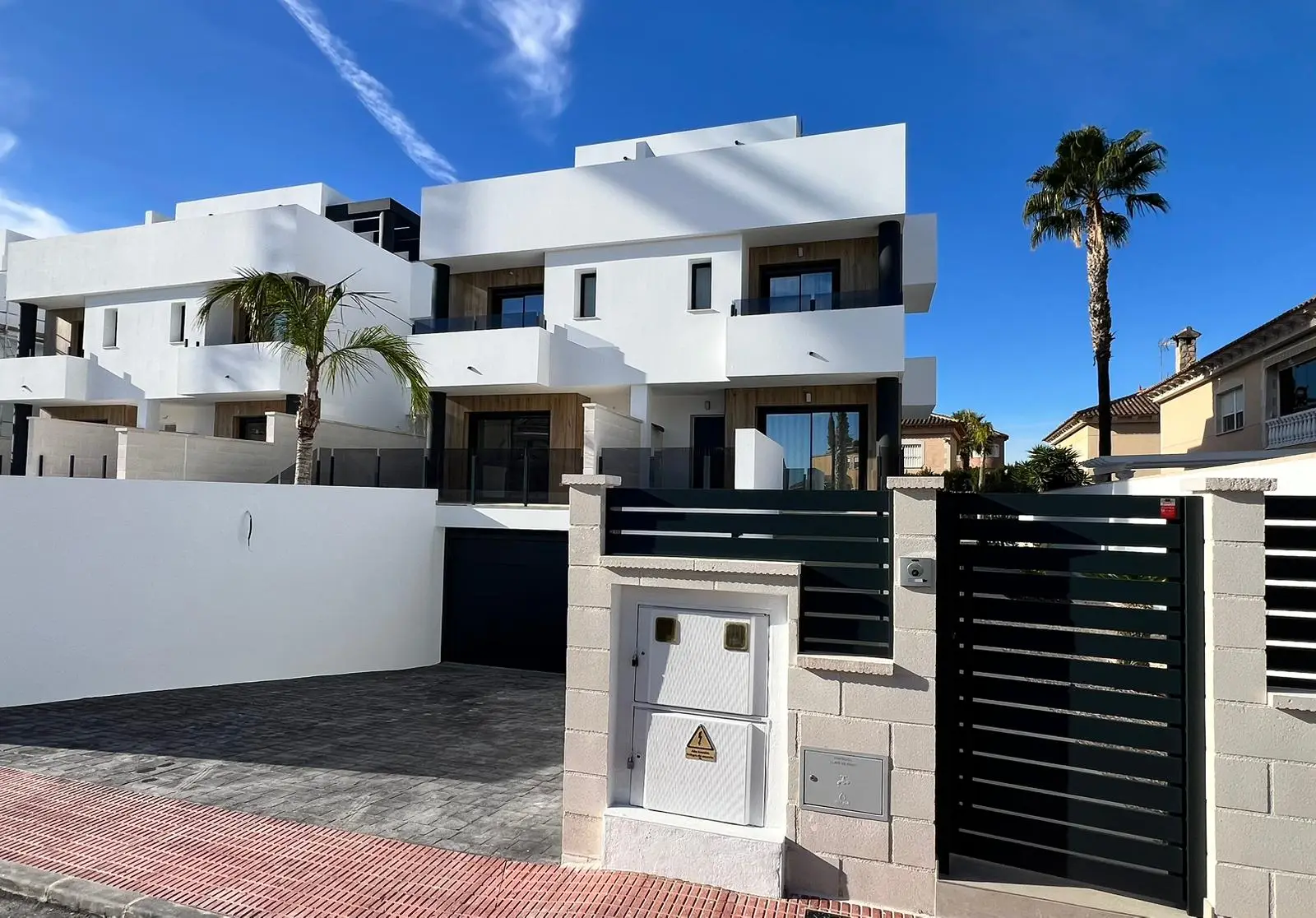
New build Benferri: step-by-step buying guide covering contracts, IVA, AJD, notary process and post-completion steps for international buyers. Updated 2025.
New build Benferri transactions are priced at €318,000 in the single project veritySpain currently tracks in this small Alicante municipality, which carries an editorial score of 7.7 out of 10. That score reflects sound construction standards and a quiet inland position within the Vega Baja del Segura comarca. Benferri sits close to the A-7 motorway and the Orihuela Costa resort belt, yet it remains a low-volume market where each sale is individually visible to registrars. International buyers drawn here tend to value lower density over beachfront proximity. The buying process in Spain follows a fixed legal sequence regardless of market size, and understanding each stage before signing anything prevents costly delays.
Before you sign: due diligence and legal representation
Spanish law does not require a buyer to use a lawyer, but every experienced broker and the Consejo General del Notariado strongly recommends independent legal representation for non-resident purchasers. A qualified Spanish abogado will obtain a Nota Simple from the Land Registry, confirming that the developer holds clean title and that no mortgages or liens are attached to the plot. They will also verify that the building licence (licencia de obras) is current, that the developer is registered with the Agencia Tributaria, and that any off-plan payment is protected by an aval bancario (bank guarantee) under Ley 57/1968, which remains the applicable framework for consumer protection in off-plan sales. Benferri being a small market means the Land Registry records for any single plot are easy to pull and cross-reference. Do not skip this step to save a few hundred euros.
The reservation and purchase contract stages
Spain's new-build purchase follows a two-step contract structure before the deed. First comes the contrato de reserva (reservation contract), usually requiring a deposit of between 3,000 and 6,000 euros to remove the unit from the market. This is a short holding agreement; it is not the binding purchase contract. The second and materially important document is the contrato de compraventa (private purchase contract), signed typically within two to four weeks of reservation. At this stage buyers commonly pay 10 percent of the agreed price. For a unit at the €318,000 price point tracked in veritySpain data, that amounts to approximately €31,800. Payment schedules on new builds in this region are negotiated with the developer and should be written in full into the contract. Keep copies of every bank transfer receipt.
Taxes and purchase costs for new build property
New build property in Spain is subject to IVA (Value Added Tax) at 10 percent, plus Actos Jurídicos Documentados (AJD), the stamp duty levied by the Valencian Community (Comunitat Valenciana), which applies at 1.5 percent of the declared purchase price. Resale property is instead subject to Impuesto de Transmisiones Patrimoniales (ITP) at the Valencian rate, currently 10 percent. On a new build, the combined IVA and AJD burden adds roughly 11.5 percent to the purchase price before notary, registry and legal fees are counted. Buyers should budget a total of 13 to 15 percent on top of the agreed price to cover all acquisition costs. Non-residents must obtain an NIE (Número de Identificación de Extranjero) before completion; the application can be made at a Spanish consulate abroad or at the Oficina de Extranjería in Alicante. Open a Spanish current account early in the process to facilitate transfers.
Completion at the notary and post-completion steps
Completion in Spain is a simultaneous act: both parties sign the Escritura de Compraventa (public deed of sale) before a notario, who is a public official rather than a party solicitor. The notary reads the full deed aloud, confirms identity documents and NIE numbers, and certifies payment. The buyer's lawyer should attend alongside the buyer. On the same day, the remaining purchase balance is usually paid by cheque bancario (bank draft). The developer then hands over the Licencia de Primera Ocupación (first-occupation licence), the property's Energy Performance Certificate, and the keys. Post-completion, the deed must be presented to the Agencia Tributaria for tax payment within 30 working days and then registered at the Land Registry. Utility contracts (water, electricity) are transferred to the buyer's name and community fees become the buyer's responsibility from the date of signing. The entire process from reservation to keys on a completed new build typically runs six to twelve weeks in Benferri's market conditions.
Key takeaways
- The only new build project in Benferri tracked by veritySpain is priced at €318,000 and scores 7.7/10.
- Hire an independent Spanish abogado before signing any contract to verify title and bank guarantees.
- Budget 13 to 15 percent above the purchase price to cover IVA, AJD, notary, registry and legal fees.
- Obtain your NIE number and open a Spanish bank account before the private purchase contract stage.
- The public deed signed before a notary is the legally binding completion step; post-sign tax filing is mandatory within 30 working days.
The market in numbers
New-build projects in Benferri
View allFrequently Asked Questions
What is the price of new build property in Benferri?
↓
The single new build project tracked by veritySpain in Benferri is priced at €318,000. This is a low-volume inland market within the Vega Baja del Segura comarca. Prices in Spain's new build sector vary significantly by developer and specification, so always verify current asking prices directly with the developer and cross-check against the Land Registry.
What taxes do I pay when buying a new build in Benferri?
↓
New build property in Spain is subject to IVA at 10 percent of the purchase price, plus Actos Jurídicos Documentados (AJD) levied by the Valencian Community at 1.5 percent. Together these add approximately 11.5 percent before notary and legal fees. Budget a total of 13 to 15 percent on top of the agreed price for all acquisition costs.
Do I need a lawyer to buy property in Benferri?
↓
Spanish law does not legally require a buyer's lawyer, but independent legal representation is strongly recommended for international buyers. A Spanish abogado will verify the title at the Land Registry, check the developer's building licence, confirm that off-plan payments are protected by a bank guarantee, and review all contracts before signing. The cost is modest relative to the protection it provides.
What is the NIE and when do I need it?
↓
The NIE (Número de Identificación de Extranjero) is the tax identification number required by all non-resident property buyers in Spain. You must have an NIE before signing the public deed at the notary. Apply at a Spanish consulate in your home country or at the Oficina de Extranjería in Alicante. The process typically takes one to four weeks so apply early in the buying process.
What does the reservation contract commit me to in Spain?
↓
The contrato de reserva removes a property from the market in exchange for a small deposit, typically between €3,000 and €6,000. It is a short-term holding agreement rather than a full purchase commitment. The binding private purchase contract (contrato de compraventa) comes next, usually requiring around 10 percent of the purchase price and setting out the full payment schedule and completion date.
How long does the new build buying process take in Benferri?
↓
On a completed new build unit in Benferri, the process from initial reservation to receiving keys typically runs six to twelve weeks. This includes legal due diligence, signing the private purchase contract, transferring funds, completing at the notary, and presenting the deed to the tax authority. Off-plan purchases on units still under construction follow a longer timeline tied to the construction programme.
What happens at the notary when buying in Spain?
↓
Both buyer and seller sign the Escritura de Compraventa (public deed of sale) before a Spanish notario, who is a state-appointed public official. The notary reads the full deed, verifies identity documents and NIE numbers, and certifies that payment has been made. The developer hands over keys, the occupation licence and the energy certificate on the same day. The signed deed must then be filed with the tax authority and the Land Registry.