New build benijófar properties range from €253k–€589k. Step-by-step guide to reservation, contracts, taxes, and completion for international buyers.
New build benijófar properties are listed on veritySpain at €253k–€589k across 15 analysed projects, with an average score of 7.1/10, giving international buyers a well-defined entry point into one of the Costa Blanca's quieter inland-coastal corridors. Benijófar sits in the Vega Baja del Segura comarca, about 40 kilometres south of Alicante and within easy reach of the N-332 coastal road. The town's compact urban core, adjacent golf courses, and proximity to La Mata and Torrevieja lagoons have made it a consistent destination for northern European buyers. Purchasing here follows Spanish civil law and regional Valencia Community rules. Understanding the sequence from reservation to notarial deed matters as much as the price per square metre.
Step 1: reservation contract and legal due diligence
€3,000–€6,000 is the typical reservation deposit range for new-build units in the Alicante province, though developers in Benijófar set their own figures. Pay nothing without first obtaining an NIE (Número de Identificación de Extranjero), the tax identification number Spain requires for all property transactions. Opening a Spanish bank account at this stage is equally advisable, as mortgage lenders and notaries expect payments from a Spanish-domiciled account. Hire a locally registered lawyer before signing any document: Spanish conveyancing is not self-service. Your solicitor will check the Registro de la Propiedad entry, the Catastro reference, any outstanding debts attached to the plot, and the developer's licence to build (licencia de obra). Short-cut any of these steps and you carry that risk into the deed.
Step 2: private purchase contract and stage payments
10% of the purchase price is the customary deposit at the private purchase contract (contrato de arras or contrato privado de compraventa) stage, though some Benijófar developers negotiate higher tranches for off-plan builds. Under Spanish law, if the buyer withdraws at this point the deposit is forfeited; if the developer cancels, they must return double. Off-plan projects require bank guarantees (avales bancarios) to protect each stage payment, a right enshrined in Law 57/1968 and reaffirmed by subsequent consumer-protection legislation. Confirm in writing that the guarantee covers every payment, not merely the first tranche. Stage payment schedules typically run across 12–24 months for a new build in this region, with a final balance due at deed signing. Registradores de España publishes quarterly data on new-build transaction volumes in the Valencia Community that can help contextualise local market activity.
Step 3: costs, taxes, and the notarial deed
10% IVA (VAT) applies to new residential property throughout Spain, replacing the ITP (Impuesto de Transmisiones Patrimoniales) that applies to resale units. On top of IVA, buyers pay Actos Jurídicos Documentados (AJD), the stamp duty, set at 1.5% of the purchase price in the Valencia Community as of 2025. Notary fees, land registry inscription costs, and lawyer fees typically add a further 1.5%–2% combined. Budget a total acquisition cost of approximately 13%–14% above the headline price. The escritura pública (notarial deed) is signed before a Spanish notary with both buyer and seller, or a correctly appointed representative, present. Banco de España guidance on mortgage regulation and the European Standardised Information Sheet (FEIN) applies if financing part of the purchase through a Spanish lender. The notary must provide a mandatory ten-day reflection period before a mortgage is signed.
Step 4: post-completion and utilities connection
2–6 weeks is the usual window between deed signing and receiving the keys when a new-build reaches the completion certificate (certificado de fin de obra) and first occupancy licence (licencia de primera ocupación). Without the occupancy licence, utility companies cannot legally connect electricity, water, and gas. In Benijófar, the local Ayuntamiento issues this licence; delays at municipal level are common in the Alicante province during peak application periods. Register the property at the land registry within the same week as signing: the notary submits a telematics note immediately, but full inscription requires follow-up. Annual costs post-purchase include IBI (municipal property tax), community fees if the development has shared amenities, and non-resident income tax (IRNR) for buyers who do not establish Spanish fiscal residency. Set up a Spanish direct debit for utility and tax bills from the outset.
Key takeaways
- Obtain your NIE and open a Spanish bank account before signing any reservation document in Benijófar.
- Hire a registered Spanish solicitor to verify the developer's build licence, land registry entry, and bank guarantees before any payment.
- Budget 13%–14% above the headline price to cover IVA, AJD stamp duty, notary fees, registration, and legal costs.
- Off-plan stage payments must each be backed by an individual bank guarantee under Spanish consumer-protection law.
- The occupancy licence from the Ayuntamiento is a legal prerequisite for utility connection and cannot be bypassed by the developer.
The market in numbers
New-build projects in Benijófar
View all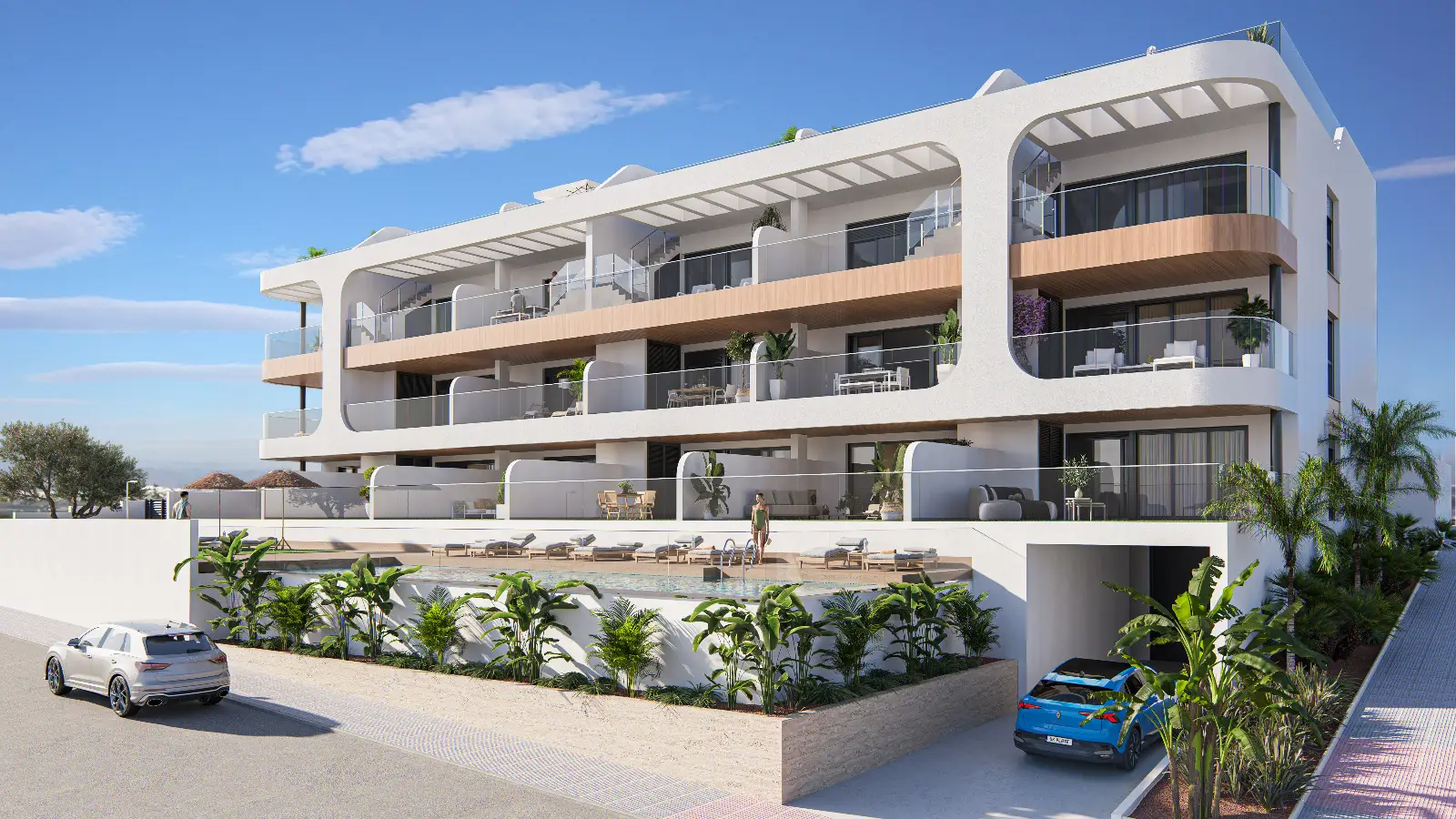

Frequently Asked Questions
How much does a new build in Benijófar cost?
↓
VeritySpain data shows new build benijófar projects listed at €253,000–€589,000. The exact price depends on the development, size, and specification. Buyers should also budget 13%–14% above the headline price to cover IVA (10%), stamp duty, notary fees, land registry costs, and legal representation.
What taxes do I pay when buying a new build in Spain?
↓
New residential property in Spain is subject to IVA at 10%, replacing the ITP resale transfer tax. Buyers in the Valencia Community additionally pay AJD stamp duty at 1.5% of the purchase price. Notary and land registry fees add roughly 1%–1.5% combined, so total acquisition costs typically run 13%–14% above the agreed price.
Do I need an NIE number to buy property in Benijófar?
↓
Yes. A Número de Identificación de Extranjero (NIE) is legally required for all Spanish property transactions. Non-EU citizens and EU citizens alike must apply for one before signing any binding contract. Applications are made at a Spanish consulate abroad or at a local Foreigners' Office (Oficina de Extranjería) in Spain, and processing can take several weeks.
What is the buying process timeline for a new build in Spain?
↓
Expect 12–24 months from reservation to key handover for an off-plan new build. The sequence is: NIE and bank account, reservation deposit, private purchase contract with stage payments, certificado de fin de obra, first occupancy licence from the Ayuntamiento, and notarial deed signing. Post-completion utility connection typically takes 2–6 additional weeks.
Are stage payments protected when buying off-plan in Benijófar?
↓
Under Spanish law (Law 57/1968 and subsequent consumer-protection legislation), developers must provide individual bank guarantees (avales bancarios) covering each stage payment made before completion. Buyers should verify that every tranche, not only the first, is covered by a valid guarantee from a licensed Spanish financial institution before transferring funds.
Do I need a Spanish lawyer to buy property in Benijófar?
↓
Spanish law does not legally require a buyer to appoint a solicitor, but it is strongly advisable. A registered Spanish lawyer will check the Registro de la Propiedad entry, verify the developer's build licence, review all contracts, and ensure bank guarantees are in place. Legal fees are typically 1%–1.5% of the purchase price and form part of the standard acquisition-cost budget.
What ongoing costs should I expect after buying a new build in Spain?
↓
Annual recurring costs include IBI (municipal property tax, set by the Ayuntamiento), community fees for shared facilities, home insurance, and utility bills. Non-residents must also file an annual non-resident income tax (IRNR) return. Setting up Spanish direct debits from a local bank account from the outset avoids payment delays and potential late-payment surcharges.