
Living in Coloma as an expat means joining a small community on Costa Blanca. veritySpain scores the only reviewed project 7.0/10 at €594k. Full lifestyle guide.
Living in Coloma as an expat means joining a small but established international community on the Costa Blanca, Alicante province, where veritySpain has scored the single analysed project at 7.0/10 and the reviewed property sits at €594,000. Coloma is a rural enclave rather than a resort strip, and that distinction shapes everything from the pace of daily life to the services available. The climate is reliably Mediterranean: hot, dry summers, mild winters, and roughly 300 days of annual sunshine recorded across the wider Alicante province, a well-documented figure cited repeatedly in regional tourism statistics. Property buyers here are typically not searching for a beach-front apartment but for space, quiet roads, and proximity to the larger towns of the Costa Blanca interior. Expectations should be calibrated accordingly.
Climate and daily pace
Temperatures in the Alicante interior average around 18–20°C annually, with July and August peaks regularly exceeding 35°C and January lows rarely dropping below 5°C. That thermal range is one reason many northern European expats settle here rather than in wetter northern Spain. Summer heat is genuine and demands shade, insulation, and air conditioning. Winters are short. Rain falls mainly between October and March and totals are low enough to class the region as semi-arid. Local life slows mid-afternoon and accelerates again early evening: shops and services follow Spanish hours, which means 09:00–14:00 and 17:00–20:00 for most small businesses. Adapting to that rhythm is less a culture shock than a recalibration of schedule.
Cost of living and practical finances
Running costs for a rural property of this size typically include annual IBI (property tax set by the local ayuntamiento), community fees if applicable, water, electricity, and internet. Spain's standard IVA rate of 21 per cent applies to most goods and services, while ITP (transfer tax) on resale property varies by region but typically falls between 6 and 10 per cent in the Valencian Community. INE (Instituto Nacional de Estadística) publishes annual household expenditure data showing that living costs in non-urban Alicante municipalities consistently run below national averages. Groceries from the nearest Mercadona or local market cost noticeably less than equivalent basket items in central Madrid or Barcelona. Fuel and utilities, however, track national Spanish prices rather than local ones.
Healthcare and education
Spain's public healthcare system, the Sistema Nacional de Salud, covers EU residents and registered non-EU residents under the S1 form or padrón registration respectively. The nearest full-service hospital to rural Coloma-area addresses is typically in Orihuela or Torrevieja, both roughly within commuting distance of the Costa Blanca interior. Ministerio de Sanidad Spain data confirms that Alicante province has above-average specialist coverage relative to other inland Spanish regions. Private health insurance is straightforward to obtain and widely used by expats for faster appointment access; monthly premiums for a healthy adult are significantly lower than equivalent UK or northern European private cover. For schooling, the nearest state schools are in adjacent municipalities, and several international schools operate within the wider Alicante–Murcia corridor.
Expat communities and integration
3.4 million foreign nationals were registered as residents in Spain in recent years, and the Alicante province accounts for one of the largest concentrations, drawn by climate and relatively affordable living. Coloma itself is small. Formal expat networks are less dense than in coastal resorts such as Torrevieja or Calpe, but that is the point for many buyers who choose the interior. Integration happens organically through the padron registration, local fiestas, and the dense network of municipal Facebook groups and WhatsApp chats. Spanish language skills matter more here than on the coast: most local tradespeople, officials, and neighbours communicate in Spanish or Valencian, not English. Language classes run through the Escuela Oficial de Idiomas system at low cost.
Key takeaways
- veritySpain rates the single analysed Coloma project at 7.0/10 with a price point of €594,000.
- The Mediterranean climate offers mild winters and long summers, with roughly 300 annual sunshine days across Alicante province.
- Running costs including IBI, utilities, and groceries run below national averages in rural Alicante municipalities.
- Public healthcare is accessible via padrón registration; private cover is affordable by northern European standards.
- Integration requires functional Spanish, as English is far less prevalent here than on the established expat coast.
The market in numbers
New-build projects in Coloma
View all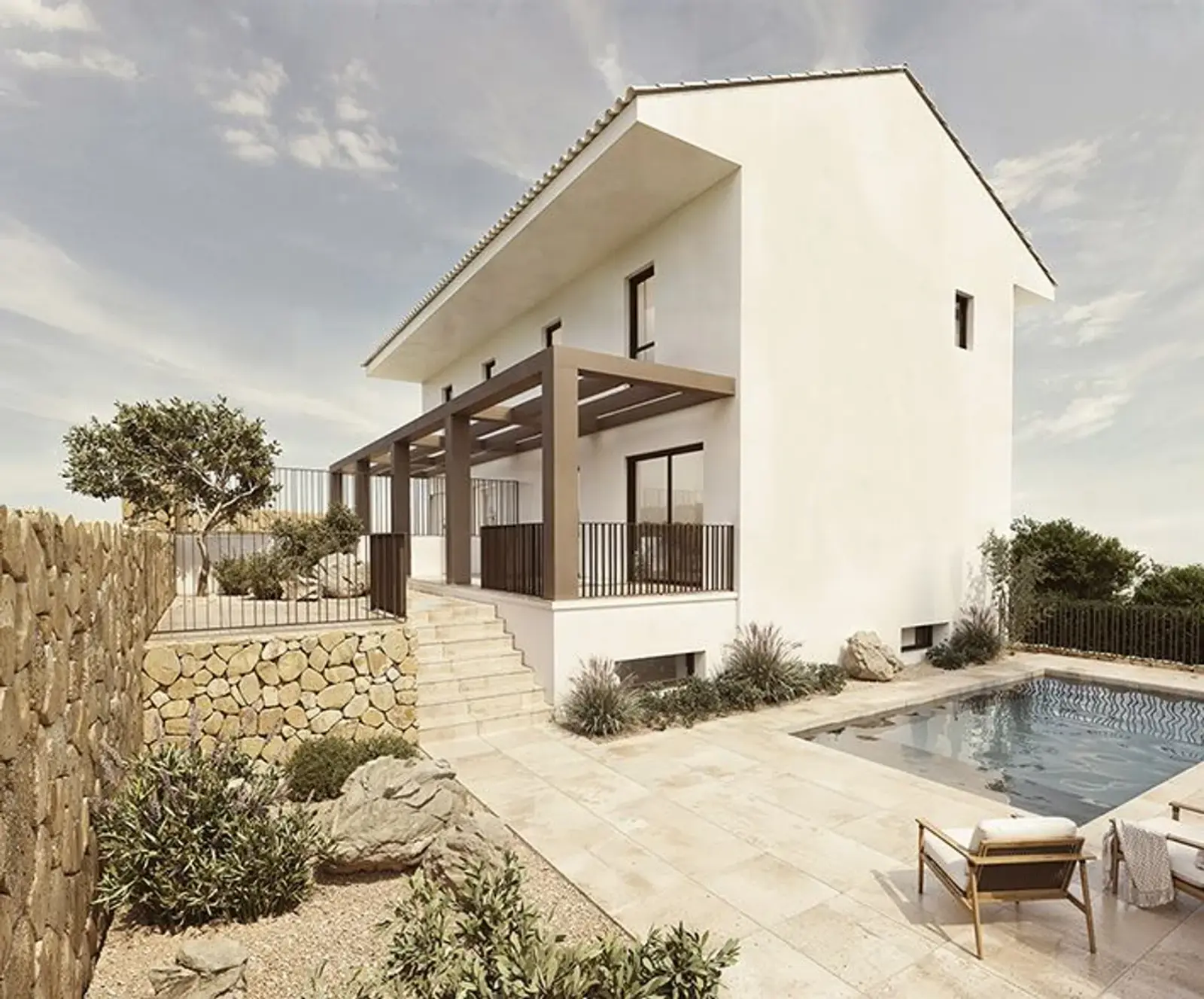
Frequently Asked Questions
Is Coloma a good place for expats to live?
↓
Coloma suits expats who prefer quiet rural living over busy coastal resorts. The Mediterranean climate is reliable, running costs are below national Spanish averages, and veritySpain rates the analysed project at 7.0/10. The trade-off is limited local English-language services; functional Spanish is necessary for day-to-day life.
What is the cost of living like in Coloma, Alicante?
↓
Running costs in rural Alicante municipalities are below national Spanish averages according to INE household expenditure data. Groceries, local services, and property taxes (IBI) tend to be lower than in urban centres. Utilities and fuel track national prices. A property at Coloma's current reviewed price point of €594,000 sits in the mid-to-upper segment for the interior Costa Blanca.
How does healthcare work for expats in Coloma?
↓
EU residents and registered non-EU residents can access Spain's public healthcare system through the S1 form or padrón registration. Alicante province has solid specialist coverage according to Ministerio de Sanidad data. Many expats supplement with private health insurance, which is considerably cheaper in Spain than in northern Europe, to reduce waiting times.
What is the climate like in Coloma, Alicante?
↓
The climate is Mediterranean: approximately 300 sunny days per year across Alicante province, average annual temperatures of 18–20°C, and very low rainfall concentrated in autumn and early winter. Summers are genuinely hot, often exceeding 35°C. Winters are short and mild. Air conditioning in summer and good insulation are practical necessities, not luxuries.
Are there international schools near Coloma?
↓
Coloma itself is a small rural municipality without an on-site international school. State schools in neighbouring municipalities follow the Spanish curriculum. Several international schools operate in the broader Alicante–Murcia corridor, generally within commuting distance. Researching exact school availability and catchment areas before committing to a property is strongly advised.
Do I need to speak Spanish to live in Coloma?
↓
Yes, functional Spanish is necessary for daily life in Coloma. Unlike established coastal resorts such as Torrevieja or Calpe, English is not widely spoken by local tradespeople, municipal officials, or neighbours. The Escuela Oficial de Idiomas offers affordable language courses. Most expats who settle here long-term describe learning Spanish as one of their earliest priorities.
What expat community is there in Coloma?
↓
Coloma's expat community is smaller and less formal than those in major Costa Blanca resorts. Much of the social fabric runs through padron-registered village life, local fiestas, and informal online groups. Alicante province as a whole has one of Spain's largest foreign-resident populations, so a broader support network is accessible nearby even if Coloma itself is quiet.