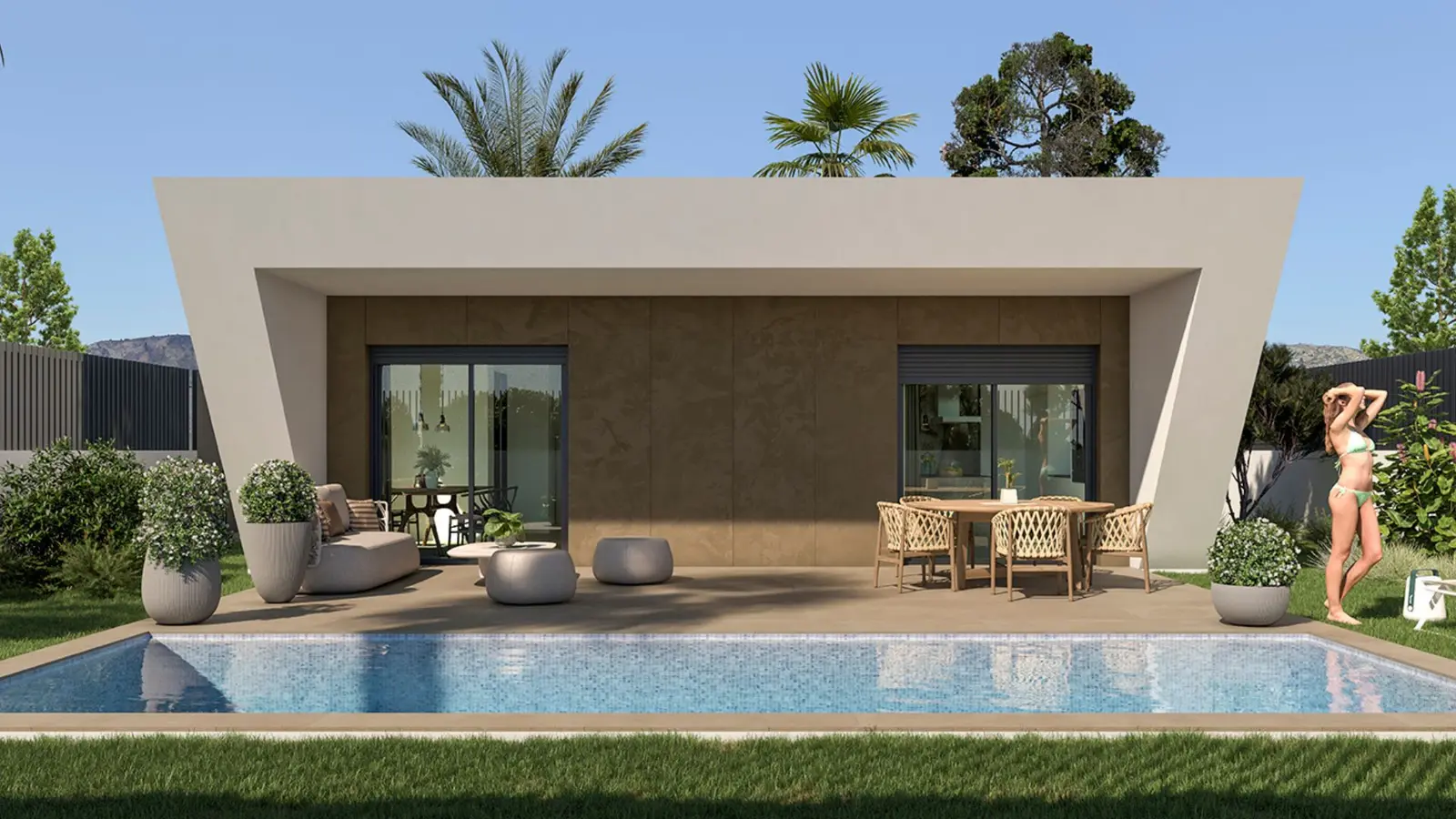
Property investment in Hondón de las Nieves: veritySpain tracks 5 projects scoring 7.2/10, with prices from €175k to €357k. Analytical market overview.
Property investment in Hondón de las Nieves starts, for most buyers, with a price range of €175,000 to €357,000 across the five projects currently tracked by veritySpain, which assigns the municipality an average analytical score of 7.2 out of 10. That score reflects above-average fundamentals: altitude, inland microclimate, and a growing cohort of northern-European residents who choose the town as a primary rather than a secondary residence. The spread between entry and ceiling pricing is wide enough to accommodate both cautious first-time investors and buyers looking to acquire larger villas. Spain's two-transfer taxes, IVA on new builds and ITP on resales, add between 8% and 11% to acquisition costs, a figure buyers must model before comparing net yields across markets.
Market positioning within inland Alicante
Hondón de las Nieves sits in the Vinalopó basin, roughly 45 kilometres from Alicante city and Alicante–Elche Airport. Its elevation of around 560 metres above sea level gives it a drier, cooler summer than the immediate coast. Comparable inland municipalities, including Pinoso and Monóvar, compete for a similar buyer profile: retirees and remote workers from northern Europe who want space, low density, and a lower purchase price than coastal equivalents. INE population registers consistently show that small Alicante municipalities like Hondón de las Nieves have a significant proportion of foreign-born residents, which underpins secondary-market liquidity. Transaction volumes in inland Alicante have been resilient; however, precise annual counts should be checked against current Registradores de España data rather than extrapolated from prior cycles.
Rental market and yield considerations
Five veritySpain-scored projects sit between €175,000 and €357,000, a range that spans studios through to three-bedroom villas with private pools. Gross rental yield depends heavily on whether a property targets long-term contracts, governed by Spain's Ley de Arrendamientos Urbanos, or short-term tourist lets under Decreto regulations issued by the Generalitat Valenciana. Long-term rents in inland Alicante run considerably below coastal benchmarks, which compresses gross yields even at lower entry prices. Vacancy is lower in long-term contracts: the foreign-resident community creates steady demand for 12-month lets. Investors who model holiday lets should account for seasonal concentration, because occupancy in an inland, non-beach location clusters around spring and autumn walking seasons rather than the July-August peak that drives coastal revenues.
Capital value trajectory
Capital appreciation in Hondón de las Nieves has tracked the broader inland Alicante pattern: quieter in the years before 2020, then subject to upward pressure as remote work expanded the buyer universe. The entry point of €175,000 for a new-build unit represents meaningful value relative to Costa Blanca coastal towns where comparable square footage trades at multiples of that figure. Price growth, however, is structurally constrained by the municipality's limited services infrastructure: secondary schools, specialist healthcare, and high-speed rail are accessed from larger centres. Buyers who buy at the top of the current range, near €357,000, should stress-test exit scenarios against a thinner secondary market than they would encounter in Torrevieja or Orihuela Costa. Liquidity is adequate; it is not deep.
Regulatory and fiscal environment
Spain's fiscal framework for non-resident property investors requires annual Impuesto sobre la Renta de No Residentes (IRNR) filings, even on unlet properties, based on a deemed rental income of 1.1% of the cadastral value. Residents of EU member states benefit from a flat rate of 19%; non-EU buyers face 24%. Capital gains on disposal are taxed at 19% for EU residents, and a 3% retention is withheld by the buyer at notary and paid to the Agencia Tributaria as a guarantee. The NIE (Número de Identificación de Extranjeros) is required for any transaction. None of these obligations are unusual within Spain, but buyers new to the market should commission a qualified Spanish fiscal adviser before signing any reservation agreement. Proper structuring at acquisition is substantially cheaper than correcting errors later.
Key takeaways
- veritySpain scores the Hondón de las Nieves market at 7.2/10 across five tracked projects.
- Entry pricing begins at €175,000, with the ceiling at €357,000, covering a range of unit types.
- Inland location suppresses peak holiday-let occupancy; long-term lets offer more predictable occupancy.
- Capital appreciation has been positive but secondary-market depth is thinner than coastal alternatives.
- Spain's non-resident tax obligations are straightforward but require a qualified fiscal adviser at acquisition.
The market in numbers
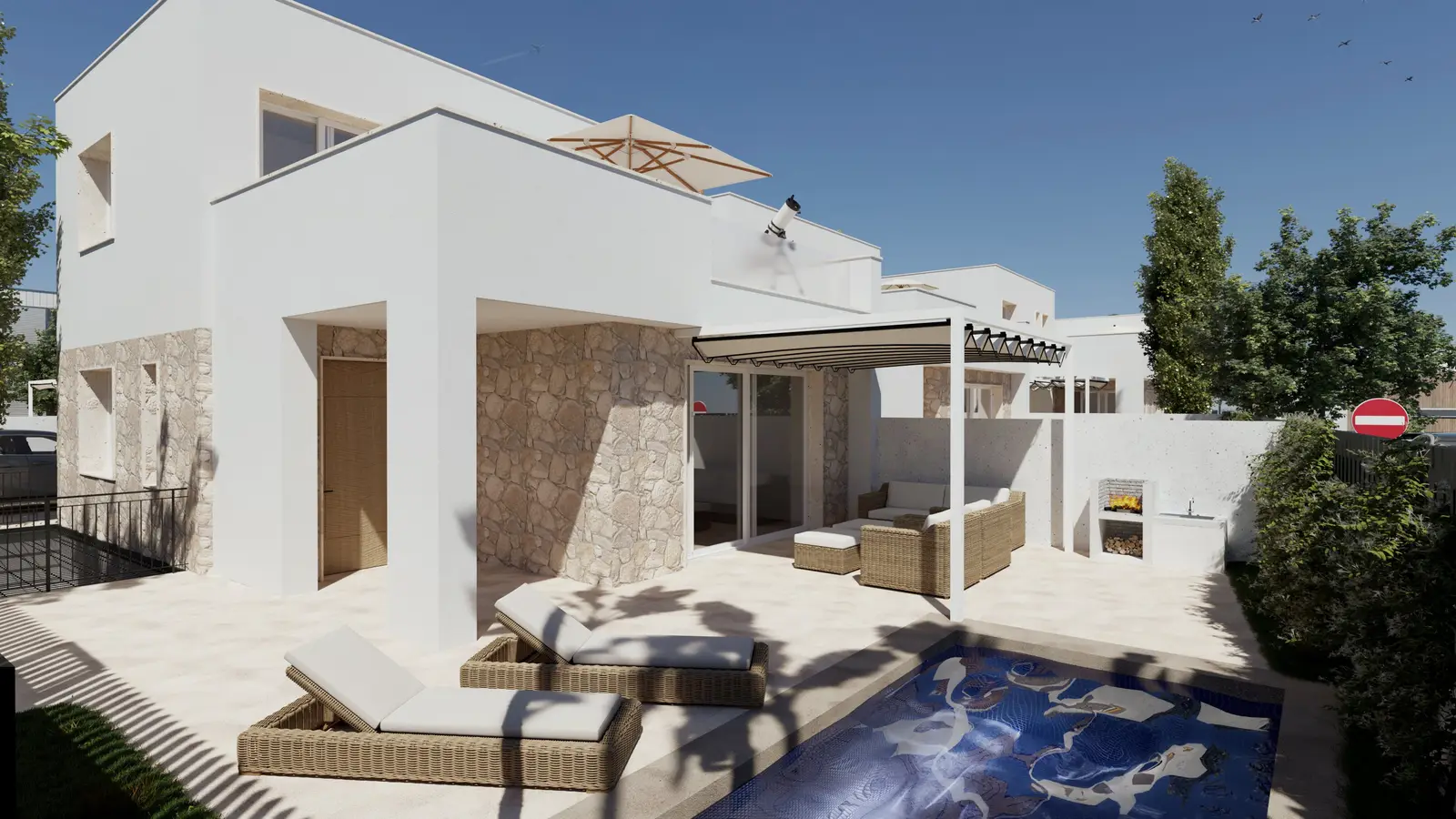
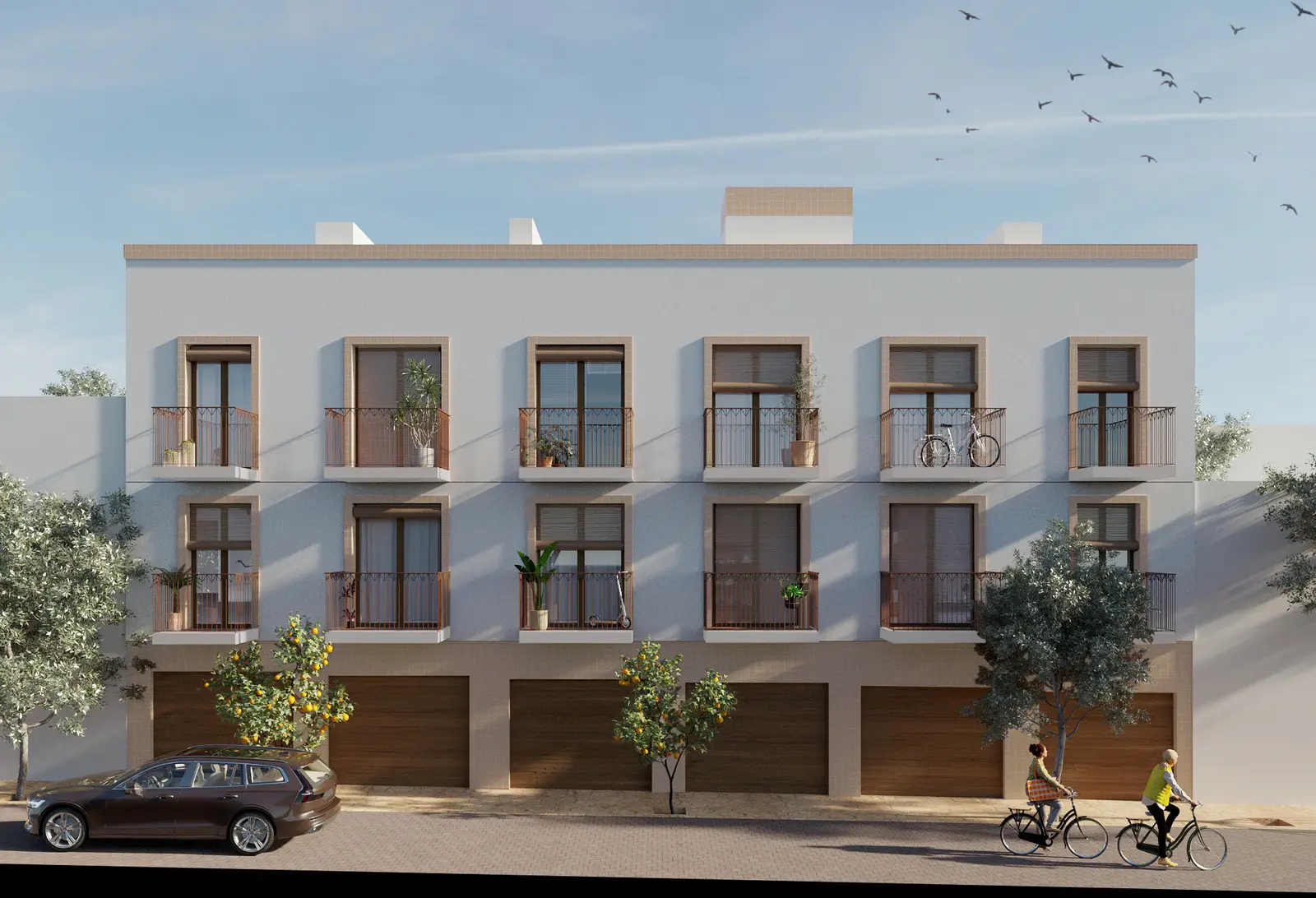
New-build projects in Hondón de las Nieves
View all
Frequently Asked Questions
What is the average property price in Hondón de las Nieves?
↓
veritySpain's current data shows prices across five tracked projects ranging from €175,000 to €357,000. The range covers smaller units at the lower end through to larger villas with private pools at the upper end. Buyers should add between 8% and 11% in acquisition taxes and fees on top of the headline price.
Is Hondón de las Nieves a good place to invest in property?
↓
veritySpain assigns the municipality a score of 7.2 out of 10, reflecting solid fundamentals including a stable foreign-resident community and competitive entry pricing. The inland location limits holiday-let yields compared with coastal towns, but long-term rental demand from northern-European residents is consistent.
What taxes do foreign buyers pay on property in Spain?
↓
New-build purchases are subject to IVA, currently 10%, plus stamp duty. Resales attract Impuesto de Transmisiones Patrimoniales (ITP) at rates set by each autonomous community, typically 8% to 10% in Valencia. Non-residents also file annual IRNR returns on Spanish property, even if the property is unlet.
How does Hondón de las Nieves compare to coastal towns for investment?
↓
Entry prices in Hondón de las Nieves start well below comparable coastal markets such as Torrevieja or Orihuela Costa. The trade-off is lower peak rental income and a thinner resale market. Buyers prioritising long-term lets and lower acquisition costs will find the inland comparison favourable.
What rental yield can I expect in Hondón de las Nieves?
↓
Precise yield figures require individual property-level modelling. Long-term rents in inland Alicante run below coastal benchmarks, which narrows gross yields even at lower entry prices. Short-term holiday lets are subject to seasonal concentration and require a Generalitat Valenciana tourist licence.
Do I need an NIE to buy property in Hondón de las Nieves?
↓
Yes. The Número de Identificación de Extranjeros (NIE) is a legal requirement for any property transaction in Spain. It can be obtained from a Spanish consulate in your home country or from a provincial police station in Spain. Most buyers appoint a Spanish solicitor to manage the process.
What is the rental demand like in Hondón de las Nieves?
↓
Demand comes primarily from foreign residents seeking 12-month contracts rather than holiday visitors. INE population data shows a substantial foreign-born share in small Alicante municipalities like Hondón de las Nieves, which supports secondary-market and rental liquidity. Occupancy on holiday lets peaks in spring and autumn.