
New build Las Colinas Golf properties start from €549k. Step-by-step buying guide: NIE, contracts, taxes, costs and key handover for international buyers.
New build las colinas golf prices start from €549,000 and extend to €2,365,000 across the four projects currently tracked by veritySpain, which has awarded the resort an average score of 7.0/10. That range signals a market serving serious buyers who expect a structured purchase process, not a casual transaction. Spain's conveyancing framework is well-established and transparent once you understand each stage. This guide maps the full journey from reservation contract to key handover, with the cost items and legal obligations that apply specifically to new-build purchases in the Valencia region.
Obtaining an NIE and opening a Spanish bank account
Four documents are compulsory before any Spanish property transaction can close: a valid passport, an NIE (Número de Identificación de Extranjero), a Spanish bank account, and proof of funds. The NIE is a tax-identification number issued by the Spanish National Police; without it, the notary cannot complete the escritura. Processing times vary by province and season. Alicante, where Las Colinas Golf sits within the municipality of Orihuela Costa, handles a high volume of international NIE applications, so applying through a gestor or lawyer well before signing anything is practical advice. You will also need a Spanish bank account to receive direct debits for community fees and utility contracts. Some buyers open an account remotely via digital banking before travelling; others prefer to open one on-site at a branch that serves international clients. Neither route is faster in every case. Budget two to four weeks for this preparatory phase. Spanish Ministry of the Interior publishes current NIE appointment procedures online.
Reservation contract and private purchase agreement
€5,000 to €10,000 is the typical range for a reservation deposit at Las Colinas Golf projects, though the developer sets the exact figure. Paying it removes the unit from sale for a fixed period, commonly two to three weeks, while legal checks are completed. After that comes the contrato de arras or contrato privado de compraventa, the private purchase agreement where a further 10% of the agreed price is generally due. This contract binds both parties: if the buyer withdraws, the deposit is forfeited; if the developer withdraws, they repay double. For new-build purchases, a stage-payment schedule typically follows, with tranches tied to construction milestones. Confirm that each stage payment is protected by a bank guarantee (aval bancario) or insurance policy, as required by Spanish consumer-protection law for off-plan sales. Your lawyer must verify the developer holds a licence de obras (building permit) before you commit funds. Registro de la Propiedad records confirm whether any encumbrances exist on the plot.
Taxes and costs to budget
10% VAT (IVA) applies to all new-build residential purchases in Spain; this is a fixed rate, not a negotiated one. On top of IVA, stamp duty (Actos Jurídicos Documentados, or AJD) is levied by the Valencia regional government; the rate for new builds has historically been 1.5% of the declared purchase price in this region, though rates are set by the Generalitat Valenciana and can be revised. Legal fees typically run between 1% and 1.5% of the purchase price; notary fees and Land Registry fees together add roughly 0.5% to 1%. Altogether, buyers should budget 12% to 14% on top of the headline price to cover all acquisition costs. Mortgage arrangement fees, if applicable, add further. Currency risk matters for non-euro buyers: the gap between agreeing a price and completing can span twelve months or more on an off-plan purchase, so locking in an exchange rate via a forward contract is worth considering. Generalitat Valenciana publishes current AJD rates and any available incentives for primary residences.
Completion, snagging and key handover
Completion takes place before a notary (notario) at the moment the escritura pública de compraventa is signed. Both buyer and seller, or their legal representatives under power of attorney, must be present. The notary reads the full deed aloud; translation services are available for non-Spanish speakers. Immediately after signing, the title deed is submitted to the Land Registry (Registro de la Propiedad) for inscription, which can take several weeks. Before completion, a pre-completion visit (snagging inspection) is standard practice. A qualified architect or technical surveyor should accompany you to document any defects; the developer is obliged to rectify listed items. Spanish new-build warranties run for one year on finishing defects, three years on habitability defects, and ten years on structural defects under the Ley de Ordenación de la Edificación. Key handover occurs at completion or shortly after once utilities are contracted. Set up water, electricity, and community fee direct debits promptly to avoid service interruptions.
Key takeaways
- Obtain your NIE and open a Spanish bank account at least four weeks before signing any contract.
- All stage payments on off-plan purchases must be protected by a bank guarantee under Spanish law.
- Budget 12% to 14% above the headline price to cover IVA, stamp duty, legal, notary, and registry fees.
- Commission an independent snagging survey before completion to document defects the developer must fix.
- New-build structural warranties last ten years under the Ley de Ordenación de la Edificación; retain all documentation.
The market in numbers
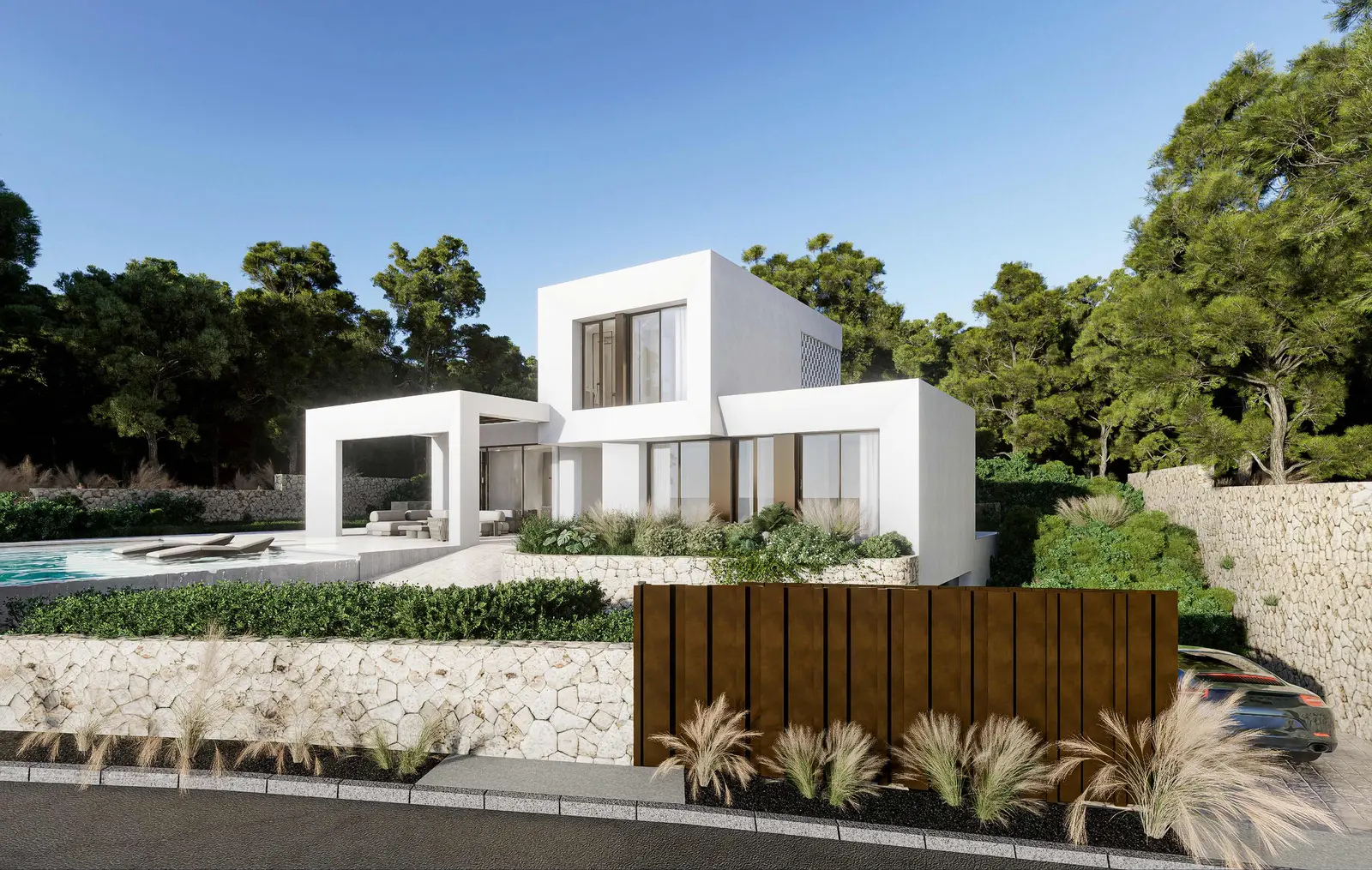
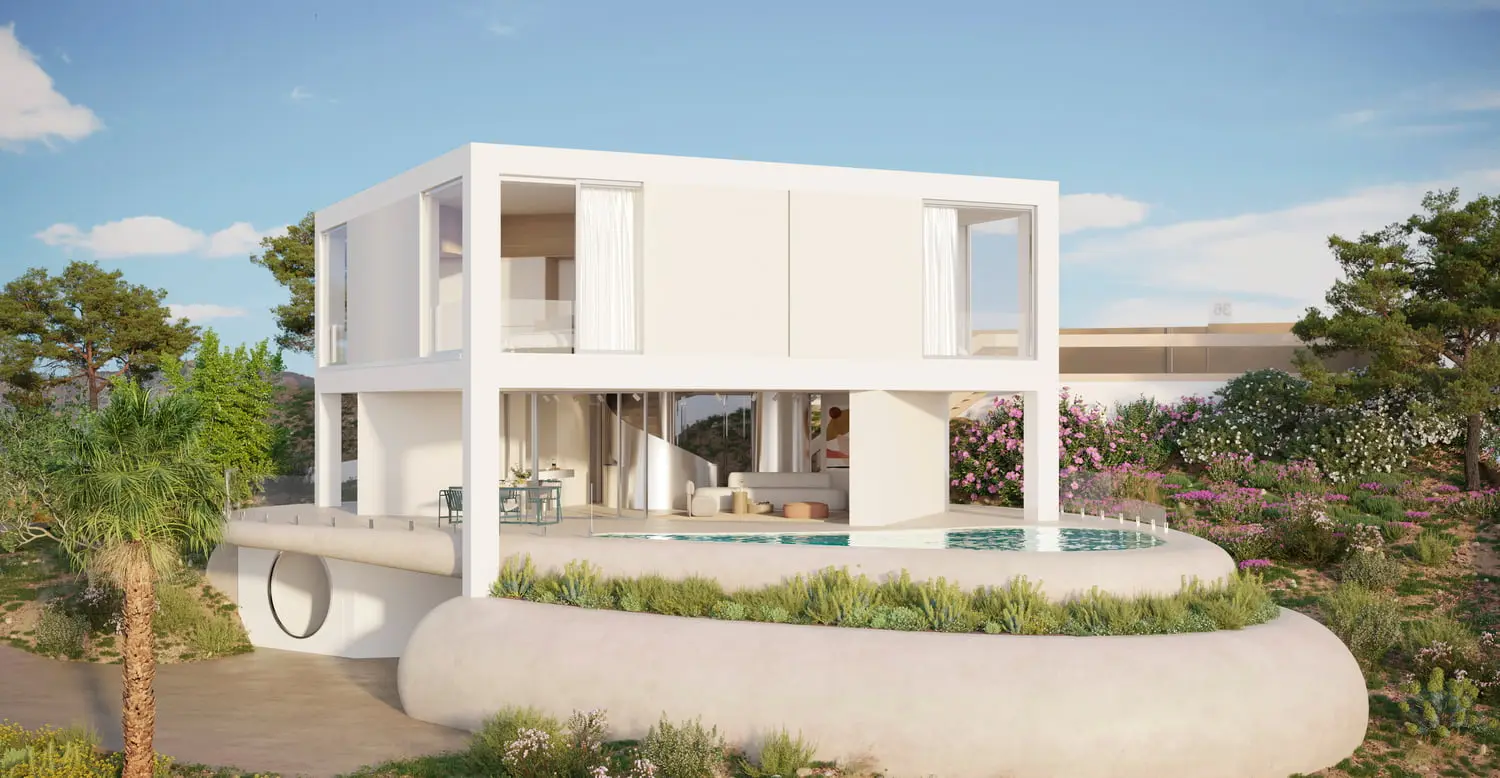
New-build projects in Las Colinas Golf
View all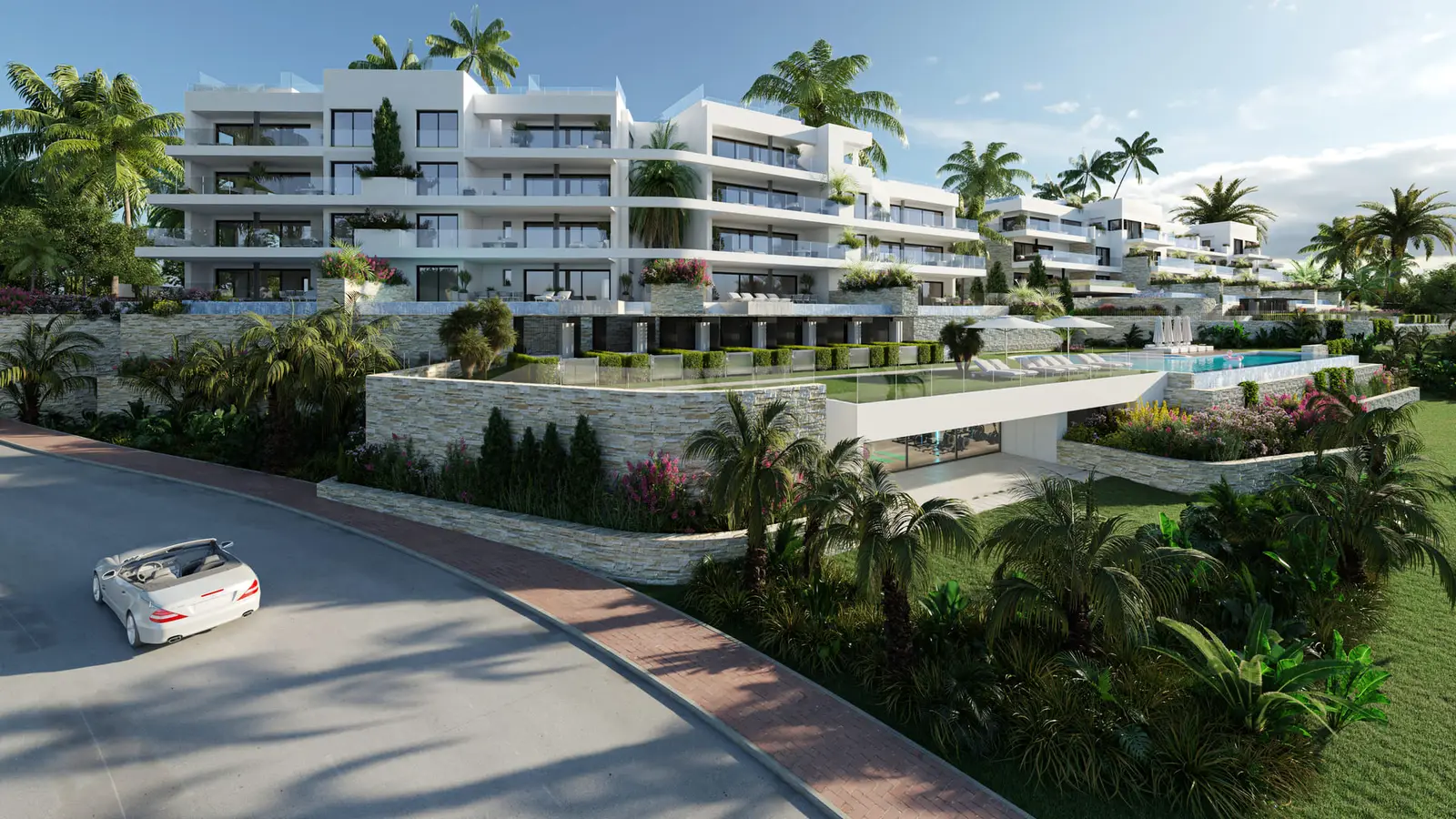
Frequently Asked Questions
What is the buying process for a new build in Las Colinas Golf?
↓
The process runs from obtaining an NIE and opening a Spanish bank account, through a reservation deposit and private purchase agreement, to staged payments tied to construction milestones, and finally to notarial completion and Land Registry inscription. A lawyer representing only your interests should accompany you at every stage to verify permits, bank guarantees, and title checks.
What taxes do I pay when buying a new build in Las Colinas Golf?
↓
New-build purchases in Spain attract 10% IVA (VAT) on the purchase price, plus stamp duty (AJD) at the rate set by the Generalitat Valenciana for the province of Alicante. Altogether, buyers should budget 12% to 14% on top of the headline price to cover all taxes, legal fees, notary fees, and Land Registry costs.
Do I need an NIE to buy property in Las Colinas Golf?
↓
Yes. An NIE (Número de Identificación de Extranjero) is mandatory for any property transaction in Spain. The notary cannot execute the completion deed without one. Applications are processed by the Spanish National Police; using a gestor or lawyer to manage the appointment in Alicante province is recommended, as processing times vary seasonally.
How long does it take to complete a new-build purchase in Las Colinas Golf?
↓
Off-plan purchases typically span twelve months or more from reservation to key handover, depending on the construction stage at the time of purchase. Resale completions on finished properties can close in six to eight weeks once legal checks are complete. The notarial completion itself takes a single appointment, but Land Registry inscription takes several additional weeks.
Are stage payments on off-plan properties in Las Colinas Golf protected?
↓
Spanish law requires developers to protect all off-plan stage payments with a bank guarantee (aval bancario) or an equivalent insurance policy. Your lawyer should obtain and verify the guarantee before each payment is made. If the developer fails to complete or obtain the first-occupancy licence, the guarantee allows buyers to recover funds paid.
What warranties cover a new-build property in Las Colinas Golf?
↓
Spanish law under the Ley de Ordenación de la Edificación provides three tiers of warranty: one year for finishing and cosmetic defects, three years for habitability and installation defects, and ten years for structural defects. Retain all handover documentation, snagging lists, and the certificate of first occupancy (licencia de primera ocupación) as they are needed to invoke these warranties.
Do I need a Spanish mortgage to buy in Las Colinas Golf?
↓
A mortgage is not required; many international buyers purchase with cash or financing from their home country. If you do use a Spanish mortgage, additional costs apply including arrangement fees and a mortgage deed tax, though the latter was shifted to lenders under 2019 reforms. Non-euro buyers should consider a forward contract to manage currency exposure over a long build period.