
Living in Penáguila as an expat means cooler inland summers, a 7.3/10 rated project, €392k asking prices, and direct integration into Spanish village life.
Living in Penáguila as an expat puts you in one of Alicante's quieter inland villages, where veritySpain has analysed one residential project and recorded a score of 7.3/10 and a current asking price of €392,000. That single data point reflects the limited supply rather than a weak market. Penáguila sits at roughly 700 metres above sea level in the Marina Alta hinterland, about 45 kilometres from Alicante city. The altitude matters: summers are significantly cooler than the coast, and winters bring frost and occasionally snow. Expats who move here are typically looking for a slower rhythm, a close relationship with the surrounding countryside, and lower background noise than a resort town provides. The cost of living in the village itself is modest. Bars and local shops operate at inland prices, and property running costs are lower than comparable square footage on the seafront.
Climate and daily pace
Penáguila records roughly 300 days of sunshine per year, a figure consistent with the broader Alicante province. Summers are warm and dry, with daytime temperatures regularly in the low 30s Celsius, but the elevation prevents the prolonged heat that settles over coastal resorts. Winters are crisp. Average January lows drop to around 2–4°C, and residents keep wood stoves or pellet burners running from November through March. Rain falls mainly in autumn, occasionally heavily in the short gota fría season. The village itself has a compact central plaza, a local bar, and a small weekly market. Alcoy, the nearest city, is about 20 kilometres away and provides a full retail offer, cinema, and hospital. The pace here is measured by agricultural cycles, local fiestas, and the rhythm of the school year rather than tourist seasons. Short sentence: that is the trade.
Healthcare and practical services
Healthcare access is the practical question most expats ask first. Penáguila falls under the Departament de Salut de la Marina Alta catchment area, which routes non-emergency care through health centres in Cocentaina and Alcoy. The Hospital Virgen de los Lirios in Alcoy is the designated public hospital for this zone, offering general surgery, emergency medicine, and specialist consultations. Spain's national health system (Sistema Nacional de Salud) entitles registered residents, including EU citizens and post-Brexit British nationals who completed the residency process before the withdrawal agreement deadline, to full public coverage. Private health insurance, offered by providers such as Sanitas, Adeslas, and Asisa, gives faster appointment access and is widely used by expats who want continuity with English-speaking practitioners in Alicante or Valencia. Pharmacies operate in Alcoy and Cocentaina. Prescriptions issued by Spanish public doctors are honoured at any Spanish pharmacy at subsidised rates. Registering with the local padrón at the Penáguila ayuntamiento is the practical first step, as it unlocks access to social services, school enrolment, and certain health benefits.
Schools and family life
Penáguila has a small local school serving primary-age children from the village and nearby hamlets, operating within the Valencian public system. Instruction follows the trilingual model introduced across the Valencian Community: Spanish, Valencian, and English are all taught from early years. Secondary education requires travel to Cocentaina or Alcoy, both accessible by car in under 30 minutes. Spain's Ministry of Education data shows the Valencian Community consistently achieving close to the national average in secondary completion rates. International private schooling is available in Alicante city, with options including English-medium schools accredited to the British curriculum and bilingual schools following Spanish bachillerato. For families without a car, public bus links from Alcoy to Alicante are frequent and affordable. Family life in the village runs on a tight community calendar: the local Moors and Christians fiesta in September is the social peak of the year, drawing former residents back and generating a genuine sense of collective continuity. It is not a commuter suburb. It functions as a village.
Expat community and social integration
Penáguila does not have a large English-speaking expat cluster in the way that coastal towns such as Jávea, Denia, or Moraira do. The expat population is small, self-selected, and tends to integrate into village life more directly than counterparts in resort municipalities. Dutch, German, and British nationals have been buying in the inland Marina Alta and l'Alcoià region for over two decades, drawn by lower prices and access to trails, cycling routes, and the Sierra de Mariola natural park. Social connection happens through the ayuntamiento's cultural programme, local hiking groups, and associations linked to the Alcoy expat community. The nearest significant English-language social infrastructure is in Denia, about 50 kilometres east. Language investment pays off here faster than on the coast: a basic working level of Spanish opens most doors, and some Valencian is welcomed but not expected. Broadband infrastructure has improved substantially across inland Alicante in recent years, making remote working viable for many residents. That connectivity change has been a quiet driver of inbound interest.
Key takeaways
- veritySpain rates one Penáguila project at 7.3/10, with current asking prices at €392,000.
- The inland altitude delivers cooler summers and genuine winters compared with coastal Alicante.
- Public healthcare is accessible via Alcoy's Hospital Virgen de los Lirios; private insurance speeds access to English-speaking specialists.
- Schools operate on the Valencian trilingual model; secondary education requires a daily commute to Cocentaina or Alcoy.
- The expat community is small and integrates into village life; Spanish language skills matter more here than on the coast.
The market in numbers
New-build projects in Penáguila
View all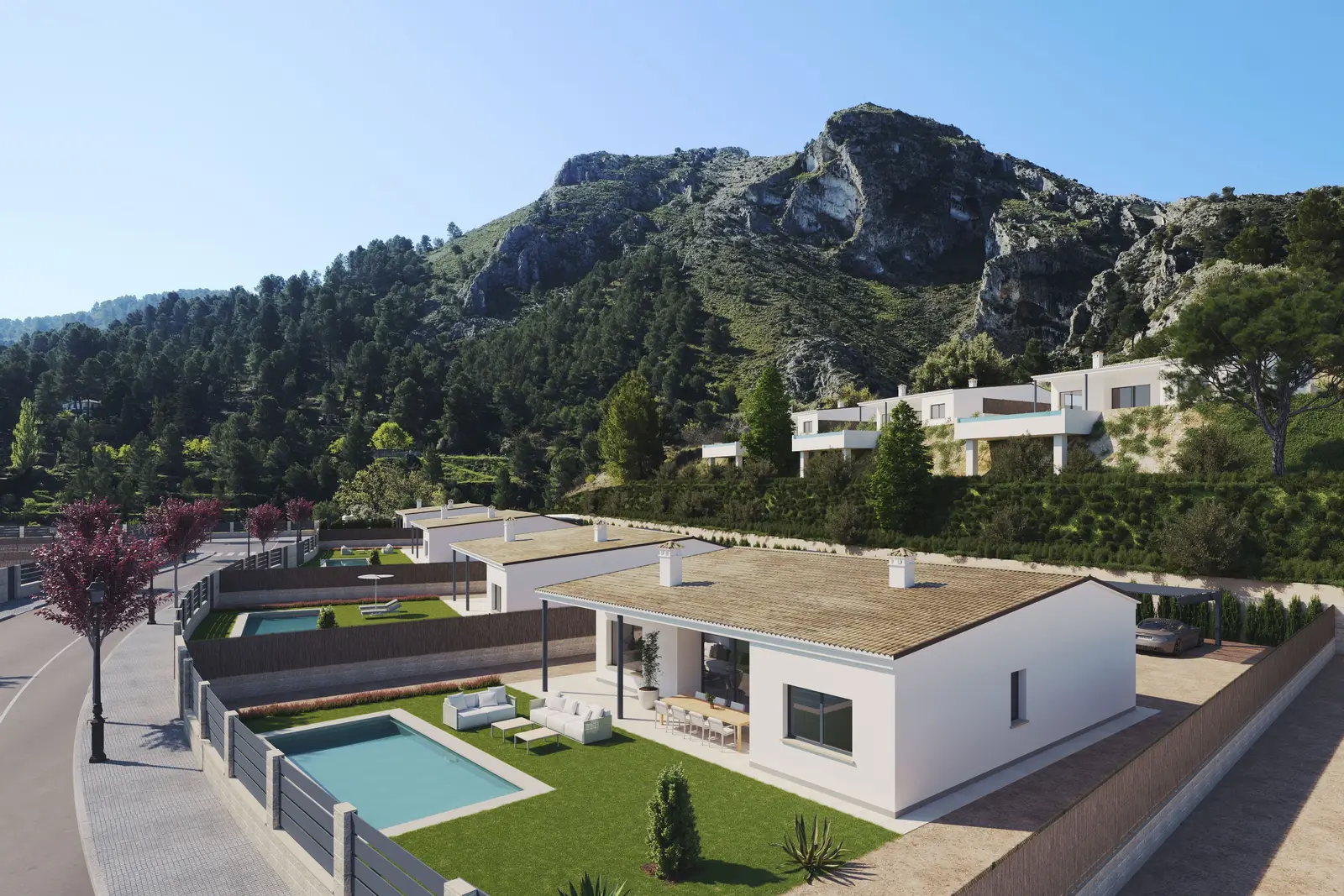
Frequently Asked Questions
Is Penáguila a good place for expats to live?
↓
Penáguila suits expats who prefer a quiet inland lifestyle over coastal resort living. The village is small, services are centred in nearby Alcoy, and the expat community is limited but well integrated. veritySpain has scored the one analysed project at 7.3/10, suggesting reasonable fundamentals for buyers who accept the limited supply.
What is the cost of living in Penáguila?
↓
Day-to-day costs in Penáguila are lower than coastal Alicante towns. Local bars and shops operate at inland prices, and property running costs reflect lower land values. Current asking prices stand at €392,000 for the one project veritySpain has tracked. Utility costs are moderate, though heating is a real expense in winter at 700 metres elevation.
How is healthcare access for expats in Penáguila?
↓
Penáguila is served by the public health system through health centres in Cocentaina and the Hospital Virgen de los Lirios in Alcoy. EU residents and qualifying British nationals with residency status can access public care. Many expats supplement this with private insurance from providers such as Sanitas or Adeslas for faster access to English-speaking practitioners.
Are there English-language schools near Penáguila?
↓
The village primary school follows the Valencian trilingual model covering Spanish, Valencian, and English. Secondary schooling requires a commute to Cocentaina or Alcoy. English-medium private schools accredited to the British curriculum operate in Alicante city, roughly 45 kilometres away. Most expat families use the public system with supplementary private tutoring.
What is the climate like in Penáguila?
↓
Penáguila sits at around 700 metres above sea level and receives roughly 300 days of sunshine per year, consistent with broader Alicante province data. Summers are warm but noticeably cooler than the coast, with daytime highs typically in the low 30s Celsius. Winters are cold, with January lows around 2–4°C and occasional frost or snow.
Is Penáguila suitable for remote workers?
↓
Broadband infrastructure across inland Alicante has improved considerably in recent years, and fibre connections are available in most villages including Penáguila. Remote workers report reliable connectivity. The lifestyle trade-off is clear: limited local amenities and services, but access to mountain trails, cycling routes, and a genuinely quiet working environment.
How large is the expat community in Penáguila?
↓
The expat community in Penáguila is small. Unlike coastal towns such as Jávea or Denia, there is no established English-speaking social infrastructure in the village. Dutch, German, and British nationals have been settling in the inland Marina Alta and l'Alcoià region for over two decades, but numbers remain low. Integration into local village life happens more quickly as a result.