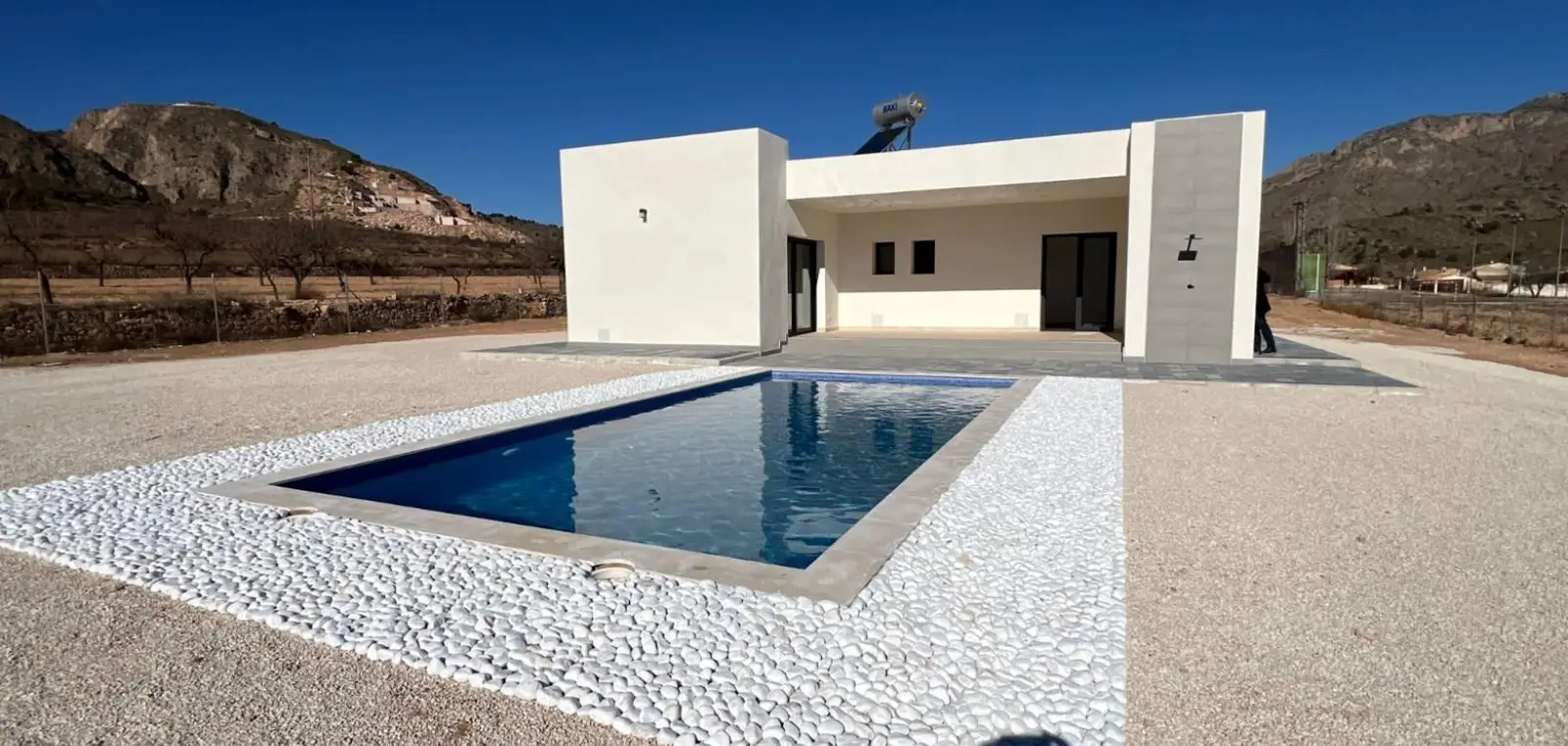
Living in Cañada de la Leña as an expat: climate, cost of living, healthcare, and community life in this Murcia municipality explained.
Living in Cañada de la Leña as an expat starts from a market where veritySpain has recorded an average score of 7.0 out of 10 and a current price point of €360,000 for the one analysed project in its coverage. The municipality sits in the Murcia region along the Costa Cálida, where average annual temperatures hover around 18°C and sunshine exceeds 300 days per year, two figures that are well-established in regional meteorological records. For prospective residents, the practical question is not whether the climate works, but whether the supporting infrastructure, community networks, and daily costs match expectations. The answer, at this stage of the market, is: largely yes, with qualifications.
Climate and outdoor life
The Costa Cálida's climate is among the driest and warmest in continental Europe, a fact confirmed by Spain's State Meteorological Agency (AEMET). Summers are long, with average July highs above 30°C. Winters are mild enough that outdoor café culture continues year-round. Short, sharp. The surrounding countryside offers hiking and cycling routes through semi-arid landscapes, and the Mar Menor lagoon, roughly 40 kilometres to the east, provides sailing, windsurfing, and year-round swimming. Water supply is a practical consideration in this zone: the Segura river basin is subject to allocation rules and periodic drought protocols, so garden irrigation costs are higher than in wetter regions. AEMET regional climate data consistently ranks this part of Murcia among Spain's sunniest provinces, which is relevant for both quality of life and energy bills.
Cost of living and daily expenses
Grocery costs in Murcia province run broadly below the Spanish national average, supported by local agricultural production: the region supplies a large share of Europe's fruit and vegetables. Mercadona, Lidl, and local market stalls all operate in nearby towns with full weekly shopping available without a long drive. Property-related costs follow the standard Spanish framework: ITP (impuesto de transmisiones patrimoniales) applies to resale purchases in Murcia at a rate set by the regional government, currently 8% as of the last revision. Agencia Tributaria publishes these regional rates and any changes. Utility bills, particularly in summer when air conditioning is essential, can be significant. Fuel costs for a car-dependent rural area also factor into monthly budgets more than in urban markets.
Healthcare and schools
Spain's national health system (Sistema Nacional de Salud) covers registered residents, including EU nationals and non-EU residents with legal residency. The nearest hospital with emergency facilities is in Murcia city, approximately 30 kilometres from the municipality depending on the exact location within the area. Local health centres (centros de salud) handle GP appointments and routine care. International private health insurance is widely used by expats to access faster specialist appointments and English-language consultations; several providers operate plans specifically designed for Spain-resident foreigners. Schooling options include the Spanish state system, which is available and free, and a number of international schools concentrated in the Murcia and Cartagena corridors that offer IB and British curriculum programmes.
Expat community and social life
Murcia region hosts one of Spain's larger Northern European expat concentrations, particularly British, German, and Dutch residents. Community infrastructure has developed over two decades: English-language social clubs, amateur sports leagues, and volunteer organisations are active across the province. Cañada de la Leña itself is a small settlement, so community life extends outward to nearby towns and the broader Costa Cálida network rather than being entirely local. The pace is quieter than the Costa del Sol and Alicante zones. That is not a drawback for everyone. veritySpain data on this municipality covers one project, which reflects the early-stage nature of organised development here; residents rely on established networks and personal introductions more than on structured expat hubs in the immediate area.
Key takeaways
- The veritySpain-scored project here sits at 7.0/10, entry price €360,000, in a small emerging market.
- Climate is consistently warm and dry, with over 300 sunshine days per year confirmed by AEMET data.
- Daily costs run below the Spanish national average for groceries; car dependency adds to monthly budgets.
- State healthcare covers registered residents; private insurance improves access and English-language service.
- Expat community life is active across Murcia region but dispersed, not concentrated in this small municipality.
The market in numbers
New-build projects in Cañada de la Leña
View allFrequently Asked Questions
What is daily life like for expats in Cañada de la Leña?
↓
Daily life is quiet and rural. The municipality is small, so residents rely on nearby towns for shopping, healthcare, and social activities. The Costa Cálida climate means outdoor living is possible year-round. Car ownership is essential. The broader Murcia expat network provides social infrastructure that is not locally concentrated.
Is healthcare accessible for expats in the Cañada de la Leña area?
↓
Registered residents access Spain's national health system at no direct cost. The nearest hospital with full emergency services is in Murcia city, around 30 kilometres away. Many expats supplement state care with private health insurance to improve appointment speed and access English-speaking consultants.
How much does property cost in Cañada de la Leña?
↓
veritySpain's current coverage records one project at €360,000. The municipality is a small and emerging market with limited comparable sales data, so this figure represents a single project rather than a broad average. Buyers should treat it as an indicator, not a market-wide benchmark.
What is the climate like in Cañada de la Leña?
↓
The municipality sits in Murcia province, one of Spain's driest and sunniest regions. Average annual sunshine exceeds 300 days according to AEMET data. Summers are hot, often above 30°C in July. Winters are mild. Water scarcity during dry periods affects irrigation costs and is a practical consideration for property owners.
Are there international schools near Cañada de la Leña?
↓
International schools are concentrated in the Murcia city and Cartagena corridors, both within commuting distance. Several offer IB and British curriculum programmes. Spanish state schools are free and available locally. Families with children typically factor school location into property searches when choosing between municipality options in the region.
What taxes apply when buying property in Cañada de la Leña?
↓
Resale property purchases in Murcia are subject to ITP (impuesto de transmisiones patrimoniales) at the regional rate, currently 8%. New-build purchases are subject to IVA instead. The Agencia Tributaria publishes current rates. Buyers should also budget for notary, registry, and legal fees, typically adding a further 1% to 2% to total acquisition costs.
Is Cañada de la Leña a good place for expats to settle long-term?
↓
The municipality suits expats seeking a quiet, rural base in a warm climate with reasonable access to the broader Costa Cálida and Murcia services. It is not suited to those requiring walkable town infrastructure or a concentrated expat community on their doorstep. veritySpain rates the one covered project at 7.0/10, reflecting solid fundamentals in a limited market.