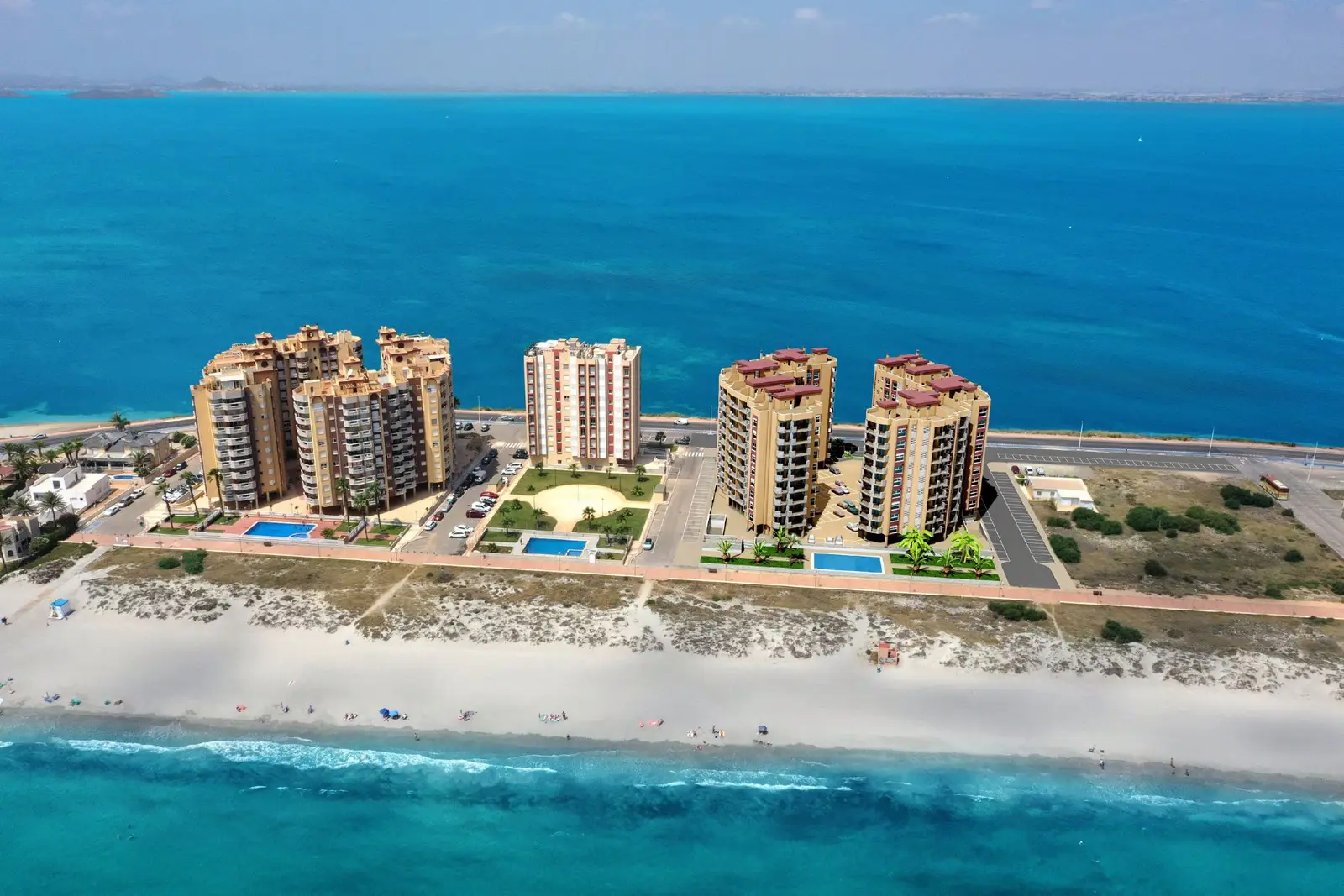
Living in La Manga del Mar Menor as an expat: climate, cost of living, healthcare, and schools explained with data from veritySpain's 6 analysed projects.
Living in La Manga del Mar Menor as an expat draws buyers to one of Spain's most geographically distinct coastal strips, where veritySpain has analysed 6 projects priced between €206,000 and €780,000 with an average score of 7.8 out of 10. The peninsula itself stretches roughly 22 kilometres into the Mediterranean, sitting between the open sea to the east and the shallow, warm waters of the Mar Menor lagoon to the west. This is not a large regional city. It is a focused coastal environment where daily life revolves around the water, the climate, and a community that skews heavily international.
Climate and daily life on the strip
Murcia province records among the highest sunshine hours in mainland Spain, typically over 300 days per year according to data published by AEMET, Spain's national meteorological agency. Temperatures in July and August regularly exceed 35°C, while winters are mild, with January averages around 11°C. That combination makes the strip attractive to northern Europeans seeking year-round outdoor activity. Morning walks along the Paseo Maritimo are routine for residents, and the Mar Menor's shallow, wind-sheltered waters support sailing, kitesurfing, and paddleboarding from early spring. Grocery shopping, however, is more limited than in larger towns. Most daily necessities are covered by supermarkets on the strip, but residents travel to Cartagena or San Javier for broader retail and specialist food shopping. Distance matters here. Self-sufficient daily life requires a car.
Cost of living for expat households
Spain's general cost of living index, tracked by INE, Spain's National Statistics Institute, consistently places it below the EU north-western average, and La Manga reflects that pattern in everyday spending. A coffee in a local bar costs around €1.50, a three-course menu del dia at a mid-range restaurant typically runs €12 to €15, and utility bills for a two-bedroom apartment are moderate in winter but rise in summer when air conditioning runs continuously. Rental demand on the strip is highly seasonal. Long-term rentals outside the summer period can be found at rates well below peak-season figures, giving year-round residents leverage that short-term visitors do not have. Property purchase costs in Spain follow standard ITP transfer tax rules (typically 8 to 10 percent in Murcia for resale properties) plus notary and registration fees. Budget roughly 12 to 13 percent on top of the purchase price for transaction costs. That is a genuine, well-established legal fact, not an estimate.
Healthcare and public services
Healthcare access is a frequent question for arriving expats. La Manga itself has a medical centre serving the strip, and the Hospital Universitario Santa Lucía in Cartagena, approximately 30 kilometres away, handles complex care. EU citizens who register as residents and obtain the Spanish NIE number gain access to the public health system (Sistema Nacional de Salud) on the same terms as Spanish nationals. Many northern European expats supplement this with private health insurance, which in Spain is relatively affordable compared to comparable coverage in northern Europe. Dental care, in particular, is largely outside the public system, so a private plan is the standard approach. Registration at the local padron (municipal census) is required for access to most public services. The Ayuntamiento de Cartagena administers La Manga, and registration can be completed there or at a satellite office on the strip.
International communities and schools
The expat community on La Manga is established and largely self-organising. British, Scandinavian, German, and Dutch residents make up the largest groups, with communities that have roots going back to the 1970s and 1980s when the original tourist development of the strip accelerated. Several English-language social clubs, golf societies, and sailing groups operate year-round, providing practical support networks for new arrivals. Schooling for children is a more significant planning consideration. There are no international schools on the strip itself. The nearest English-medium private schools are in Murcia city, roughly one hour north, and in the wider Cartagena area. Spanish state schools serve the local population, and children of expat families typically integrate into the state system over one to two academic years. For families with secondary-age children committed to an English curriculum, commuting or relocation closer to Murcia city is a common solution.
Key takeaways
- La Manga's 6 analysed projects range from €206,000 to €780,000, with an average veritySpain score of 7.8 out of 10.
- Over 300 sunshine days per year and mild winters make year-round outdoor life genuinely practical, not just seasonal.
- A car is essential: daily retail, specialist healthcare, and international schools all require travel off the strip.
- EU residents gain access to Spain's public health system after NIE registration and padron enrolment in Cartagena.
- The expat community is long-established, with active English-language social networks but no international school on the strip itself.
The market in numbers
New-build projects in La Manga del Mar Menor
View all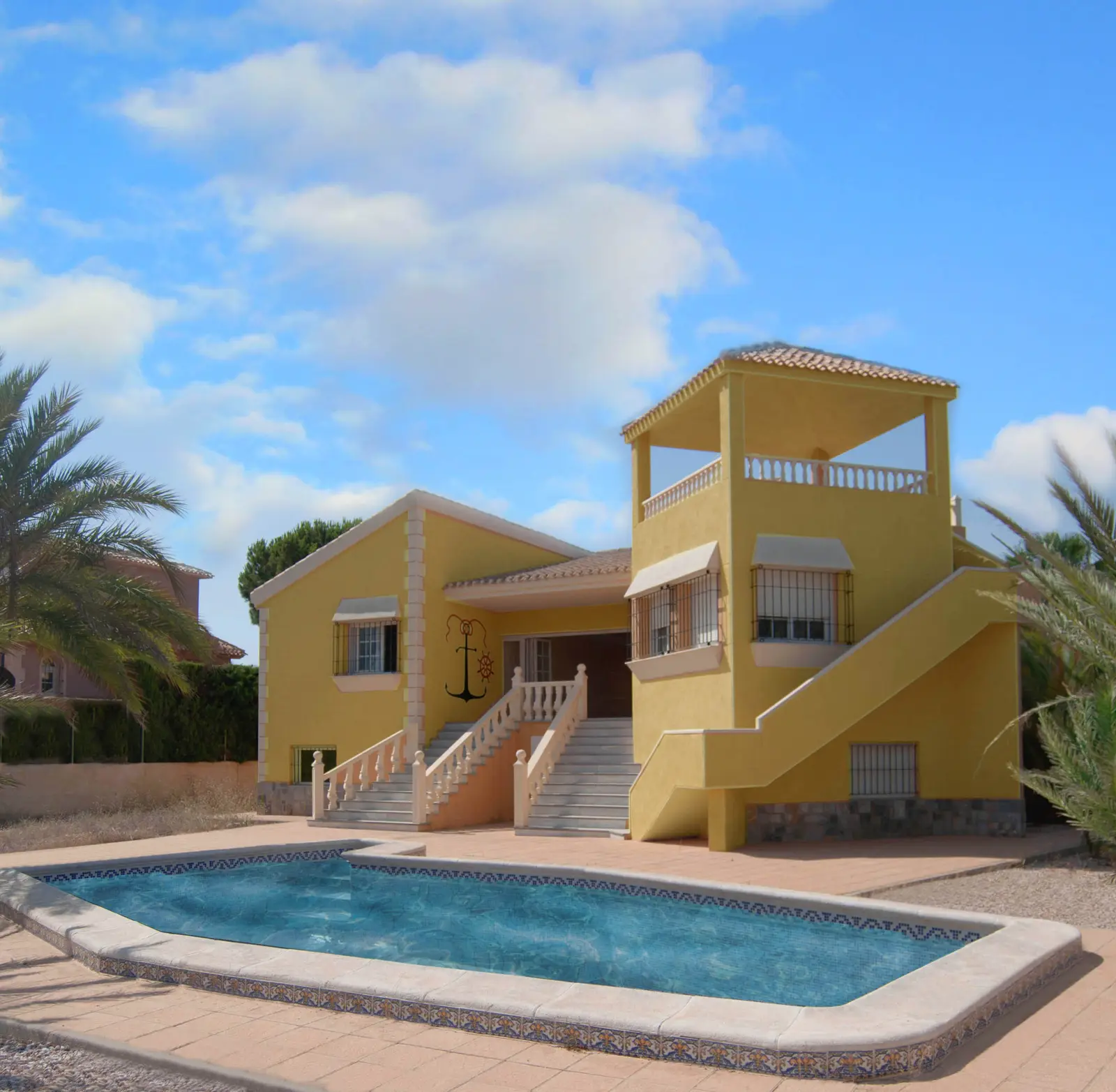
Frequently Asked Questions
Is La Manga del Mar Menor a good place to live year-round?
↓
Yes, for the right lifestyle. Over 300 sunshine days and mild winters support year-round outdoor activity. The strip is quiet outside peak summer months, which suits residents seeking a low-key pace. A car is essential for shopping and healthcare, as services are concentrated off the strip in Cartagena and San Javier.
What is the cost of living in La Manga del Mar Menor compared to northern Europe?
↓
Spain's cost of living is consistently below the EU north-western average, according to INE data. Daily expenses are moderate: a coffee runs around €1.50 and a restaurant lunch menu around €12 to €15. Utilities rise significantly in summer due to air conditioning demand. Long-term rental rates outside peak season are notably lower than summer figures.
How does healthcare work for expats living in La Manga del Mar Menor?
↓
EU citizens who register as residents and obtain an NIE number access Spain's public health system on the same terms as nationals. A local medical centre operates on the strip. Hospital Universitario Santa Lucía in Cartagena handles specialist care. Many expats add private insurance for dental coverage and faster access to consultants, which is affordable by northern European standards.
Are there international schools near La Manga del Mar Menor?
↓
No international schools operate on the strip itself. English-medium private schools are located in Murcia city, roughly an hour away, and in the broader Cartagena area. Expat children commonly integrate into Spanish state schools. Families committed to an English curriculum often choose to live closer to Murcia city or arrange regular commuting for secondary-age children.
What is the expat community like in La Manga del Mar Menor?
↓
The expat community is well-established and has deep roots. British, Scandinavian, German, and Dutch residents are the largest groups, with organised social clubs, sailing societies, and golf groups that have operated for decades. New arrivals typically find integration into English-language social networks straightforward, particularly outside the busy summer period when the strip's permanent population is more visible.
What transaction costs should I budget for buying property in La Manga del Mar Menor?
↓
Budget roughly 12 to 13 percent on top of the purchase price. Resale properties in Murcia are subject to ITP transfer tax, typically 8 to 10 percent depending on the purchase price bracket. Notary fees, land registry fees, and legal costs account for the remainder. New-build properties attract IVA at 10 percent plus stamp duty rather than ITP.
What property prices are typical for La Manga del Mar Menor?
↓
Based on veritySpain's analysis of 6 projects on the strip, prices range from €206,000 to €780,000. The average project score across those developments is 7.8 out of 10. The range reflects the difference between smaller apartments closer to the lagoon shore and larger frontline properties facing the open Mediterranean. Location within the 22-kilometre strip significantly affects pricing.