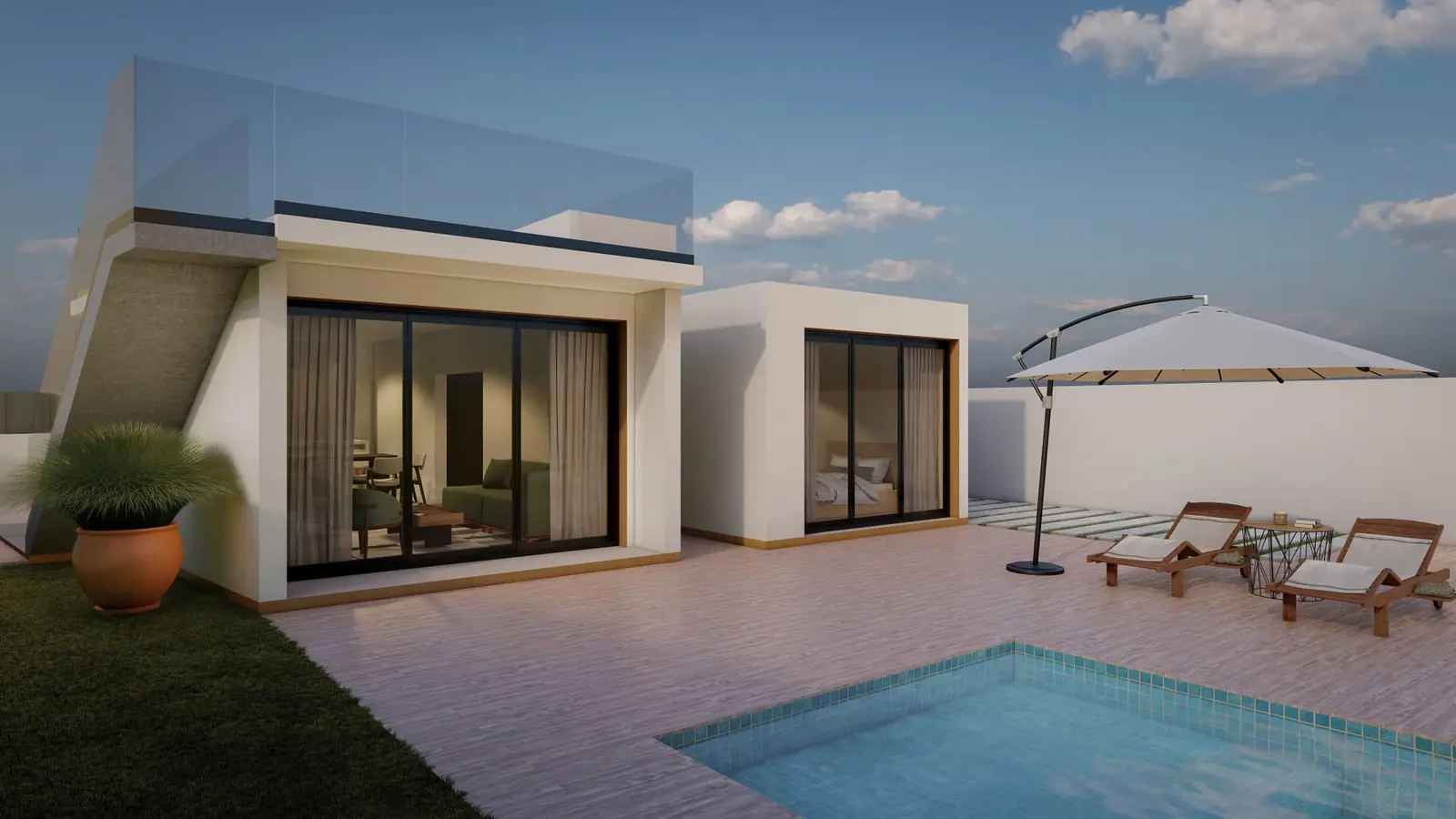
New build las casicas: step-by-step buying guide covering NIE, reservation, stage payments, taxes and mortgages for international buyers in Murcia.
New build las casicas properties currently start at €360,000, and the single project tracked by veritySpain holds a score of 7.0 out of 10. That score reflects sound construction standards and a location within Murcia's Costa Cálida corridor, where the buying process for non-resident purchasers follows the same legal sequence as the rest of Spain. Transaction volumes across Murcia have held up in recent years, according to data published by INE, though Las Casicas itself is a small, emerging market with limited comparable sales. Buyers should approach the process with realistic expectations and independent legal advice from the outset.
Before you sign: the NIE and the reservation contract
Every overseas buyer must obtain a Número de Identificación de Extranjero (NIE) before any contract can proceed. The NIE is your Spanish tax identifier and appears on every transaction document from reservation to title deed. Applying at the Spanish consulate in your home country before travel saves weeks on site. A reservation contract typically requires a deposit of between €3,000 and €6,000, payable directly to the developer; this sum is usually deducted from the eventual purchase price. Read the reservation conditions carefully. Some developers include a forfeiture clause if the buyer withdraws after a set date, even when the cause is financing failure.
Private purchase contract and stage payments
The private purchase contract (contrato privado de compraventa) is the binding agreement that locks in price, specifications, and delivery date. For off-plan new builds, this stage typically requires a further payment of 10 to 30 percent of the purchase price, depending on the developer's schedule. Stage payments are made as construction milestones are reached. Spanish consumer law (Ley 57/1968 and its successors) obliges developers to hold all buyer stage payments in a dedicated escrow account and to provide a bank guarantee or insurance policy covering the deposited funds. Verify the existence of that guarantee before transferring any money beyond the reservation deposit. Your solicitor will request the documento de garantía directly from the developer's bank.
Costs, taxes, and completion
At completion, a new-build transaction in Spain attracts IVA (value added tax) at ten percent of the purchase price, plus Actos Jurídicos Documentados (stamp duty) at a rate set by the Murcia regional government. On top of tax, budget for notary fees, land registry fees, and legal costs, which together typically add a further two to three percent of the purchase price. The deed of sale (escritura pública) is signed before a Spanish notary, who verifies the parties' identities and the legality of the transaction. Registration of the deed in the Land Registry (Registro de la Propiedad) finalises ownership. Registradores de España publish guidance on registration timelines, which normally run from two to eight weeks depending on registry workload.
Mortgages and financing for non-residents
Non-resident buyers can access Spanish mortgage finance, though on different terms than residents. Spanish banks typically lend non-residents up to 60 to 70 percent of the purchase price or the bank's own valuation, whichever is lower. That means a buyer purchasing at the €360,000 price point should plan to have at least €144,000 in liquid capital for the deposit before costs and taxes. Loan-to-value ratios and interest rates vary between lenders. A mortgage broker with access to multiple Spanish banks is worth the fee for buyers unfamiliar with the local market. Submit mortgage applications early in the process; pre-approval provides negotiating clarity and helps set a realistic completion timeline.
Key takeaways
- Obtain your NIE before signing any contract; this is a legal requirement for every overseas buyer in Spain.
- Developer stage payments must be covered by a bank guarantee or insurance policy under Spanish consumer law.
- New-build purchases attract IVA at ten percent plus stamp duty and legal costs of roughly two to three percent.
- Non-resident mortgages are available but generally capped at 60 to 70 percent of the property value.
- Las Casicas is an emerging market with limited comparable data; independent legal advice is essential from day one.
The market in numbers
New-build projects in Las Casicas
View allFrequently Asked Questions
What taxes do I pay when buying a new build in Las Casicas?
↓
New-build purchases in Spain are subject to IVA at ten percent of the purchase price, plus Actos Jurídicos Documentados (stamp duty) at a rate set by the Murcia regional government. Add notary, registry, and legal fees of roughly two to three percent, and a buyer should budget around 12 to 13 percent on top of the purchase price to cover all purchase costs.
Do I need an NIE to buy property in Las Casicas?
↓
Yes, every overseas buyer requires a Número de Identificación de Extranjero (NIE) before any contract can be signed. The NIE is Spain's tax identification number for non-residents and appears on every transaction document, from the reservation contract through to the title deed. Apply at the Spanish consulate in your home country before travelling to save time.
Are stage payments protected when buying off-plan in Spain?
↓
Spanish consumer law requires developers to hold all buyer stage payments in a dedicated escrow account and to provide a bank guarantee or insurance policy covering those funds. Before transferring any payment beyond the reservation deposit, ask your solicitor to obtain and verify the developer's guarantee document. If the developer cannot produce one, do not proceed.
How much deposit does a non-resident need for a Spanish mortgage?
↓
Spanish banks typically lend non-residents up to 60 to 70 percent of the purchase price or the bank's valuation. A buyer at the €360,000 price point should plan for a minimum of around €144,000 in liquid capital before accounting for taxes and legal costs. Pre-approval from a lender early in the process avoids delays at the contract stage.
How long does the buying process take in Spain?
↓
From reservation to notarial completion, the process typically takes two to six months for a completed new build, depending on financing and due-diligence timelines. Off-plan purchases take longer and are tied to the construction schedule. Registration at the Land Registry follows completion and normally adds two to eight weeks before the buyer receives their registered title.
What is the role of the Spanish notary in a property purchase?
↓
The notary is a public official appointed by the state who witnesses the signing of the escritura pública, verifies the identities of both parties, checks that all legal conditions are met, and collects the applicable taxes on behalf of the tax authority. The notary does not act as a lawyer for either party, so engaging your own independent solicitor remains essential.
Is Las Casicas a good area to buy a new build?
↓
The single new-build project tracked by veritySpain in Las Casicas holds a score of 7.0 out of 10, reflecting sound fundamentals within a small and emerging market. Limited comparable sales data means buyers cannot rely on broad market benchmarks. Independent legal advice, a thorough review of the developer's track record, and realistic expectations about liquidity are the appropriate starting points.