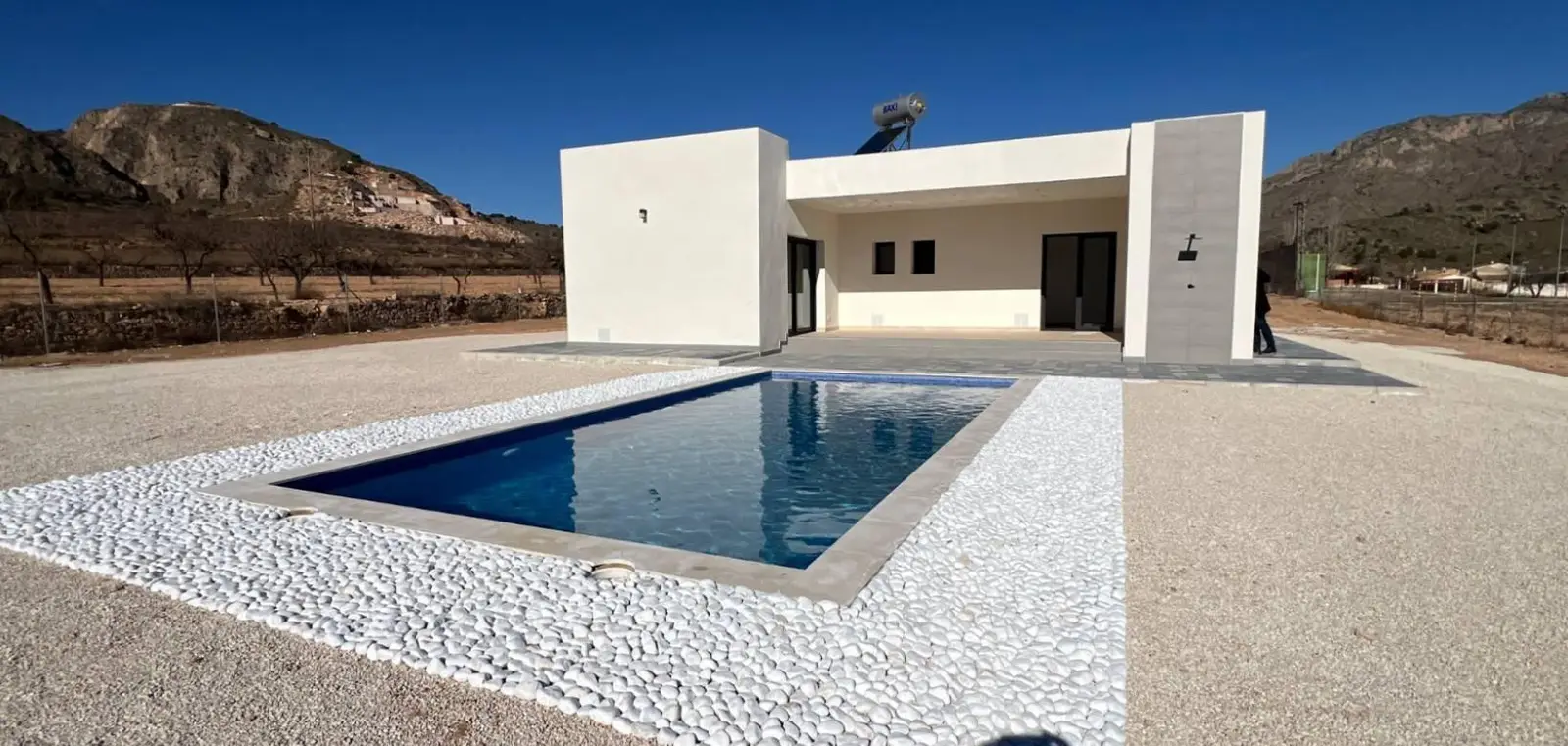
Living in Torre del Rico as an expat: climate, costs, healthcare and schools in this quiet Murcia village, with veritySpain data from €385,000.
Living in Torre del Rico as an expat starts at around €385,000 for a new-build property, based on veritySpain's current feed of one tracked project, which carries an editorial score of 7.0 out of 10. The village sits in the Vega Alta del Segura, inland Murcia, roughly 60 kilometres from the coast. That inland position shapes everything about daily life: lower humidity than the Costa Cálida shoreline, hot summers reaching 38°C, mild winters rarely dipping below 5°C, and a pace of life that is agricultural rather than tourist-driven. Expats who settle here tend to be drawn by quiet, by olive groves, and by significantly lower cost of living than coastal alternatives.
Climate and daily rhythm
The Segura valley records over 300 sunny days a year, according to AEMET historical normals for the Murcia interior. Summers are dry and intense: air conditioning is not optional between June and September. Spring and autumn are long, warm, and comfortable for outdoor living. Winters are short. Frost is rare but possible from December through February at this elevation. The agricultural calendar is visible in daily life: orange and lemon groves line the roads, and the weekly market in nearby Cieza (8 kilometres north) is a primary food-shopping destination. Transport requires a car. Torre del Rico has no train stop; the closest rail link is Cieza, on the regional Renfe line toward Murcia city. Budget 45 minutes to reach Murcia city for larger services.
Cost of living
Murcia is consistently among the lowest-cost regions in Spain. INE household expenditure surveys place Murcia near the bottom of the regional cost index, roughly 15 to 20 percent below Madrid. Monthly grocery costs for a two-person household are typically in the €350 to €500 range, and local restaurants in Cieza charge €10 to €14 for a fixed weekday menu. Utilities run higher in summer due to air conditioning load; a 90-square-metre home can expect €120 to €160 monthly in July and August. Petrol stations in Cieza are reliably cheaper than the coast. Property purchase taxes in the Murcia region follow standard Spanish ITP rates, currently 8 percent on resale and 10 percent IVA on new-build. veritySpain data shows the single tracked project in Torre del Rico priced at €385,000, which places it mid-range for new-build villa product in the Murcia interior.
Healthcare and schools
Primary healthcare for Torre del Rico residents is covered by the Centro de Salud in Cieza, part of the Servicio Murciano de Salud network. EU citizens with an EHIC or S1 form access this at no direct cost; non-EU nationals must register in the sistema de salud through empadronamiento (municipal registration). Cieza's public hospital, Hospital de Cieza, handles routine emergencies. More complex cases go to Hospital Reina Sofía in Murcia (45 minutes). Private health insurance from providers such as Sanitas or Asisa typically costs €60 to €120 per month per adult and gives faster access to specialists. Schools in Cieza include several state primary and secondary options; there is no international school closer than Murcia city, which has several British-curriculum and bilingual private schools within a 45-minute drive.
Expat community and integration
Torre del Rico is a small settlement; the permanent population numbers in the low hundreds. This is not a village with a large established expat network. British, Dutch, and Belgian buyers have historically preferred the coastal arc from Torrevieja to Mazarrón; the Segura valley interior is more unusual as an expat destination. That said, the broader Cieza municipality has a growing foreign-resident register, and Padrón Municipal statistics (Murcia region) show consistent year-on-year increases in non-Spanish registrations across the Vega Alta. Integration is easier for Spanish speakers; while shopkeepers in Cieza are accustomed to basic communication with foreigners, English fluency is not widespread outside commercial contexts. Local life revolves around the peñas (social clubs), the weekly market, and seasonal festivals tied to the agricultural year. Registering on the padrón is the first practical step, enabling access to health, schooling, and local services.
Key takeaways
- The sole veritySpain-tracked new-build project in Torre del Rico is priced at €385,000 with an editorial score of 7.0 out of 10.
- The inland Murcia climate delivers over 300 sunny days annually, with hot dry summers and mild short winters.
- Cost of living is low by Spanish standards, with Murcia ranking among the most affordable regions per INE data.
- Healthcare is through the Servicio Murciano de Salud; the nearest hospital is in Cieza, 8 kilometres away.
- Torre del Rico is a quiet, small settlement with limited expat infrastructure; a car and basic Spanish are essential.
The market in numbers
New-build projects in Torre del Rico
View allFrequently Asked Questions
What is the cost of living in Torre del Rico for expats?
↓
Daily costs are low. Murcia consistently ranks among the cheapest regions in Spain per INE household data. A two-person household can manage groceries for around €350 to €500 monthly, with fixed-price lunches in nearby Cieza at roughly €10 to €14. A car is essential, adding fuel costs on top.
How do expats access healthcare in Torre del Rico?
↓
EU citizens register with the local Servicio Murciano de Salud via their S1 or EHIC card. The nearest health centre is in Cieza (8 km). Non-EU nationals need to empadronarse (register on the municipal roll) first. Many expats also take out private health insurance, costing roughly €60 to €120 per adult per month.
Are there international schools near Torre del Rico?
↓
There are no international schools in Torre del Rico itself. State schools are available in Cieza, 8 kilometres away. British-curriculum and bilingual private schools are located in Murcia city, approximately 45 minutes by car. Families with school-age children typically factor in the drive or consider accommodation closer to Murcia.
What is the climate like in Torre del Rico?
↓
The Segura valley interior sees over 300 sunny days a year, per AEMET historical records for the Murcia inland zone. Summers are hot and dry, frequently reaching 38°C. Winters are short and mild, with frost rare but possible December through February. Spring and autumn offer the most comfortable outdoor conditions.
Is Torre del Rico popular with expats?
↓
Not yet in large numbers. Most British, Dutch, and Belgian buyers in Murcia favour the Costa Cálida coast. Torre del Rico attracts buyers seeking rural quiet rather than a ready-made expat community. Padrón Municipal data shows foreign registrations rising across the Vega Alta del Segura, but the village itself remains small and locally oriented.
What property prices can expats expect in Torre del Rico?
↓
veritySpain currently tracks one new-build project in Torre del Rico, priced at €385,000. New-build purchases in Spain carry 10 percent IVA; resale properties in Murcia are subject to 8 percent ITP transfer tax. The project holds a veritySpain editorial score of 7.0 out of 10.
Do you need a car to live in Torre del Rico?
↓
Yes, a car is necessary. Torre del Rico has no train station; the nearest rail link is in Cieza, 8 kilometres away, on the Renfe regional line toward Murcia city. Local shops and the weekly market are in Cieza. Murcia city, for larger services and the airport, takes around 45 minutes by road.