New build Calpe step-by-step: reservation contract to keys, taxes, costs, timelines and legal checks for international buyers on the Costa Blanca.
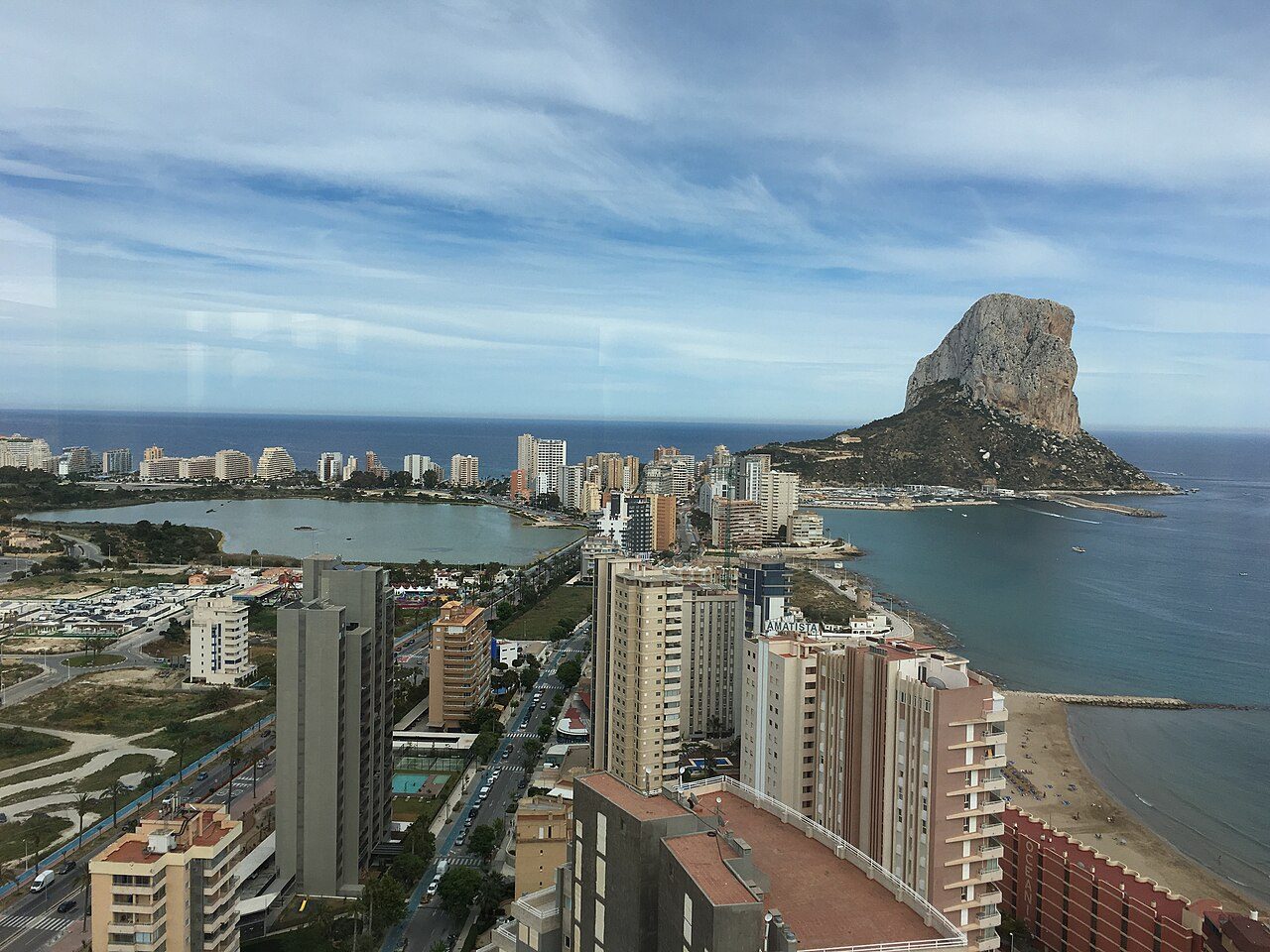
New build Calpe listings range from €180k to €3,190k, spanning entry-level apartments to large seafront villas, and the 24 projects veritySpain has analysed carry an average score of 7.8 out of 10. That spread means a buyer's first job is qualification: budget, preferred location within the municipality, and the intended use (primary residence or rental asset) all shape which developments are relevant. Calpe sits on the northern Costa Blanca in Alicante province, roughly equidistant between Benidorm and Dénia. The coastline is dominated by the Peñón de Ifach, a 332-metre limestone promontory that defines planning boundaries and limits certain development zones, giving the town a naturally constrained supply of beachfront land.
Reservation and private purchase contract
Spanish off-plan purchases begin with a reservation contract, typically requiring a deposit of €3,000 to €10,000 to take the unit off the market for two to four weeks. This is not yet a binding sale. After due diligence, the parties sign the contrato de arras or contrato privado de compraventa, at which point the buyer pays a further tranche, usually 10% of the purchase price. A Spanish notary does not attend at this stage. The contract must specify the completion date, the penalty clauses if either party withdraws, and, critically for new builds, that the developer holds a bank guarantee or aval bancario protecting all stage payments. Banco de España supervisory guidance requires developers to insure or guarantee off-plan deposits; buyers should receive written confirmation of this guarantee before transferring any funds. Short timelines are common: reservation to private contract often takes fewer than 30 days.
Legal due diligence before signing
A Spanish property lawyer (abogado) is not legally required but is standard practice for non-resident buyers. Due diligence covers four main checks. First, the nota simple from the Registro de la Propiedad confirms ownership, outstanding mortgages, and any legal charges on the plot. Second, the licencia de obra (building permit) issued by the Calpe Ayuntamiento confirms the project is legally authorised. Third, the developer's financial standing and track record should be reviewed, including whether any of their previous projects in the municipality have faced insolvency proceedings. Fourth, the community statutes for the urbanisation must be read to understand annual maintenance fees, shared pool or gym costs, and any rental restrictions. Registradores de España publish guidance on interpreting the nota simple for foreign buyers. Spain does not operate a conveyancing monopoly, so buyers are free to choose any licensed Spanish lawyer; the developer's recommended lawyer should be treated as a conflict of interest.
Taxes, costs, and the notaría
10% IVA (VAT) applies to all new-build residential purchases in Spain; this is charged on top of the agreed price. Alongside IVA, buyers pay Impuesto sobre Actos Jurídicos Documentados (AJD, stamp duty), which in Valencia's Comunitat Valenciana (the region containing Calpe) is set by the regional government. Legal fees, notary fees, and land-registry inscription together typically add another one to two per cent of the purchase price. Buyers should budget approximately 12 to 14 per cent above the headline price to cover all taxes and transaction costs. The notaría session is the formal completion: both parties, or their legal representatives under poder notarial (power of attorney), sign the escritura pública. The notary reads the deed aloud, verifies identities, and confirms payment. Keys exchange on the same day. Foreign buyers who are non-residents require an NIE (Número de Identificación de Extranjero) before the notaría; applying via the Spanish consulate in the buyer's home country is the standard route, though applications can be submitted in person at a Comisaría in Alicante.
Timeline and post-completion steps
Off-plan new builds in Calpe typically carry build times of 18 to 30 months from the grant of the licencia de obra, though larger developments can run longer. Once the escritura is signed, the buyer has 30 days to pay IVA and AJD to the relevant tax authority (Agència Tributaria Valenciana for AJD). The gestoria, an administrative agent, usually handles this filing. After taxes are settled, the escritura is inscribed in the Registro de la Propiedad; inscription takes two to eight weeks. Utilities connections follow: electricity (typically Iberdrola in this part of Alicante), water (Calpe's municipal supplier), and community association membership. Non-resident buyers must also register with the Spanish tax authority (Agència Tributaria) and file an annual IRNR (non-resident income tax) return, even if the property is not rented out. Buyers planning to rent the property short-term must register with the Generalitat Valenciana and obtain a tourist licence number before listing on any platform. Transaction volumes and absorption rates in the Costa Blanca market are tracked and published periodically by INE (Instituto Nacional de Estadística), and monitoring those releases helps buyers time their decision relative to broader market cycles.
Key takeaways
- Budget 12 to 14 per cent above the headline price to cover IVA, AJD, notary, and legal fees.
- Confirm the developer holds a bank guarantee protecting all stage payments before transferring any funds.
- Obtain an NIE number early: without it, the notaría cannot proceed and completion will stall.
- Appoint an independent Spanish lawyer; never rely solely on the developer's recommended legal contact.
- Register for a tourist licence with the Generalitat Valenciana before listing a Calpe property for short-term rental.
The market in numbers
New-build projects in Calpe
View all
Frequently Asked Questions
What taxes do I pay when buying a new-build property in Calpe?
↓
New build purchases in Spain are subject to 10% IVA (VAT) on the sale price. On top of that, buyers in the Valencian Community (which includes Calpe) pay AJD stamp duty set by the regional government. Notary fees and land-registry inscription add roughly one to two per cent. In total, budget around 12 to 14 per cent above the agreed price to cover all taxes and transaction costs.
How long does buying a new-build in Calpe take from reservation to keys?
↓
The legal process itself, from reservation to notaría, can move in two to four months once the property is ready. However, off-plan builds in Calpe typically require 18 to 30 months of construction time first. After signing, allow a further two to eight weeks for the escritura to be inscribed in the land registry. Obtaining an NIE number before you start saves time at the notaría stage.
Do I need a lawyer when buying a new-build property in Spain?
↓
A lawyer is not legally required but is strongly advisable, particularly for non-resident buyers. An independent Spanish abogado checks the nota simple, the building permit, the developer's bank guarantee on stage payments, and the community statutes. Using the developer's own recommended lawyer creates a conflict of interest; appoint someone who works only for you.
What is a bank guarantee and why does it matter for off-plan buyers?
↓
A bank guarantee (aval bancario) is a legal protection that covers all stage payments you make to a developer before completion. If the developer becomes insolvent or fails to deliver the property, the guarantee allows you to recover the funds. Spanish law requires developers to provide this cover; always request written confirmation before transferring any money beyond the initial reservation fee.
What is an NIE number and how do I get one?
↓
An NIE (Número de Identificación de Extranjero) is a tax identification number required of all foreign nationals completing a property purchase in Spain. Without it, the notaría cannot proceed. Non-residents can apply through the Spanish consulate in their home country or in person at a Comisaría in Alicante. Allow several weeks for processing if applying before travel.
Can I rent out a new-build property I buy in Calpe?
↓
Short-term holiday rentals require a tourist licence issued by the Generalitat Valenciana before you can legally advertise on any platform. Some urbanisations in Calpe include rental restrictions in their community statutes, which take precedence. Check both the community statutes and regional licensing requirements before purchase if rental income is part of your investment case.
What does the reservation deposit cover and is it refundable?
↓
The reservation deposit, typically €3,000 to €10,000, removes the unit from the market while you complete initial due diligence. Refundability depends on the specific contract terms. Most reservation agreements allow a refund if the buyer withdraws within the agreed period; once the private purchase contract (arras) is signed, withdrawal by the buyer usually means forfeiting that deposit amount.