Property investment in Calpe analysed: veritySpain rates 24 projects at 7.8/10, prices from €180k to €3,190k. Rental market, legal costs, and comparable towns.
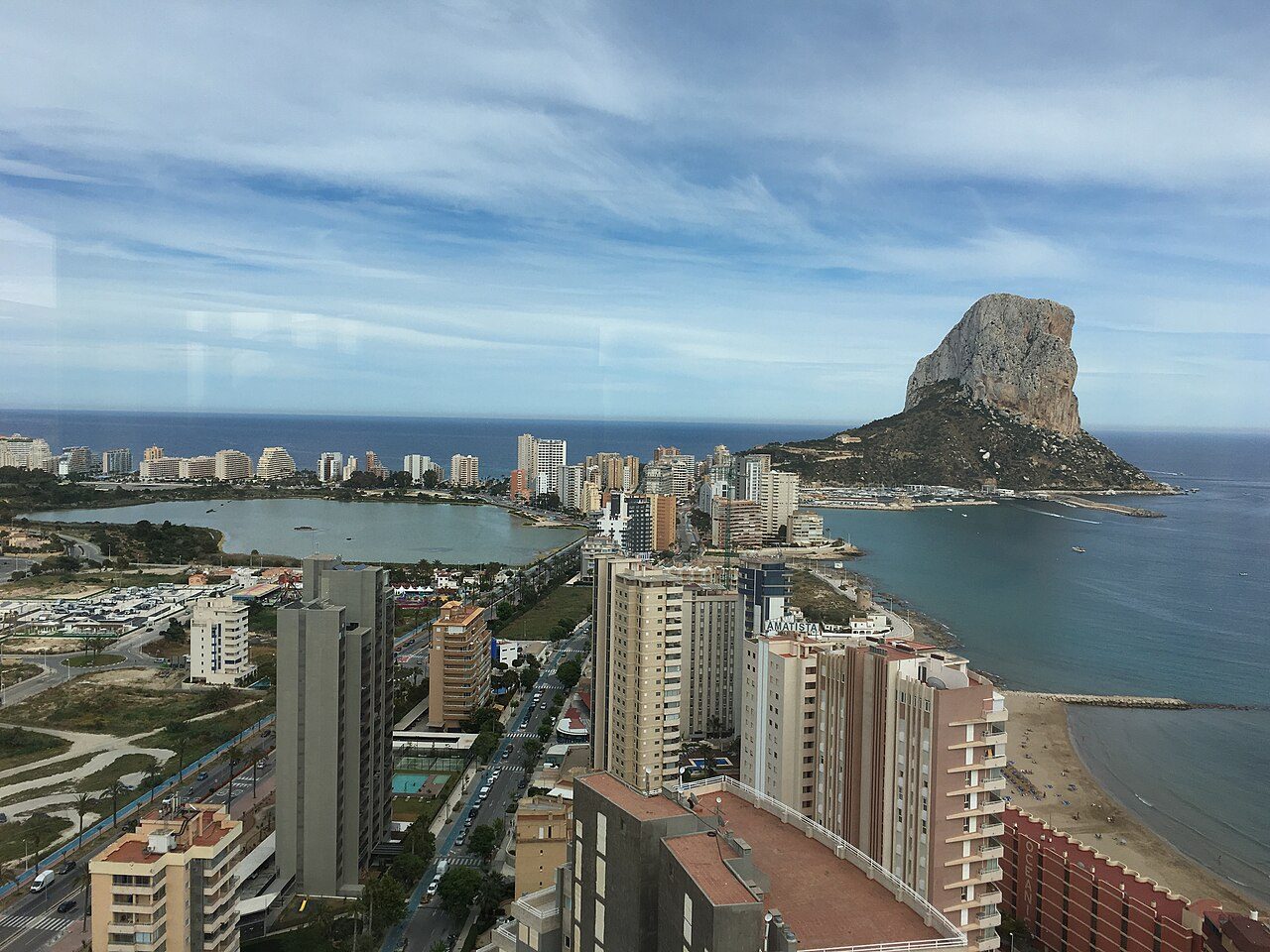
Property investment in Calpe draws sustained interest from buyers across northern Europe, and veritySpain's analysis of 24 tracked projects places the market at an average score of 7.8 out of 10, with asking prices spanning €180k to €3,190k. That range signals a market with real depth: entry-level apartments sit alongside penthouse and villa stock that commands a meaningful premium for sea-facing positions. Calpe's physical geography reinforces values at the top of the range. The Peñón de Ifach, a 332-metre limestone rock that rises from the sea and forms a protected natural park, is a hard boundary on developable land. Supply constraints in the most sought-after zones are structural, not cyclical. Investors weighing Costa Blanca locations therefore find that Calpe carries a defensible scarcity argument that nearby towns with flatter terrain cannot match.
Price dynamics and transaction context
Listed prices in the veritySpain feed run from entry-level new-build apartments to high-end villas priced at €3,190k, a spread of nearly €3m within a single municipality of roughly 22,000 permanent residents. veritySpain data, June 2025 shows the average quality score across 23 active projects sitting at 7.8/10, indicating that developers meeting our editorial threshold have concentrated supply in the mid-to-upper band. Transaction volumes in the Comunitat Valenciana are tracked annually by Registradores de España, which publishes notarised purchase counts by province; Alicante consistently records one of Spain's highest foreign-buyer shares, and Calpe sits within that flow. Prices on the most exposed seafront plots have not softened materially through recent rate cycles, a pattern consistent with compressed supply and continued northern-European demand. Short buying windows in peak season create a competitive dynamic that favours prepared buyers.
Rental market and income potential
Calpe's tourist licence regime, governed by Valencian Community regulation, shapes what landlords can earn and how they structure ownership. Licensed tourist properties can be let short-term; the stock of licences is finite and new applications face tighter scrutiny each year. That constraint is relevant for investors targeting seasonal income: an existing licence on a resale property carries a premium that reflects not only the income stream but the regulatory protection it affords. Long-term rental demand from non-tourist residents, including remote workers and retirees who use Calpe as a year-round base, provides a second income pathway. No single verified yield figure is available across the whole market. Investors should model conservatively, using actual weeks of occupancy from comparable local management operators rather than headline projections.
Legal and fiscal framework
Spain's property purchase costs are material and must be factored into any investment case. Resale purchases are subject to Impuesto de Transmisiones Patrimoniales (ITP), which the Comunitat Valenciana levies on a sliding scale. New-build purchases attract IVA at 10 percent plus stamp duty. Legal fees, notary costs, and land-registry inscription add further to the acquisition cost; total transaction costs typically land between 10 and 14 percent on top of the agreed price. Non-resident owners pay Impuesto sobre la Renta de No Residentes (IRNR) on actual or imputed rental income, and an annual property tax (IBI) to the municipality. Spain's double-taxation treaties with most northern-European countries mean investors are not taxed twice. Independent legal advice from a qualified Spanish abogado is the non-negotiable starting point. The process is well-documented and the costs are known.
Comparable towns and competitive positioning
Calpe sits between Altea to the south and Denia to the north, two towns that investors regularly evaluate alongside it. Altea has a stronger reputation for architecture and a more established year-round expatriate community; its centre is largely built out, and premium prices reflect that scarcity. Denia benefits from a ferry link to Ibiza and a larger permanent population, which broadens the long-term rental pool. Calpe's relative advantage is the combination of the Peñón landmark, two sandy beaches (Arenal-Bol and La Fossa), and a marina that supports a water-sports economy. Its permanent resident base, at around 22,000, gives it more commercial infrastructure than smaller villages but less density than Benidorm. For investors who want coastal liquidity without the mass-tourism scale of Benidorm, Calpe occupies a considered middle position.
Key takeaways
- veritySpain rates Calpe's active projects at 7.8/10 across 23 analysed developments, signalling consistent quality at the upper end of the market.
- Asking prices span €180k to €3,190k, reflecting both entry-level apartments and premium seafront villas in a supply-constrained coastal municipality.
- The Peñón de Ifach natural park limits developable land permanently, supporting a structural rather than speculative scarcity argument for values.
- Tourist rental licences are finite and regulated under Valencian Community law; a licence on a resale property carries a distinct value premium.
- Total acquisition costs in Spain typically reach 10 to 14 percent above the agreed price; budgeting for these upfront is essential for accurate return modelling.
The market in numbers
New-build projects in Calpe
View all
Frequently Asked Questions
Is Calpe a good place to invest in property?
↓
veritySpain rates Calpe's active projects at an average of 7.8/10 across 23 analysed developments. The Peñón de Ifach natural park limits new supply on the most desirable coastal plots, which supports values structurally. Northern-European buyer demand has remained consistent, though investors should model rental income conservatively and account for full Spanish acquisition costs.
What is the average property price in Calpe?
↓
Listed prices in the veritySpain feed for Calpe range from entry-level apartments to villas priced at €2,990k. The spread reflects both budget-accessible new-build stock and premium seafront product. There is no single average that covers the full market; investors should assess pricing by property type, proximity to the beach, and whether a tourist rental licence is included.
Can I rent out a property short-term in Calpe?
↓
Short-term tourist lettings in Calpe require a licence under Valencian Community regulation. The stock of licences is finite, and new applications face increasing scrutiny. Resale properties with an existing tourist licence carry a premium that reflects both the income stream and the regulatory position. Buyers should verify licence status with a qualified Spanish abogado before exchange.
What taxes apply when buying property in Calpe?
↓
Resale property purchases in the Comunitat Valenciana are subject to ITP on a sliding scale. New builds attract IVA at 10 percent plus stamp duty. Legal fees, notary costs, and land-registry inscription bring total acquisition costs to roughly 10 to 14 percent above the agreed price. Non-resident owners also pay IRNR on actual or imputed income and annual IBI to the municipality.
How does Calpe compare with Altea and Denia for investment?
↓
Altea has a well-established expatriate community and limited development land, making it supply-constrained but expensive. Denia offers a larger permanent population and a ferry link to Ibiza, broadening rental demand. Calpe sits between the two, combining coastal scarcity from the Peñón, two sandy beaches, and a marina, without the mass-tourism scale of Benidorm. Comparative liquidity should be assessed by property type.
What is the veritySpain score for Calpe?
↓
veritySpain analyses new-build and off-plan projects against a 1.0 to 10.0 quality scale. Across 23 projects currently tracked in Calpe, the average score is 7.8 out of 10. Projects scoring below 6.0 are not published. The 7.8 average indicates that active supply in the municipality is concentrated in the mid-to-upper quality band.
Is Calpe popular with foreign buyers?
↓
Alicante province, where Calpe is located, consistently records one of Spain's highest shares of foreign-buyer transactions, according to data published by Registradores de España. Calpe attracts buyers primarily from northern and central Europe, drawn by the Peñón landmark, beach access, and a year-round climate. Demand from this cohort has held across recent interest-rate cycles.