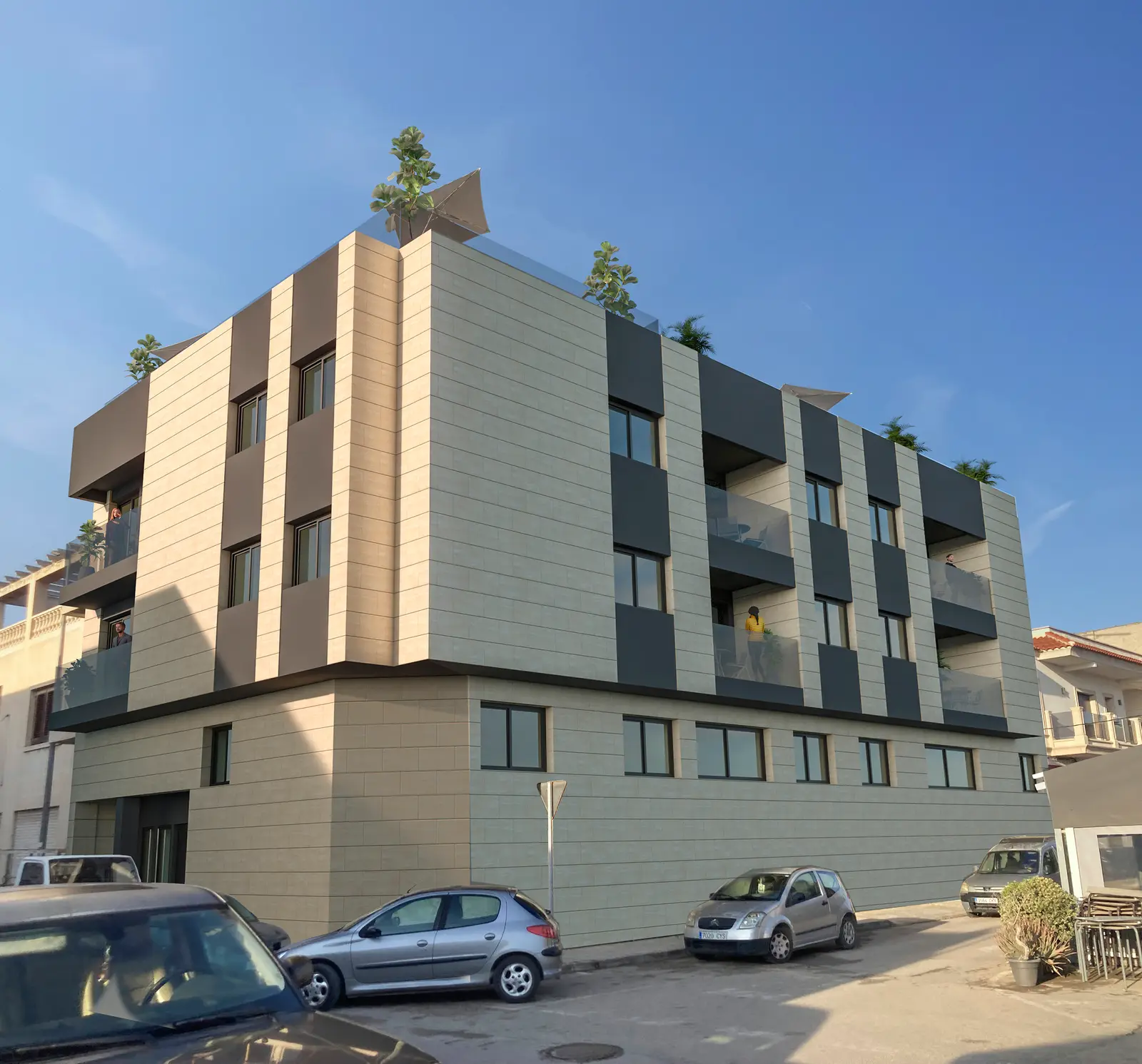
Living in Catral as an expat: climate, cost of living, healthcare, schools and community life in this Alicante interior town. Analytical guide from veritySpain.
Living in Catral as an expat means choosing a small inland Alicante town where veritySpain has reviewed one residential project, scoring it 7.5 out of 10, and where asking prices have sat at around €113,000. The Costa Blanca interior is not as promoted as the coastal strip, but that gap between profile and liveability is precisely what draws a growing number of northern European residents. Catral sits in the Vega Baja del Segura comarca, roughly 20 kilometres south-west of Alicante city. The climate is semi-arid Mediterranean, with long summers, mild winters, and well over 300 days of sunshine per year according to regional meteorological records. Life moves at a deliberate pace.
Climate and day-to-day comfort
July and August routinely push above 35 degrees Celsius, and nights stay warm. That is the trade-off for winters where temperatures rarely fall below 8 degrees and frost is unusual. Spring and autumn are the most comfortable seasons for outdoor activity. Locals and long-term residents organise their days around the heat in summer: early morning errands, a long midday pause, activity from late afternoon. Humidity is lower than on the coast. For residents with respiratory conditions, the dry interior air is often a reason for choosing Vega Baja over seaside locations. Spain's Agencia Estatal de Meteorología (AEMET) publishes historical climate data confirming the region as one of the sunniest and driest in mainland Europe.
Cost of living and day-to-day spending
A weekly shop for two people at a local mercadona or Lidl typically costs between €50 and €70, which is noticeably below equivalent baskets in northern Europe. Dining out at a local bar for the menú del día, the fixed two-course lunch with bread and drink, runs between €10 and €13. Utility bills are the variable most expats flag: summer air-conditioning use pushes electricity costs up considerably, and Spain's electricity pricing is indexed to spot-market rates. Property-related costs include IBI (the annual municipal property tax) and, for buyers, either IVA on new builds or ITP on resale purchases. INE (Instituto Nacional de Estadística) tracks consumer price indices for the Valencia region, providing general context on inflation trends without municipality-level breakdowns.
Healthcare and services
Spain's public healthcare system (SNS) is available to residents who are registered on the municipal padrón and hold an appropriate residency status. The nearest hospital with full emergency and specialist services is the Hospital Vega Baja in Orihuela, approximately 15 kilometres from Catral. Catral itself has a local centro de salud for primary care, GP consultations, and basic diagnostics. Waiting times for specialist appointments in the public system can run to several months, which leads many expat residents to supplement with private health insurance. Several major insurers including Sanitas and Adeslas operate in the province. Pharmacy provision in the town is adequate for everyday needs.
Schools and families with children
Three options are available to expat families: Spanish state schools, Spanish concertado (part-state-funded) schools, and private international schools within driving distance. State schools in the municipality teach entirely in Spanish, with some Valencian-language content. Children under ten generally integrate quickly when immersed in Spanish-language schooling. For families who prefer English-medium instruction, the nearest established international schools are in the Torrevieja and Orihuela Costa areas, roughly 25 to 35 kilometres away. Secondary education in Spain follows the ESO and Bachillerato pathway, which is compatible with university entry across most European systems. Families relocating should verify their children's year group equivalencies before enrolment.
Expat community and social life
Catral has a resident northern European population, predominantly British and Belgian, that is long-established rather than newly arrived. The local foreign residents' association holds regular events and provides practical support for administrative processes such as NIE registration, padrón enrolment, and driving-licence exchange. The town's weekly market is a social anchor. Orihuela and Torrevieja, both within easy reach by car, extend the social and commercial options considerably. Spanish language skills improve quality of life significantly in a town of this size, where English is not widely spoken outside expat-oriented businesses. Integration is gradual. Residents who engage with local associations and neighbourhood life report higher satisfaction.
Key takeaways
- veritySpain reviewed one Catral project, awarding a score of 7.5/10, with entry pricing around €113,000.
- The semi-arid Mediterranean climate delivers over 300 sunshine days annually, with hot summers and mild winters.
- Day-to-day costs for food and dining sit clearly below northern European equivalents, though utility bills spike in summer.
- Public healthcare is available via the padrón system, but private insurance is widely used to reduce specialist waiting times.
- English-medium schooling requires a drive to the Torrevieja or Orihuela Costa area; local state schools teach in Spanish.
The market in numbers
New-build projects in Catral
View allFrequently Asked Questions
Is Catral a good place to live as an expat?
↓
Catral suits expats who want an affordable, quiet inland base in Alicante province. The cost of living is low, the climate is consistently sunny, and a long-established northern European community provides practical support. It is not a resort town, so those who want beach proximity or English-speaking infrastructure on their doorstep may prefer the coast.
What is the cost of living in Catral, Spain?
↓
Day-to-day costs in Catral are below the Spanish average for a coastal area. A weekly supermarket shop for two runs around €50 to €70 and a restaurant lunch menu costs €10 to €13. Electricity bills rise steeply in summer due to air-conditioning use. Property entry prices in veritySpain's data sit around €113,000 for reviewed projects.
What healthcare is available in Catral?
↓
Catral has a local centro de salud for primary care. The nearest full hospital is Hospital Vega Baja in Orihuela, about 15 kilometres away. Residents registered on the padrón with valid residency status can access Spain's public SNS system. Many expats add private health insurance through providers such as Sanitas or Adeslas to reduce specialist waiting times.
Are there English-speaking schools near Catral?
↓
State schools in Catral teach in Spanish and some Valencian. English-medium international schools are located in the Torrevieja and Orihuela Costa areas, roughly 25 to 35 kilometres away. Younger children generally integrate well in Spanish-language state schooling. Families should confirm year-group equivalencies with the school before finalising enrolment.
What is the weather like in Catral?
↓
Catral has a semi-arid Mediterranean climate with over 300 sunny days per year, according to AEMET regional data. Summers are hot, regularly exceeding 35 degrees Celsius. Winters are mild with temperatures rarely dropping below 8 degrees. Humidity is lower than on the coast. Spring and autumn are the most temperate periods for outdoor life.
Is there an expat community in Catral?
↓
Yes. Catral has a long-established northern European resident population, mainly British and Belgian nationals. A local foreign residents' association organises events and helps newcomers with administrative processes including NIE registration and padrón enrolment. The weekly market is a regular social gathering point. Spanish language skills make integration considerably easier in a town of this size.
How do I register as a resident in Catral, Spain?
↓
Registration begins at the local Ayuntamiento (town hall) to obtain padrón certification, which records your address for administrative purposes. EU nationals need to register with the Registro Central de Extranjeros to obtain a TIE residency certificate. Non-EU nationals apply for the relevant visa and residence permit through a Spanish consulate before arrival. A Spanish NIE (tax identity number) is required for property purchase and most financial transactions.