
New build Dehesa de Campoamor properties range from €995k to €3.6m. Step-by-step buying process: NIE, contracts, taxes, stage payments and keys.
New build dehesa de campoamor listings currently run from €995,000 to €3,600,000, and the seven projects veritySpain has analysed carry an average score of 7.4 out of 10 on its independent rating scale. That price range reflects a market positioned firmly at the upper end of Costa Blanca Sud. International buyers who move through the purchase process in an orderly way typically find the legal framework straightforward, provided they engage a licensed gestión firm or independent abogado before signing anything. Spain's property acquisition process is document-intensive by northern European standards. Understanding each stage, from the first reservation fee to registering title, saves weeks and avoids the most common pitfalls.
Reservation, NIE and preliminary contracts
Every purchase in Spain begins with a reservation contract and a fee, typically in the range of a few thousand euros, that takes the property off the market. Before signing, you need a Número de Identificación de Extranjero (NIE), the tax-identification number Spain requires of all foreign nationals for any financial transaction. The NIE application can be filed at a Spanish consulate in your home country or in person at a Policía Nacional office near Dehesa de Campoamor. Allow at least two to four weeks if applying abroad. Once the NIE is in hand, buyer and developer sign a contrato de arras privado, which binds both parties and defines the deposit structure. Under the standard arras penitenciales arrangement, if the developer cancels the deal they must return double the deposit; if the buyer cancels, the deposit is forfeited. Read the clause carefully. A registered abogado should review every contrato de arras before you transfer funds.
Taxes, notary fees and total acquisition costs
On new-build property in Spain the buyer pays IVA (currently 10 % for residential use) plus Actos Jurídicos Documentados (AJD), the stamp duty applied to the deed value. Those two levies alone account for a substantial portion of acquisition cost on top of the purchase price. Solicitors' fees, notary fees, Land Registry inscription costs, and a gestión fee add further layers. As a working rule of thumb, buyers budget 13 % to 15 % on top of the purchase price to cover all taxes and closing costs on a new build in the Valencia Community, though individual transactions vary. Dehesa de Campoamor falls under the jurisdiction of the Registro de la Propiedad de Orihuela. Registradores de España publishes transaction statistics for this area, and their data confirms that international buyers account for a material share of Costa Blanca coastal volumes. Registradores de España is the authoritative public record of all inscribed transactions and the official source for title history.
Stage payments and developer guarantees
Off-plan new builds in Dehesa de Campoamor are typically sold with a phased payment structure: reservation, a series of staged payments during construction, and the balance on completion and key handover. Spanish law requires that developers hold all stage payments in a special ringfenced account or back them with an insurance policy or bank guarantee. This protection, codified in Ley 57/1968 and its successor provisions, means buyers can recover advance payments if the developer fails to complete. Verify that your developer has the seguro de caución or aval bancario in place before each tranche transfer. Ask for written confirmation of the guarantee and the name of the insuring entity. Do not rely on verbal assurances. The architect's habitation certificate (licencia de primera ocupación) must also be in place before you take keys; without it, connecting utilities is difficult and mortgage draw-down is blocked. Notaría de España guidance notes confirm that the notary checks for both the habitation certificate and outstanding community charges before proceeding to escritura.
Mortgage options for international buyers
Spanish banks offer mortgages to non-resident buyers, though the maximum loan-to-value is generally lower than for residents. Non-residents routinely receive offers of up to 70 % LTV on property in established coastal markets. A binding mortgage offer (FEIN, the Ficha Europea de Información Normalizada) must be provided at least ten days before signing at the notary, giving the buyer a mandatory reflection period under the 2019 Ley de Crédito Inmobiliario. That cooling-off period is non-negotiable. Banco de España supervises all mortgage lending and publishes the Euribor reference rate, which underpins most variable-rate Spanish mortgages. Banco de España maintains the official Euribor publication and the public register of authorised mortgage lenders. Fixed-rate products have become more common since 2022, and buyers should compare both structures. Currency risk matters for buyers earning in sterling or dollars; forward contracts through a regulated FX broker can fix the exchange rate for the final payment.
Key takeaways
- Obtain your NIE number before making any offer; the process takes up to four weeks from abroad.
- New-build purchases in the Valencia Community attract 10 % IVA plus AJD; budget 13–15 % on top of the purchase price for all acquisition costs.
- Stage payments must be backed by a bank guarantee or insurance policy under Spanish law; verify this before each tranche transfer.
- The notary will not proceed to escritura without a valid licencia de primera ocupación and proof of no outstanding community debt.
- Non-resident buyers typically access up to 70 % LTV; the 2019 Ley de Crédito Inmobiliario mandates a ten-day reflection period after receiving the mortgage offer.
The market in numbers
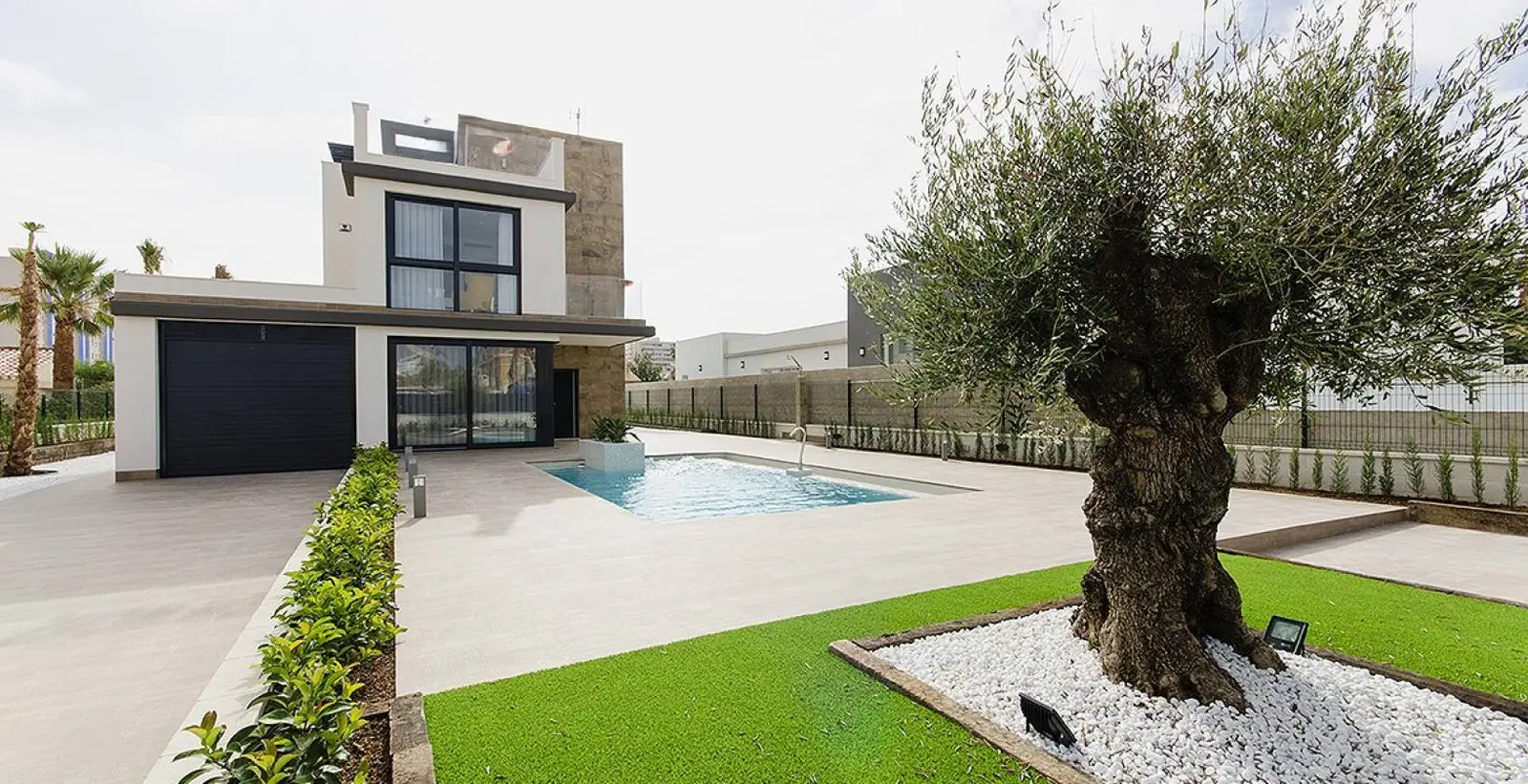
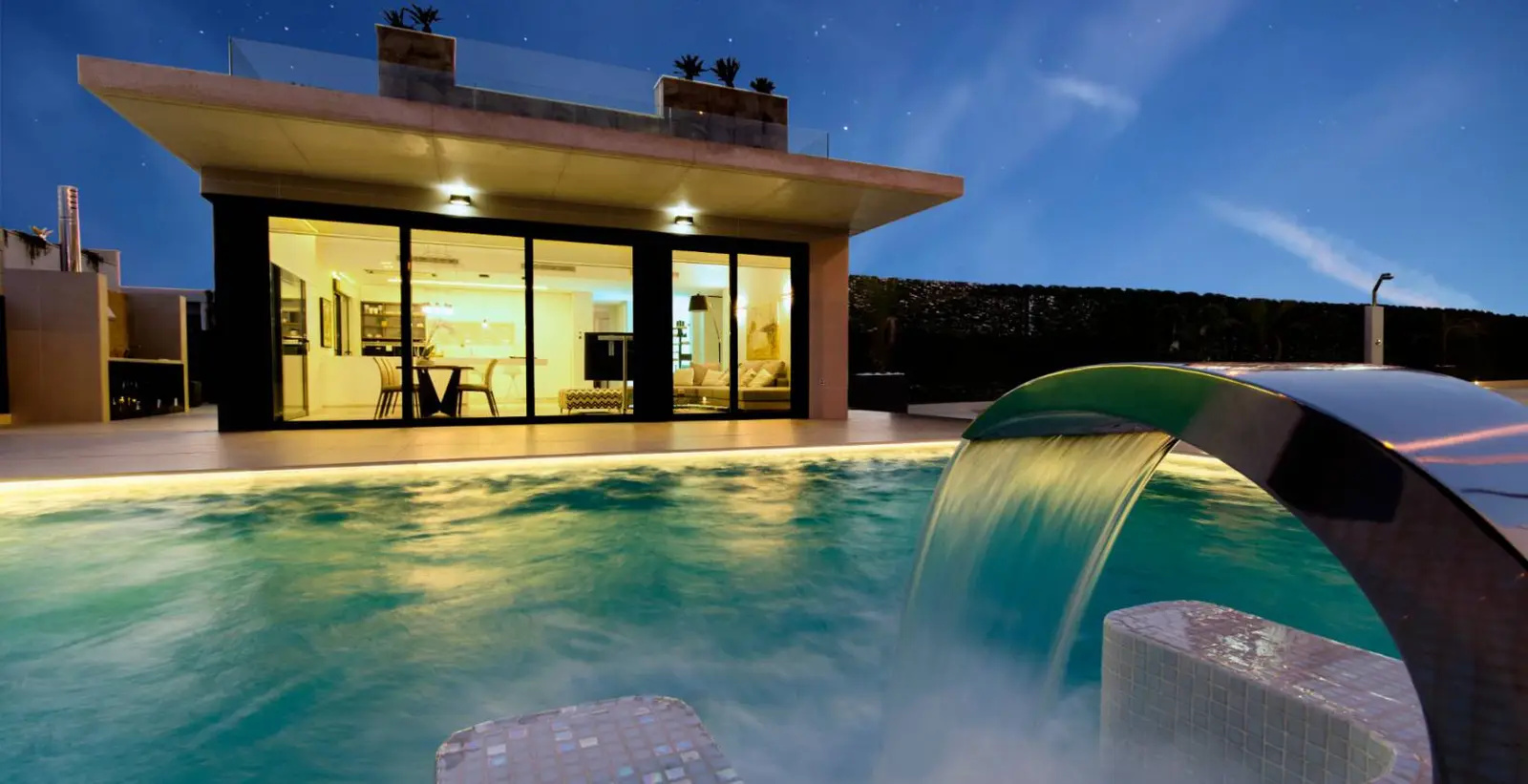
New-build projects in Dehesa de Campoamor
View all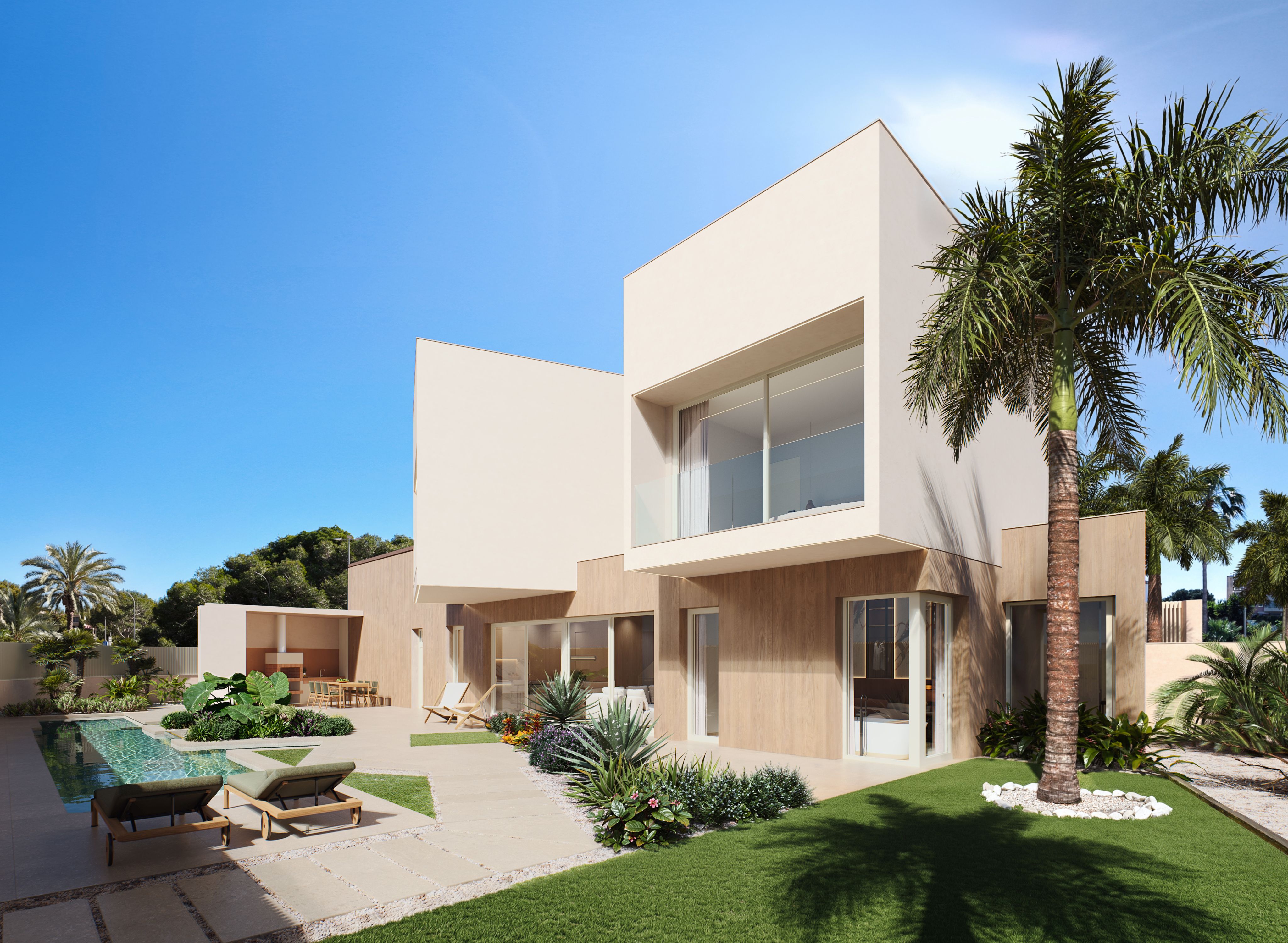
Frequently Asked Questions
What taxes do I pay when buying a new build in Dehesa de Campoamor?
↓
New-build buyers pay 10 % IVA on the purchase price plus Actos Jurídicos Documentados (AJD) stamp duty. Notary, Land Registry inscription and gestión fees add further costs. As a working estimate, allow 13 % to 15 % above the agreed purchase price for all taxes and closing costs on a new-build property in the Valencia Community.
Do I need an NIE number to buy property in Spain?
↓
Yes. Spain requires a Número de Identificación de Extranjero (NIE) for every financial transaction, including property purchases. You can apply at a Spanish consulate in your home country or in person at a Policía Nacional office. Allow two to four weeks if applying from abroad. No notary will proceed to escritura without a valid NIE.
How are stage payments protected on an off-plan new build?
↓
Spanish law requires developers to ring-fence buyer stage payments in a dedicated account or back them with a bank guarantee or insurance policy. If the developer fails to complete, buyers can recover their advance payments under these protections. Always obtain written confirmation of the guarantee before transferring any tranche.
Can non-residents get a mortgage to buy in Dehesa de Campoamor?
↓
Yes. Spanish banks lend to non-resident buyers, though the typical maximum loan-to-value is around 70 %, lower than the 80 % available to residents. Under the 2019 Ley de Crédito Inmobiliario, lenders must provide a binding FEIN mortgage offer at least ten days before signing, giving buyers a mandatory reflection period.
What is a licencia de primera ocupación and why does it matter?
↓
A licencia de primera ocupación (first habitation licence) is the certificate issued by the local authority confirming the building meets planning requirements and is fit for residential occupation. Without it, connecting utilities is difficult and mortgage draw-down is blocked. The notary verifies this document before proceeding to the deed of sale.
What price range should I expect for new builds in Dehesa de Campoamor?
↓
Based on veritySpain data covering seven projects in the area, new-build prices run from €995,000 to €3,600,000. This range reflects the upper segment of the Costa Blanca Sud market. Individual projects vary by plot size, specification and sea-view exposure.
How long does the buying process take for a new build in Spain?
↓
From reservation to key handover on a completed new build typically takes three to six months, assuming the NIE is obtained promptly and mortgage approval is pre-arranged. Off-plan purchases add the construction timeline on top. Allow extra time for Land Registry inscription after the deed is signed, which can take several weeks.