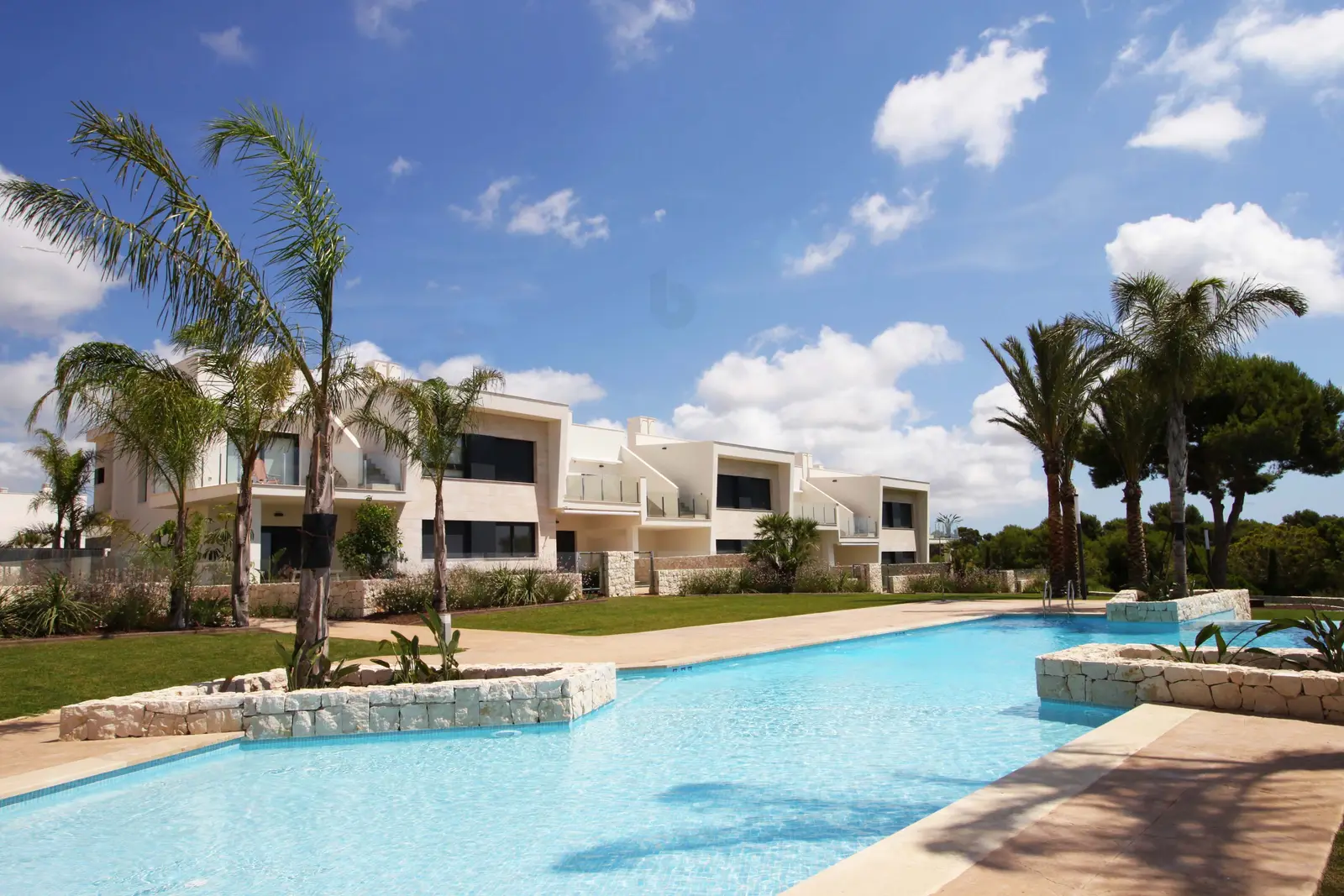
New build Pinar de Campoverde: step-by-step buying guide for international buyers. NIE, taxes, stage payments, notary and registration explained. Projects from €330k.
New build pinar de campoverde properties currently list between €330,000 and €845,000, and the three projects analysed by veritySpain carry an average score of 7.5 out of 10. That score reflects genuine quality: sound structural specifications, competent promoters, and locations within a recognised residential enclave in the Pilar de la Horadada municipality of Alicante province. For international buyers, the purchase process in this part of the Costa Blanca follows Spanish civil law and typically runs from six to eighteen months between reservation and key handover, depending on construction stage at the point of signing. Understanding each legal milestone in advance reduces surprises and cost. This guide walks through every formal step, from obtaining a Spanish tax identification number to registering the deed at the local land registry.
Before you sign anything: NIE, bank account, and legal representation
No property purchase in Spain is legally valid without a Número de Identificación de Extranjero, or NIE. This tax identification number is issued by the Spanish consulate in your home country or by a provincial police station in Spain, and the process typically takes several weeks when done abroad. Open it in parallel with your property search. A Spanish bank account is equally necessary: mortgage lenders, notaries, and the tax office all require payments in euros from a Spanish-domiciled account. Choose your lawyer before selecting a property. An independent Spanish solicitor, separate from any agent or developer, will conduct due diligence on the promoter's building licence (licencia de obras), confirm the property is free of encumbrances in the Registro de la Propiedad, and verify that the developer holds a bank guarantee or insurance policy protecting your stage payments under the Ley 57/1968 framework, which remains the key consumer protection for off-plan buyers in Spain.
Reservation contract and private purchase agreement
Reservation contracts typically require a payment of between €3,000 and €10,000 to take the unit off the market for a defined period, usually two to four weeks. This payment is refundable if due diligence uncovers a legal problem, but the conditions vary: read the clause carefully with your lawyer. The substantive legal document is the contrato de compraventa privado, the private purchase agreement. It sets out the agreed price, the payment schedule, the build specification, the delivery date, and the penalty regime if the developer misses the handover deadline. Stage payments beyond the reservation are typically structured as a deposit of around 10 percent at private contract signing, with the balance split across construction milestones and a final payment at notarial completion. Every stage payment above the reservation must be covered by an individual bank guarantee or collective insurance policy. Verify this with your solicitor before each transfer. Registradores de España data shows that off-plan sales in coastal Alicante represent a meaningful share of total residential transactions, which underlines how well-established this purchase format is in the region.
Taxes and purchase costs
Spanish new-build property attracts IVA (value added tax) at 10 percent, payable on the purchase price at notarial completion. This rate applies to residential properties under current legislation. In addition, buyers pay Actos Jurídicos Documentados (AJD), the stamp duty on the notarial deed, which varies by autonomous community. In the Valencian Community, where Pinar de Campoverde sits, this rate has historically been around 1.5 percent of the deed value. Notary fees and land registry fees together typically add around 0.5 to 1 percent of the purchase price. Budget approximately 12 to 13 percent of the purchase price for total acquisition costs on top of the agreed unit price. For a €330,000 property, that implies roughly €40,000 to €43,000 in taxes and fees. Mortgage costs, if applicable, include an arrangement fee and valuation. Non-resident buyers face annual wealth tax (Impuesto sobre el Patrimonio) obligations; a Spanish tax adviser should be engaged before completion.
Completion, handover, and registration
Completion takes place before a Spanish notary, the notario, who is a public official responsible for verifying the identity of parties, the legality of the transaction, and the contents of the escritura de compraventa, the public deed of sale. The notary is neutral; they do not represent either party. At completion, the buyer pays the outstanding balance, the IVA, and the AJD, and receives the keys and the signed deed. Within thirty working days the deed must be presented to the Registro de la Propiedad to formally transfer title. Until registration is complete you hold equitable title, not registered title, which matters for future mortgage or resale transactions. Your lawyer should manage this step on your behalf. The Certificado de Ocupación, or first occupancy licence, issued by the local ayuntamiento, is the document that confirms the property legally meets the approved specifications and may be inhabited. Confirm this certificate has been issued before accepting keys. Without it, utility companies in the Valencian Community will not connect water and electricity on permanent contracts.
Key takeaways
- Obtain your NIE and open a Spanish bank account before signing any contract to avoid delays.
- Appoint an independent solicitor to verify building licences, encumbrances, and bank guarantees on stage payments.
- New-build IVA in Spain is 10 percent; add roughly 2 to 3 percent for AJD, notary, and registry costs.
- Verify the Certificado de Ocupación before accepting keys or utility connections will be refused.
- The three projects in Pinar de Campoverde analysed by veritySpain average 7.5 out of 10, with prices from €330,000 to €845,000.
The market in numbers
New-build projects in Pinar de Campoverde
View all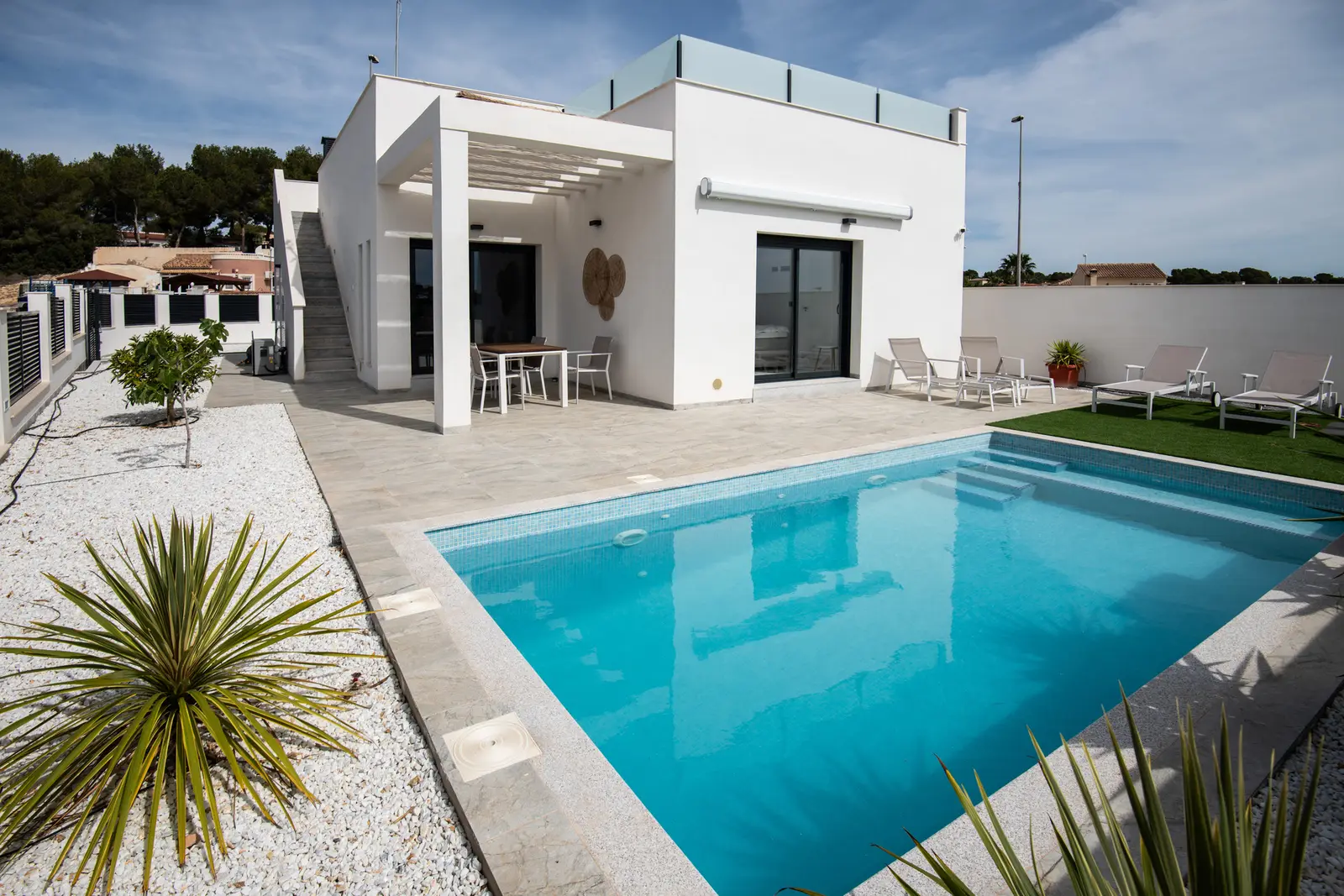

Frequently Asked Questions
How much does a new-build property in Pinar de Campoverde cost?
↓
Prices in Pinar de Campoverde currently range from €330,000 to €845,000 based on veritySpain's analysis of active new-build projects in the area. The price depends on unit size, plot, specification, and construction stage at the time of reservation. Off-plan units purchased early in the build cycle often carry a lower entry price than completed stock.
What taxes do I pay when buying a new-build in Spain?
↓
New-build residential properties in Spain attract IVA at 10 percent of the purchase price. Buyers also pay Actos Jurídicos Documentados stamp duty, which in the Valencian Community runs at around 1.5 percent. Adding notary and land registry fees, total acquisition costs typically sit between 12 and 13 percent on top of the agreed purchase price.
Do I need a NIE to buy property in Pinar de Campoverde?
↓
Yes. A Número de Identificación de Extranjero is legally required for every property transaction in Spain. Without it, no contract, tax payment, or mortgage can be processed. Non-residents should apply at the Spanish consulate in their home country well before signing any purchase agreement, as processing can take several weeks.
How long does buying a new-build off-plan take in Spain?
↓
Timelines vary from around six months for a nearly-complete development to eighteen months or more for an early-stage project. The private purchase agreement sets a contractual delivery date with penalty clauses if the developer misses it. Your solicitor should confirm the build programme and the enforceability of the penalty regime before you sign.
Are stage payments protected when buying off-plan in Spain?
↓
Stage payments beyond the initial reservation must be covered by a bank guarantee or insurance policy under Spanish consumer protection law. Each guarantee should be individual to your payments. Your solicitor must verify these documents before every transfer. If the developer fails to complete, the guarantees allow you to recover your payments plus statutory interest.
What is a Certificado de Ocupación and why does it matter?
↓
The Certificado de Ocupación is the first occupancy licence issued by the local ayuntamiento confirming that the finished property matches the approved building specifications. In the Valencian Community, utility companies require this document before connecting water and electricity on permanent supply contracts. Buyers should confirm it has been issued before accepting keys at completion.
Do I need a Spanish solicitor to buy property in Pinar de Campoverde?
↓
No law compels you to hire a solicitor, but doing so is strongly advisable. An independent Spanish lawyer will verify the building licence, check the land registry for encumbrances, confirm stage payment guarantees, review contract terms, and manage post-completion registration. Using a lawyer unconnected to the developer or selling agent removes a significant conflict of interest.