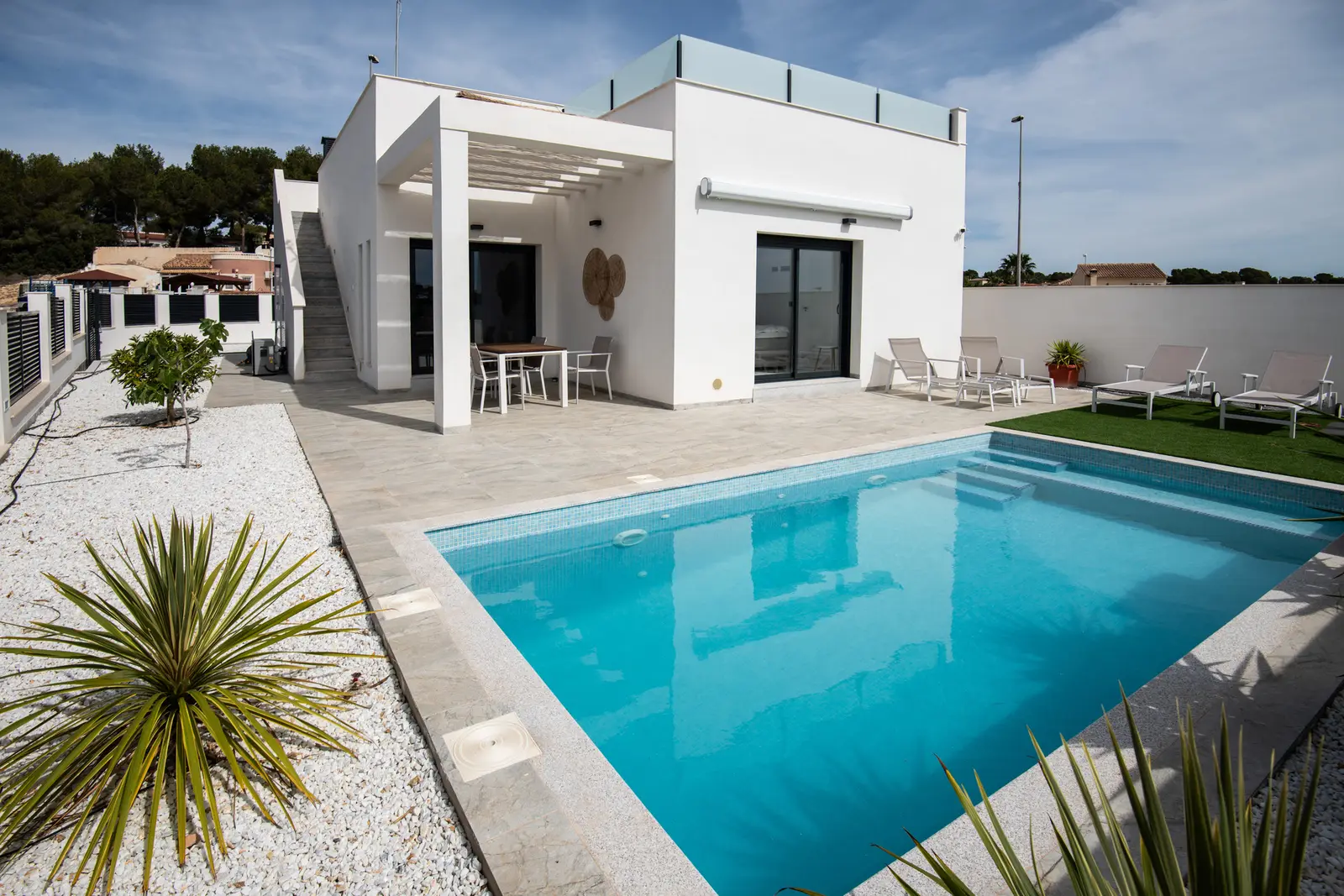
Living in Pinar de Campoverde as an expat: climate, healthcare, schools and costs analysed. veritySpain scores local projects at 7.5/10; prices from €330k.
Living in Pinar de Campoverde as an expat puts you in a low-density residential area on Alicante's Costa Blanca where veritySpain has analysed three local projects, scoring them at an average of 7.5 out of 10, and current residential prices run from €330,000 to €845,000. The urbanisation sits roughly 4 km inland from the coast near Pilar de la Horadada, in the far south of Alicante province. Altitude provides meaningful cooling relative to the shoreline: summer temperatures are still high, but afternoon sea breezes reach the hillside. Winters are mild, with frost rare at this latitude. That climate profile is a principal draw for northern European residents who want year-round outdoor activity without extreme summer heat forcing them inside.
Climate and day-to-day living
Annual sunshine hours in southern Alicante province exceed 300 days of recorded sunshine, a figure published in Spanish meteorological data. Summers are hot and dry; the shoulder months from October to May are the practical sweet spot for active outdoor life. Pinar de Campoverde is a pine-forested residential zone. Walking and cycling routes run through the surrounding countryside without the density of coastal resort areas. Grocery shopping is handled at large supermarkets in Pilar de la Horadada, roughly 10 minutes by car. Day-to-day costs for food and services are broadly in line with Spanish provincial norms, generally lower than the UK, Germany or Scandinavia for equivalent goods. Utilities are the variable to watch: air conditioning in July and August adds real weight to monthly bills.
Healthcare access
Two healthcare pathways apply to foreign residents. State coverage is available to residents who contribute to Spanish social security or, for EU citizens and qualifying retirees, via the S1 transfer route. The nearest public health centre (centro de salud) serving the area is in Pilar de la Horadada, with Hospital del Vinalopó in Elche and Hospital Universitario Santa Lucía in Cartagena reachable within 30 to 45 minutes by road for secondary-level care. Private health insurance premiums for expats in Spain typically run significantly lower than equivalent cover in northern European markets, which drives substantial demand. Spain's Sistema Nacional de Salud covers the full spectrum of acute care for qualifying residents; private insurers handle faster specialist access. Dental care sits almost entirely outside public coverage and is budgeted separately by most residents.
Schools and education
Three broad options cover families with school-age children: Spanish state schools, concertado (semi-private, state-funded) schools, and international schools. The nearest international provision is concentrated in the Torrevieja and Murcia corridors, accessible within 30 to 45 minutes from Pinar de Campoverde. A number of British-curriculum schools operate in that corridor, regulated under Spanish education law while delivering UK syllabi. Spanish state schools in Pilar de la Horadada are the most practical option for long-term residents integrating fully; immersion is fast. Families with younger children who expect to return to their home country often prioritise international provision despite the commute. INE municipal education data shows the area's demographic shift toward non-Spanish residents has been sustained over the past decade, which has supported stable enrolment at international providers nearby.
Expat community and social infrastructure
Pinar de Campoverde has a majority non-Spanish resident population, a characteristic that distinguishes it from inland Spanish towns of comparable size. British, German, Belgian and Scandinavian residents constitute the core groups, with a visible presence from the Netherlands. This concentration means English is widely spoken in commercial and social settings within the urbanisation. Social clubs, amateur sports organisations and informal community groups operate across the area; golf is the dominant organised sport, with several courses within 20 minutes' drive. The marina at San Pedro del Pinatar and the beaches of Playa de las Higuericas and Guardamar are within easy range for weekend use. Pilar de la Horadada hosts regular markets and seasonal festivals that provide practical integration points for residents who want engagement beyond the expat enclave. Remote working is now a significant factor: reliable fibre broadband has reached most of the urbanisation, supporting the shift toward location-independent professional residents.
Key takeaways
- veritySpain rates the area's analysed projects at 7.5/10; entry prices start at €330,000.
- Climate is the primary lifestyle driver: over 300 sunshine days per year with mild winters.
- Healthcare is available via the public Sistema Nacional de Salud or competitively priced private plans.
- International schooling is 30 to 45 minutes away; state schools in Pilar de la Horadada are closer.
- A large established expat community makes English-language daily life straightforward from arrival.
The market in numbers
New-build projects in Pinar de Campoverde
View all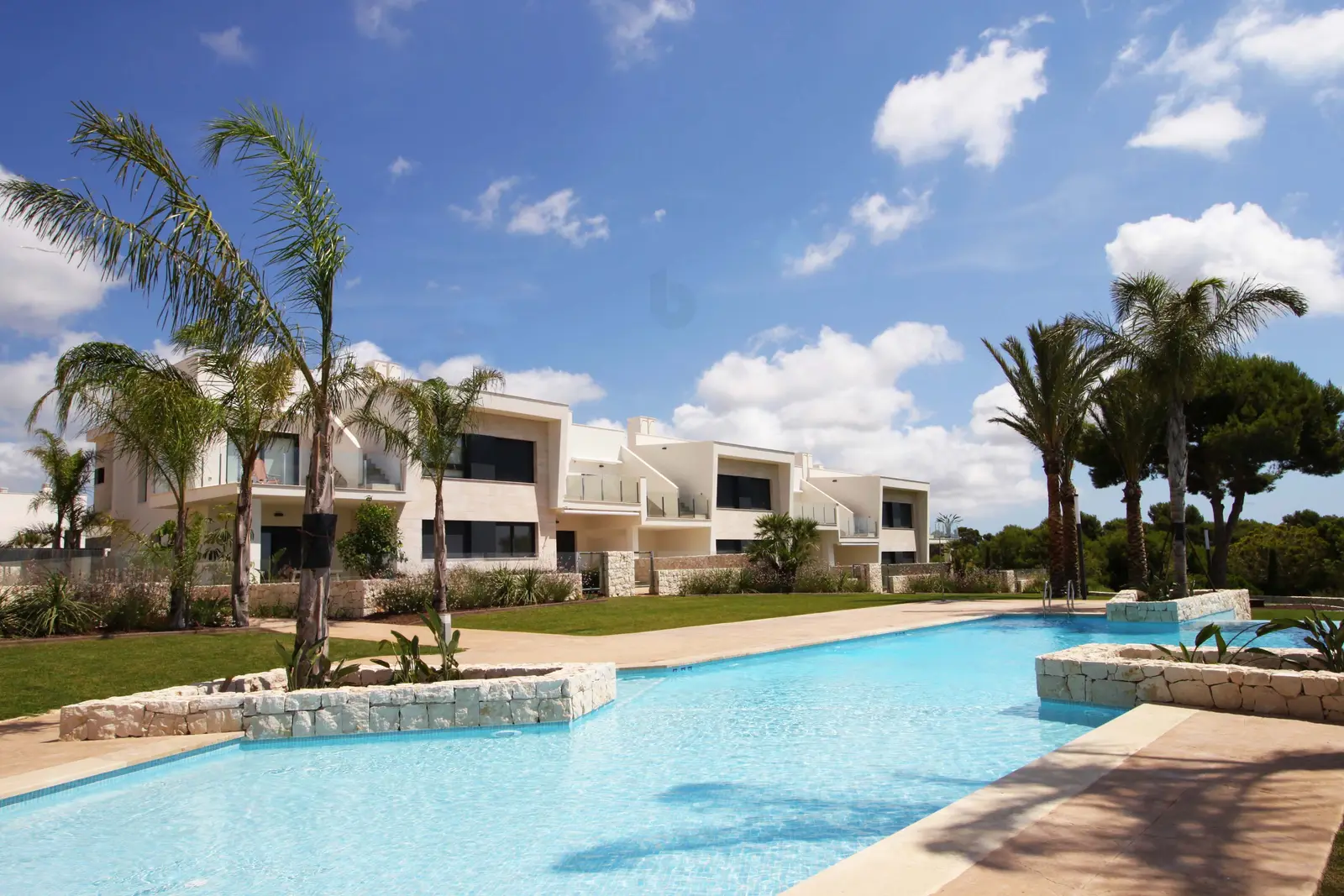
Frequently Asked Questions
What is daily life like for expats in Pinar de Campoverde?
↓
Daily life centres on a quiet, low-density residential environment roughly 4 km inland from the Costa Blanca. Most residents drive to Pilar de la Horadada for groceries and services. English is widely spoken within the urbanisation, and the established northern European community means social infrastructure is well developed. Climate is consistently warm, with mild winters and over 300 sunny days annually.
How much do properties cost in Pinar de Campoverde?
↓
Based on veritySpain feed data, current residential prices in Pinar de Campoverde run from €330,000 to €845,000. The area scores 7.5 out of 10 across the three projects veritySpain has analysed. Pricing reflects the low-density pine-forested setting and proximity to the coast rather than beachfront premium values.
What healthcare is available for foreign residents near Pinar de Campoverde?
↓
Residents can access Spain's public healthcare system via social security contributions or, for qualifying EU retirees, the S1 transfer route. The nearest centro de salud is in Pilar de la Horadada. Hospital-level care is 30 to 45 minutes away at facilities in Elche or Cartagena. Private health insurance is a widely used supplement, with premiums notably lower than in northern Europe.
Are there international schools near Pinar de Campoverde?
↓
British-curriculum and other international schools operate in the Torrevieja and Murcia corridors, typically 30 to 45 minutes by road. Spanish state schools in Pilar de la Horadada are the nearest option for full local integration. Families expecting to relocate back to their home country generally prioritise international provision despite the additional travel.
What nationalities make up the expat community in Pinar de Campoverde?
↓
The community is predominantly northern European: British, German, Belgian, Dutch and Scandinavian residents are the core groups. Non-Spanish residents make up a majority in the urbanisation. English is the practical lingua franca in most commercial and social settings. Several residents' associations and activity clubs serve the community across the broader Pilar de la Horadada area.
What is the cost of living in Pinar de Campoverde compared to northern Europe?
↓
Day-to-day costs for food, services and dining out are broadly lower than in the UK, Germany or Scandinavia for equivalent goods. Utilities are the main variable: air conditioning in summer months adds significantly to monthly bills. Private healthcare is a genuine saving relative to northern European equivalents. Property acquisition costs include Spanish transfer tax (ITP) on resale purchases.
Is Pinar de Campoverde a good place for remote workers?
↓
Fibre broadband has reached most of the urbanisation, making remote work practical. The area's low density, mild climate and proximity to beaches and golf courses make it a viable full-time base for location-independent professionals. Alicante airport is roughly 60 kilometres away, providing access to European destinations for those who travel periodically for work.