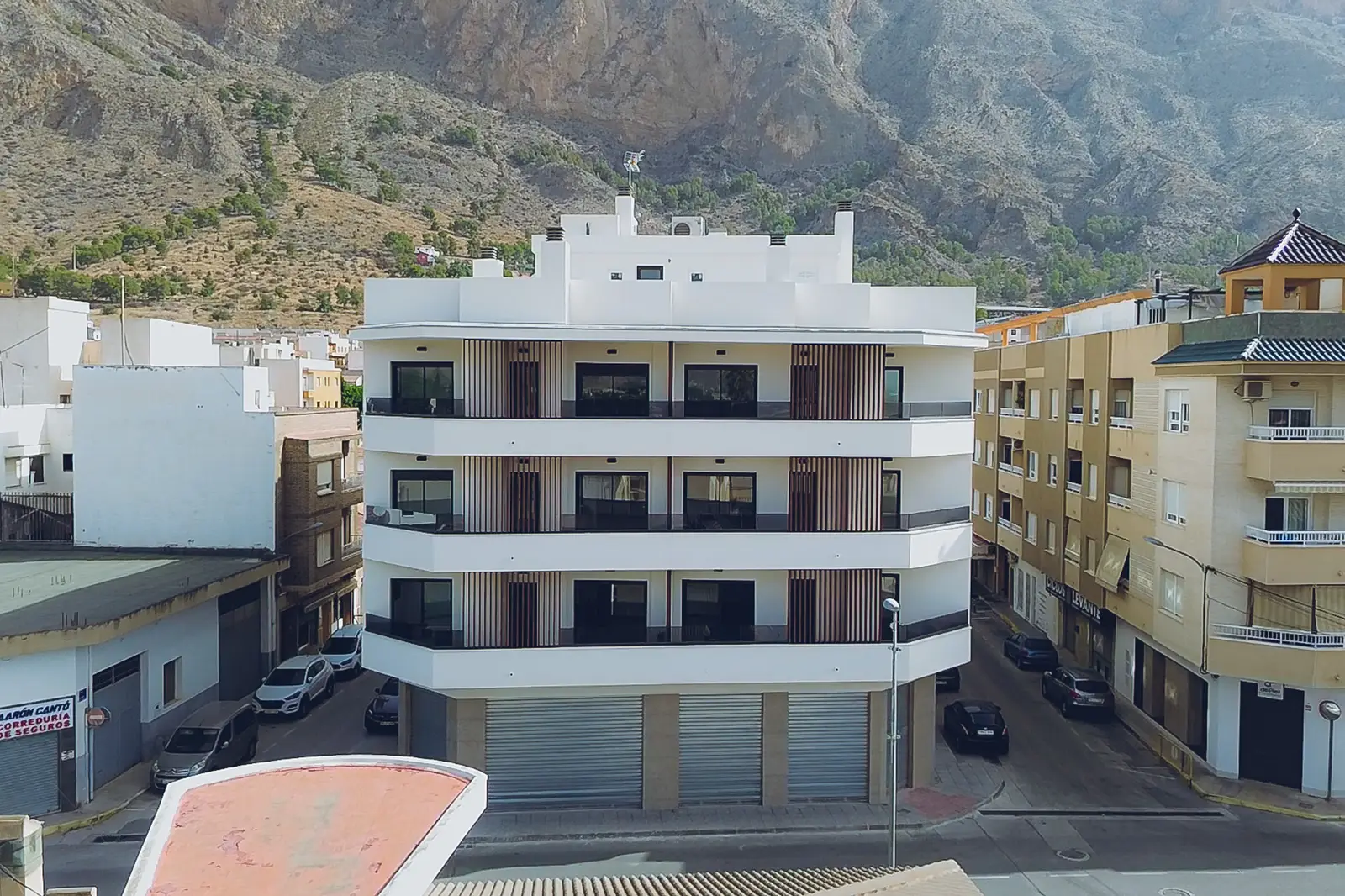
New build Redován: step-by-step guide for international buyers. NIE, contracts, taxes, mortgages and completion costs explained for the Costa Blanca interior.
New build redován stands at a single active project priced at €190,000, scored 7.4/10 by veritySpain's editorial team, making it one of the more compact markets on the Costa Blanca interior. For international buyers, that limited supply has a practical upside: the purchase process here follows the same legal framework as anywhere in Alicante province, so the steps are well-documented even if the local transaction volume is modest. Spain's buying timeline runs roughly three to six months from reservation to completion. Costs on top of the headline price typically add 10 to 13 percent depending on whether you buy new build (subject to IVA plus stamp duty) or resale (subject to ITP). Understanding which bucket your purchase falls into is the first decision point.
The reservation and NIE phase
€500 to €5,000 is the typical reservation deposit range for new-build properties in the Alicante region, held against the agreed purchase price. Before you sign anything, you need a Número de Identificación de Extranjero (NIE), Spain's tax identification number for non-residents. The NIE application is filed at a Spanish consulate abroad or at a National Police station (Comisaría) in Spain; processing can take two to four weeks at busy periods. Open a Spanish bank account in parallel. Direct debit mandates for community fees and utility supplies require a domestic account, and lenders financing a Spanish purchase generally insist on one too. The NIE and bank account are not optional steps. Complete them before you pay any deposit.
Preliminary contract and staged payments
10 percent of the purchase price is the standard deposit required under a contrato de arras penitenciales once both parties agree to proceed. Registradores de España records show this private contract is the backbone of most residential transactions: the buyer forfeits the deposit if they withdraw; the seller pays double if they pull out. For new-build purchases off-plan, the developer will instead offer a contrato de compraventa with a staged payment schedule linked to construction milestones. Spanish law (Ley 57/1968 and its successor regulation) requires developers to guarantee stage payments via a bank guarantee or insurance policy. Always verify the guarantee before transferring milestone funds. Your Spanish lawyer should check the developer's licences, planning permissions (licencia de obras), and the property's nota simple from the Registro de la Propiedad before you commit funds beyond the initial reservation.
Mortgages and financing
70 percent loan-to-value is the typical ceiling for non-resident buyers from Spanish lenders, compared with up to 80 percent for residents, as a general market convention noted by Banco de España guidance on mortgage regulation. That means a buyer targeting the €190,000 listing analysed by veritySpain would need at least €57,000 in liquid equity plus buying costs. Fixed-rate mortgages have become the dominant product in Spain since the Euribor volatility of 2022 to 2023; variable rates tied to Euribor remain available but carry repricing risk. Spanish banks require a full appraisal (tasación) by a Banco de España-registered valuation firm before issuing a mortgage offer. The notary must then issue a Ficha Europea de Información Normalizada (FEIN) and allow a ten-day reflection period before signing. That reflection window is mandatory under the 2019 mortgage law and cannot be waived.
Completion, taxes, and registration
On completion day, buyer and seller sign the escritura pública (deed of sale) before a Spanish notary. New-build purchases are subject to IVA at 10 percent (for residential property) plus Actos Jurídicos Documentados (AJD), the stamp duty levied by the Valencian Community; current AJD rates for new residential property in the Valencia region are published by the regional government and should be confirmed with your fiscal adviser at the time of purchase, as they can be revised. Add notary fees, land registry fees, and your lawyer's fee and the total acquisition cost above the purchase price is typically in the 11 to 13 percent range for new build. After signing, your lawyer registers the escritura at the Registro de la Propiedad, which legally establishes your ownership. Registration takes two to eight weeks in normal conditions. Redován's location in the Vega Baja del Segura comarca means the relevant land registry office is in Orihuela.
Key takeaways
- Obtain your NIE and open a Spanish bank account before signing any reservation contract.
- New-build buyers pay IVA at 10 percent plus AJD stamp duty, not ITP transfer tax.
- Stage payments on off-plan properties must be backed by a bank guarantee under Spanish law.
- Non-resident mortgage financing is typically capped at 70 percent LTV by Spanish lenders.
- Budget 11 to 13 percent above the purchase price for taxes, notary, and legal fees.
The market in numbers
New-build projects in Redován
View allFrequently Asked Questions
What taxes do I pay when buying a new build in Redován?
↓
New build purchases in Redován are subject to IVA at 10 percent on the purchase price plus Actos Jurídicos Documentados (AJD) stamp duty, levied at the Valencian Community rate. You do not pay ITP transfer tax, which applies only to resale properties. Total acquisition costs including notary and legal fees typically add 11 to 13 percent to the headline price.
How long does buying a property in Redován take?
↓
From reservation to completion, the typical timeline in Spain is three to six months for a new-build purchase. Off-plan projects take longer, tied to construction milestones. Getting your NIE and opening a Spanish bank account can each take two to four weeks, so start both before you make any payment.
Do I need a Spanish lawyer to buy property in Redován?
↓
You are not legally required to hire a lawyer, but it is strongly advisable for international buyers. An independent Spanish abogado checks the nota simple, verifies planning licences, confirms developer guarantees on stage payments, and reviews all contracts before signing. Legal fees typically run 1 to 1.5 percent of the purchase price.
Can I get a mortgage in Spain as a non-resident buyer?
↓
Yes. Spanish banks lend to non-residents, though the maximum loan-to-value is generally around 70 percent, compared with up to 80 percent for residents. You will need a Spanish bank account, a valid NIE, and a tasación (regulated appraisal) before the bank issues a formal mortgage offer. The 2019 mortgage law requires a mandatory ten-day reflection period before signing.
What is a contrato de arras and how does it protect me?
↓
A contrato de arras penitenciales is a preliminary private contract where the buyer pays a deposit, typically 10 percent of the agreed price. If the buyer withdraws, the deposit is forfeited. If the seller pulls out, they must pay the buyer double the deposit. It is a standard safeguard in Spanish residential transactions before the notarised deed is signed.
What is the NIE and why do I need it before buying?
↓
The Número de Identificación de Extranjero (NIE) is Spain's tax identification number for foreign nationals. You need it to sign any property contract, pay taxes, open a bank account, and set up utilities. Apply at a Spanish consulate in your home country or at a National Police station in Spain. Allow two to four weeks for processing.
Are stage payments on off-plan properties in Spain protected?
↓
Yes. Spanish law requires developers to protect buyer stage payments on off-plan properties through a bank guarantee or insurance policy. If the developer fails to complete, the buyer can claim a full refund of stage payments plus interest. Always ask your lawyer to verify the guarantee is in place and covers your payment tranches before transferring funds.