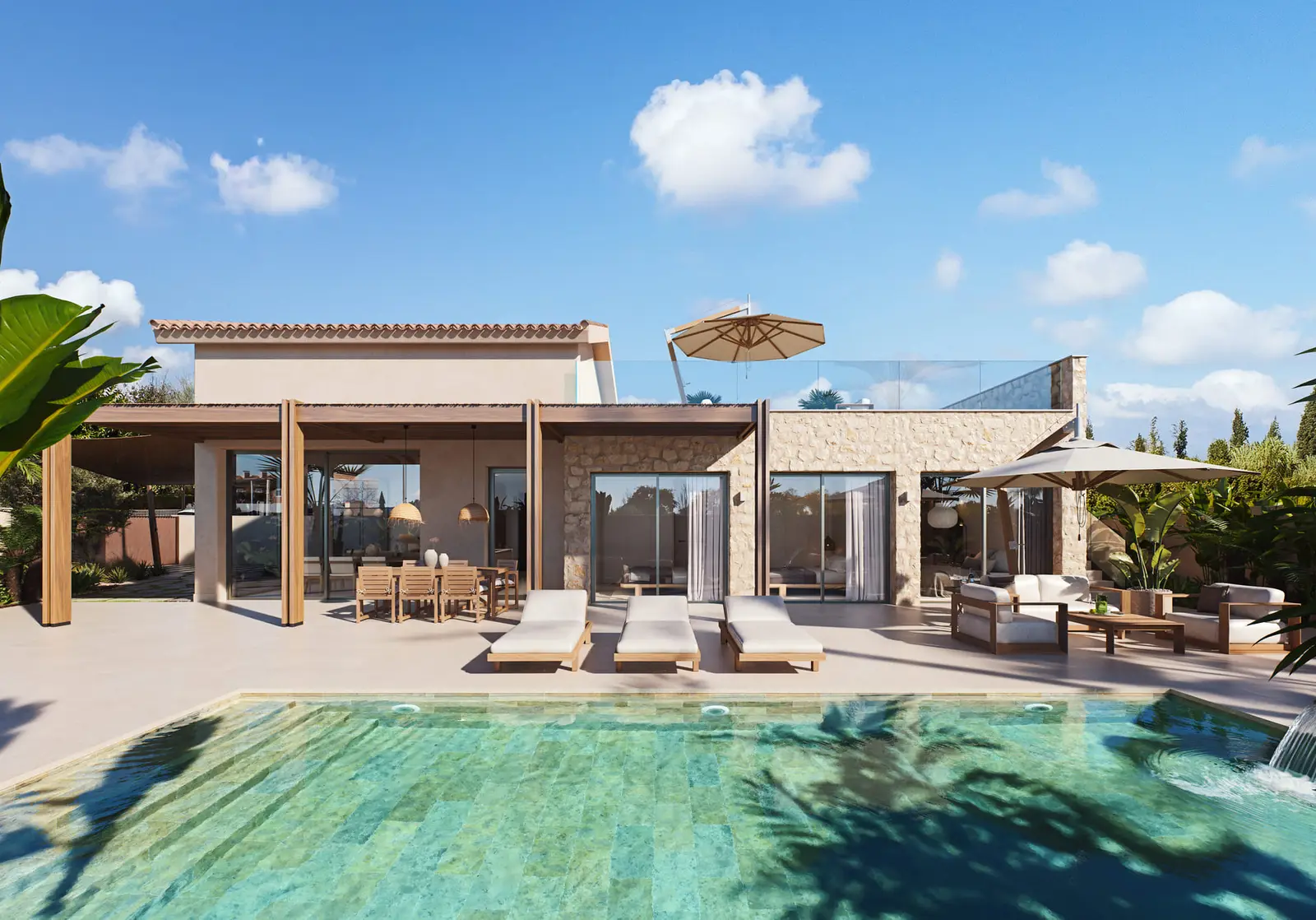
Living in Cabo de Palos as an expat means year-round sun, a genuine fishing-village pace and prices from €1.39 million. Key facts on climate, healthcare and daily life.
Living in Cabo de Palos as an expat brings daily life within a compact fishing village where veritySpain has assessed two residential projects, scoring an average of 7.3 out of 10, with asking prices ranging from €1,390,000 to €2,600,000 on the Costa Cálida shoreline. The village sits at the southeastern tip of the Mar Menor lagoon, giving residents access to two distinct water environments: the open Mediterranean to the east and the shallow, warm lagoon to the west. Healthcare, schools and community infrastructure are concentrated in nearby Cartagena, roughly 25 kilometres north. That proximity matters. Life here is genuinely local in character, not international in the way the Costa del Sol can be.
Climate and outdoor life
Cabo de Palos records more than 300 days of sunshine per year, placing it among the sunniest corners of mainland Spain, as documented in meteorological data from the Spanish state weather agency AEMET. Winters are mild: daytime temperatures rarely fall below 12°C, and frost is essentially absent at sea level. Summers are long and hot, often exceeding 35°C in July and August, though sea breezes along the cape moderate the heat in ways that inland Murcia does not experience. Short. That combination makes the cape a year-round destination rather than a seasonal one. Outdoor activity is the daily rhythm: walking the Calblanque regional nature park, diving at the marine reserve, or sailing from the small harbour define how residents spend leisure hours. The marine reserve at Cabo de Palos is one of the most biodiverse in the western Mediterranean, a designation that restricts development and, by extension, protects the character of the area.
Cost of living and daily practicalities
The cost of living in Cabo de Palos itself is low relative to the property values at the upper end of the market. Grocery prices in Murcia region track the national average or below, and eating at local restaurants in the village centre costs a fraction of comparable spots in Marbella or Ibiza. Fuel, utilities and local services are priced at standard Spanish rates with no tourist premium on everyday items. The village has a small selection of shops, a fish market, and a handful of bars and restaurants oriented toward local clientele rather than package tourism. For larger supermarkets, IKEA, or specialist services, residents drive to Cartagena or the commercial zones around Los Alcázares. INE regional data consistently places the Murcia region among Spain's lower-cost autonomous communities in terms of household expenditure, which is a practical advantage for expats living on foreign income or pensions. Banking and public administration are accessible in Cartagena, and the city has a well-regarded public hospital: the Hospital General Universitario Santa Lucía.
Healthcare and education
Healthcare access in the Cartagena catchment area is robust for a city of its scale. The Hospital General Universitario Santa Lucía, opened in 2011, provides a full range of specialist services and has emergency care available around the clock. Expats registered as residents in Murcia can access the Spanish public health system through the standard NIE and empadronamiento process. Private health insurance is widely available and used by many Northern European residents who prefer shorter waiting times for non-urgent procedures. Private premiums in Spain are considerably lower than equivalent cover in the UK, Germany or the Netherlands. For families with school-age children, the nearest international schools are in Murcia city, approximately 50 kilometres away, and in Alicante, roughly 100 kilometres north; most are English-medium and follow British or American curricula. Day trips are manageable, but boarding or relocation closer to Murcia city is worth factoring in for families with children in secondary education.
Expat communities and social life
Cabo de Palos has a small but stable foreign resident base, drawn primarily from Northern Europe, with British, German, Belgian and Dutch nationals most consistently present, according to municipal registration figures tracked by Registradores de España for the Murcia coastal belt. The community is quieter and less organised than the larger expat clusters around Torrevieja or Orihuela Costa in neighbouring Alicante province. That suits some residents and frustrates others. Social life tends to form around the marina, the dive clubs, and informal networks rather than formal expat associations. Spanish is more necessary here than in heavily anglicised resort towns; residents who engage with the language integrate faster and find the local community genuinely welcoming. The fishing heritage of the village persists in daily life: the morning fish auction at the lonja is open to observers, and local festivals including the Virgen del Carmen in July maintain a genuine civic character.
Key takeaways
- veritySpain has scored two Cabo de Palos projects at an average of 7.3 out of 10, with prices from €1.39 million.
- The cape's 300-plus sunshine days and dual sea access make outdoor life a defining feature of residency.
- Cartagena, 25 kilometres away, provides hospital care, international schooling links and full retail infrastructure.
- The Murcia region consistently records below-average household costs relative to coastal areas in Valencia or Andalusia.
- Expat community life is small and informal; functional Spanish is more necessary here than in larger resort towns.
The market in numbers
New-build projects in Cabo de Palos
View all
Frequently Asked Questions
Is Cabo de Palos a good place to live as an expat?
↓
Cabo de Palos suits expats who want a quiet, year-round coastal lifestyle rather than a busy resort scene. The village is small, Spanish in character, and surrounded by natural reserves. Healthcare and international schools require a drive to Cartagena or Murcia city. veritySpain rates the available residential projects at 7.3 out of 10 on average.
What is the cost of living in Cabo de Palos?
↓
Day-to-day costs in Cabo de Palos are low relative to coastal areas in Valencia or Andalusia. Groceries, restaurants and local services track Murcia regional averages, which INE data places among the more affordable in Spain. Property is at the premium end, with asking prices from around €1.39 million for the projects currently on the market.
How is healthcare for expats in Cabo de Palos?
↓
Healthcare is managed from Cartagena, roughly 25 kilometres away. The Hospital General Universitario Santa Lucía is a full-service regional hospital with 24-hour emergency care. Registered residents with NIE and empadronamiento can access the public system. Many Northern European expats also take out private health insurance, which is considerably cheaper in Spain than in their home countries.
Are there international schools near Cabo de Palos?
↓
International schools are in Murcia city, about 50 kilometres north, and in Alicante, about 100 kilometres away. Most offer English-medium curricula following British or American programmes. For daily commuting this is manageable for primary-age children; families with secondary-age children often consider relocating closer to Murcia city during term time.
What is the climate like in Cabo de Palos?
↓
Cabo de Palos records more than 300 sunshine days per year according to AEMET meteorological records. Winters are mild with daytime temperatures rarely below 12°C. Summers are hot, often above 35°C in July and August, though coastal breezes moderate conditions at the cape. The climate supports genuinely year-round outdoor living, including diving, sailing and walking.
How large is the expat community in Cabo de Palos?
↓
The expat community is small and informal, with British, German, Belgian and Dutch nationals most consistently present in municipal registration records. Social life centres on the marina, dive clubs and informal networks rather than organised expat associations. Functional Spanish is more important here than in heavily anglicised coastal towns such as Torrevieja.
What makes Cabo de Palos different from other Costa Cálida locations?
↓
Cabo de Palos sits at the entrance to the Mar Menor lagoon, giving residents access to both open Mediterranean and sheltered lagoon waters. A protected marine reserve surrounds the cape, restricting development and preserving the village's scale and character. That combination of dual-sea access and natural protection sets it apart from nearby resort towns on the Costa Cálida.