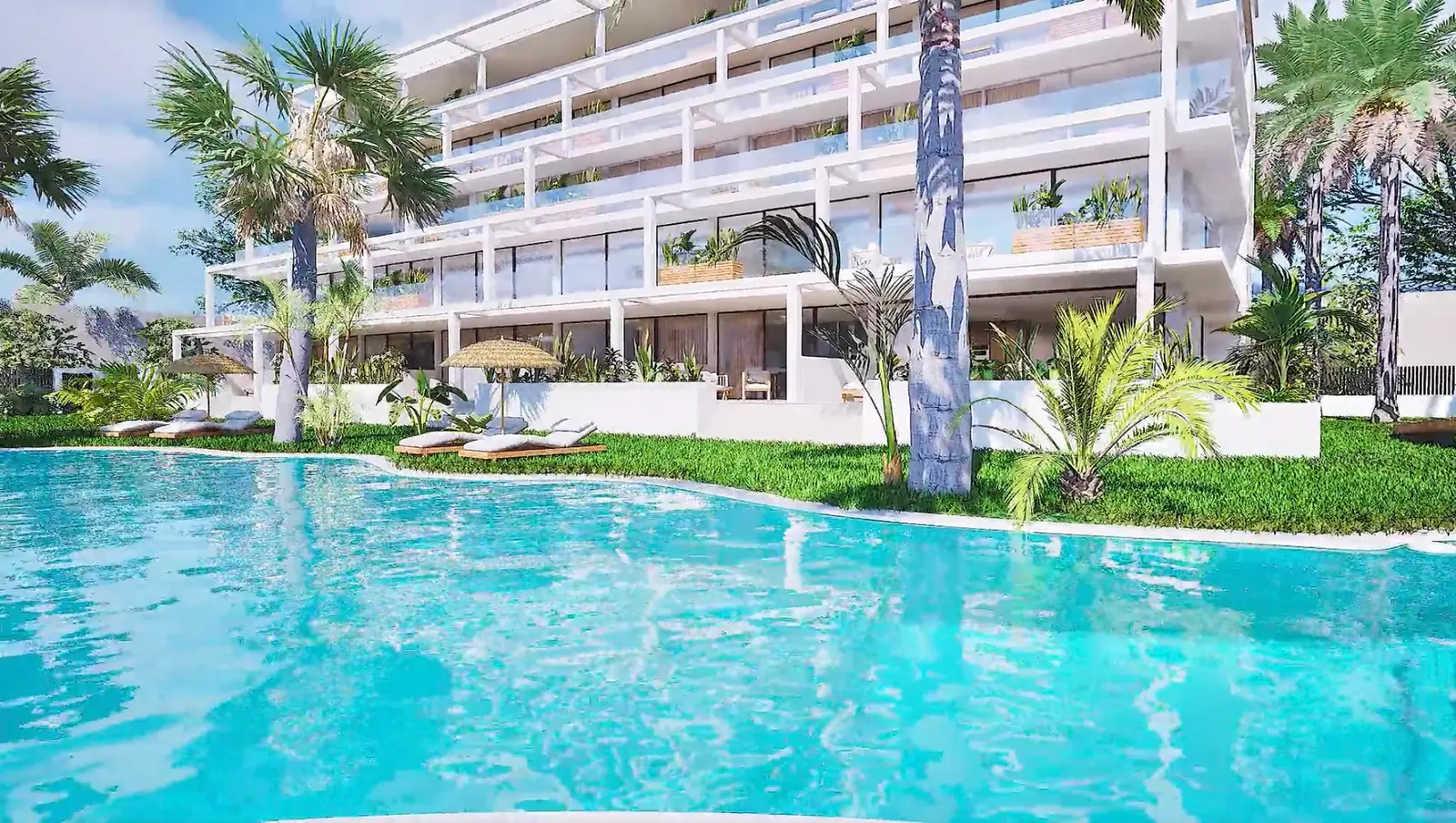
Living in Islas Menores as an expat: climate, cost of living, healthcare and community in this quiet Mar Menor waterfront area. veritySpain independent analysis.
Living in Islas Menores as an expat means entering a small lagoon-side community on the Costa Cálida where veritySpain has reviewed two residential projects, scoring them an average of 8.4/10, with prices running from €305,000 to €358,000. The area sits along the western shore of the Mar Menor, Murcia's enclosed salt-water lagoon, and that geography shapes everything about daily life here. Infrastructure is deliberately low-key. Roads, shops and medical services serve a resident population that has traditionally been Murcian rather than international, though that demographic is shifting steadily. Expats who arrive expecting a developed resort strip find instead a quieter waterfront edge that rewards patience and self-sufficiency. That contrast is neither a flaw nor a virtue: it is simply the honest condition of the place.
Climate and the outdoor calendar
Over 300 days of sunshine a year is the figure most commonly cited for the Murcia coast, and the data published by AEMET, Spain's national meteorological agency, broadly supports that reputation for this sub-region. Summers are long and dry, with July and August regularly exceeding 35°C inland; the Mar Menor itself acts as a heat sink, keeping coastal temperatures slightly lower at night. Winters are mild enough to encourage outdoor activity from October through April, which is the main reason northern Europeans choose the Costa Cálida over the Atlantic coast. Wind patterns matter here. The Levante blows in from the Mediterranean and can make the lagoon surface choppy for days at a time. Short. The Poniente arrives from the west and brings calmer conditions preferred by paddleboarders and kayakers who use the lagoon year-round. An expat calendar built around outdoor life is genuinely viable in Islas Menores for ten months of the year, with only July and August demanding some adjustment to early-morning or evening scheduling.
Cost of living and practical finances
Property acquisition costs in Spain follow a structure that applies equally in Murcia: resale purchases attract Impuesto de Transmisiones Patrimoniales (ITP) at the regional rate set by the Comunidad Autónoma de Murcia, while new builds attract IVA at 10% plus stamp duty (AJD). These are well-established legal facts, not variable estimates. Running costs in Islas Menores are lower than in the larger resort towns of the Costa Blanca or Marbella, largely because the commercial infrastructure is less developed and property taxes (IBI) reflect assessed cadastral values in a municipality that has not experienced the same reassessment pressure as Benidorm or Torrevieja. INE data on municipal cost indicators places interior and smaller coastal Murcia among the lower-cost zones in mainland Spain for day-to-day expenses. Supermarkets, utilities and local restaurants in the Mar Menor area price for a year-round resident market rather than a seasonal tourist one. That keeps weekly grocery and leisure costs noticeably below what an equivalent lifestyle costs in the larger resort clusters of Alicante province.
Healthcare and schools
Healthcare access for registered residents (empadronados) in Spain is provided through the national system, the Sistema Nacional de Salud. Registering on the municipal padrón in Torre-Pacheco or San Javier, the two nearest larger municipalities, gives access to a Centro de Salud for primary care. The main hospital serving this stretch of the Costa Cálida is Hospital Los Arcos del Mar Menor in San Javier, a public facility with an emergency department. Private health insurance is widely used by expats and is straightforward to obtain through Spanish or international providers; premiums are materially lower than in the UK or Germany for equivalent coverage. Schools in the immediate Islas Menores area are limited. The nearest international-curriculum options are in the Murcia capital and in the Cartagena catchment. Families with school-age children almost always factor in a longer daily commute or choose to integrate into the Spanish state-school system, which operates fully in Spanish and Valenciano is not a factor here as it is on the Costa Blanca.
Expat community and integration
Two active veritySpain-reviewed projects in Islas Menores signal a market that is early rather than saturated. The existing expat presence is smaller and less organised than in La Manga del Mar Menor to the east or in the larger urbanisations around Los Alcázares. That has practical consequences. Informal networks for tradespeople, administrative help and legal referrals are thinner on the ground; expats in the area frequently mention relying on online groups and Facebook communities for the kind of word-of-mouth infrastructure that older resort zones provide organically. veritySpain editorial review, 2025 notes that both reviewed projects are oriented toward owner-occupation rather than short-term rental, which tends to produce more stable, year-round communities rather than the seasonal turnover that hollows out some coastal urbanisations. Spanish-language ability matters more here than in heavier tourist zones. Basic conversational Spanish is sufficient for most practical tasks; the absence of a large hospitality sector means fewer English-speaking service workers than in Torrevieja or Fuengirola.
Key takeaways
- veritySpain reviewed two Islas Menores projects, averaging 8.4/10, with entry prices between €305,000 and €358,000.
- The Mar Menor microclimate supports genuine outdoor living for around ten months of the year.
- Running costs sit below those of more developed resort zones, reflecting the area's quieter, resident-focused character.
- Healthcare is accessible via the public Sistema Nacional de Salud after completing municipal registration (empadronamiento).
- The expat community is small and forming; basic Spanish and self-reliance matter more here than in larger resort towns.
The market in numbers
New-build projects in Islas Menores
View all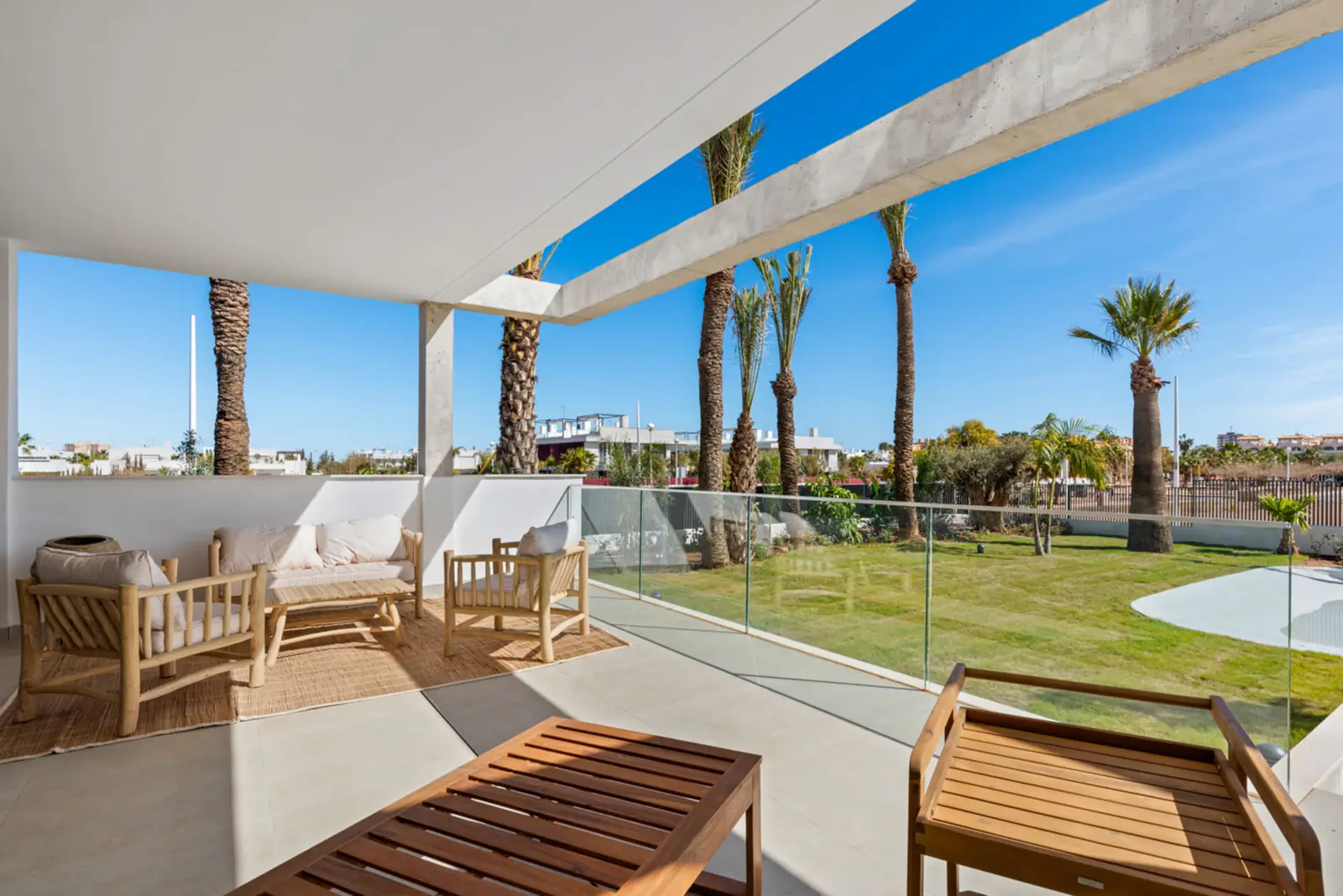
Frequently Asked Questions
What is daily life like for expats in Islas Menores?
↓
Daily life is quiet and resident-oriented rather than resort-style. The area sits on the Mar Menor lagoon, offering year-round outdoor activity. Commercial and social infrastructure is less developed than in larger Costa Cálida towns, so expats typically commute to San Javier or Torre-Pacheco for a wider range of shops and services. Some Spanish is genuinely useful here.
How much does property cost in Islas Menores?
↓
veritySpain's current data shows prices in the €305,000 to €358,000 range across the two reviewed projects. The market is small, so this range reflects a limited sample rather than a comprehensive market average. Acquisition costs follow standard Spanish rules: ITP on resales, IVA at 10% plus AJD on new builds.
Is healthcare easily accessible in Islas Menores?
↓
Registered residents access primary care through the Spanish national health system (Sistema Nacional de Salud) at a Centro de Salud in San Javier or Torre-Pacheco. Hospital Los Arcos del Mar Menor in San Javier provides emergency and specialist services. Private health insurance is widely used by expats and is cost-effective relative to northern European equivalents.
What is the climate like in Islas Menores?
↓
The Costa Cálida climate is characterised by long, dry summers and mild winters. AEMET records consistently show the Murcia coast among Spain's sunniest regions. July and August are hot, often exceeding 35°C; October through April is the most comfortable period for outdoor activity. The Mar Menor moderates overnight temperatures slightly compared to the inland Murcia plain.
Are there international schools near Islas Menores?
↓
International-curriculum schools are not located immediately in Islas Menores. The nearest options are in Murcia city and the Cartagena area, requiring a significant daily commute. Some families choose to integrate into the Spanish state-school system, which is fully Spanish-medium. This is an important practical consideration for families with school-age children before purchasing in the area.
Is Islas Menores a good place for expat community life?
↓
The expat community is smaller and less established than in Mar Menor towns such as Los Alcázares or La Manga. Online groups and informal networks are the main social infrastructure at present. Both veritySpain-reviewed projects are owner-occupied rather than rental-oriented, which supports a more stable year-round community rather than seasonal turnover.
What are the main practical challenges for expats moving to Islas Menores?
↓
The main practical challenges are limited local amenities, a thinner expat network than in larger resort areas, and the need for basic Spanish for everyday tasks. Families with school-age children face school commutes. The area rewards those seeking quiet waterfront living over convenience; self-reliance and willingness to integrate into Spanish daily life are assets here.