
Property investment in Mazarrón analysed: veritySpain scores 10 projects at 7.3/10, prices €105k–€340k. Rental dynamics, legal costs, and regional comparisons.
Property investment in Mazarrón draws growing attention from buyers across northern Europe, with veritySpain scoring 10 analysed projects at an average 7.3/10 and asking prices spanning €105,000 to €340,000 across the current market. That range puts Mazarrón well below Costa Blanca benchmarks, creating a meaningful price differential. The municipality sits on the Costa Cálida coastline in the Region of Murcia, roughly 50 kilometres south-west of Cartagena. Its port, marina, and two main beach areas attract a consistent year-round residential population alongside a seasonal visitor base. Buyers weighing entry cost against potential rental return find the lower price floor notable. Resale liquidity is shaped by the concentration of northern-European owner-occupiers, who tend to hold for the medium term rather than trade actively.
Price structure and what the data shows
The €105,000 to €340,000 price band, drawn from veritySpain's live feed, reflects a market structured around apartment stock near the coast and detached villas further inland. Entry-level units at the lower end are typically one-bedroom or studio apartments in established urbanisations, while the upper end captures two- and three-bedroom villas with private pools. veritySpain data shows a 7.3 average score across the 10 projects reviewed, indicating that most meet a quality threshold without reaching the premium tier. Price per square metre varies considerably between beachside and inland postcodes; buyers who conduct a systematic postcode-by-postcode comparison rather than relying on headline averages tend to identify better value. Supply in Mazarrón is not tight. New development continues at a measured pace, which moderates the kind of rapid appreciation seen in more constrained coastal markets.
Rental market dynamics and vacancy patterns
Tourism in Mazarrón concentrates in July and August, with a secondary shoulder season in June and September. That seasonal profile limits annualised rental income for short-let investors relative to markets with twelve-month demand. The Balearics or Costa del Sol command stronger year-round occupancy. Longer-term residential rentals to Spanish households provide more stable income, though asking rents in a municipality of Mazarrón's size are modest. INE 2025 publishes municipal population and household data that allows cross-referencing of rental stock against local household formation, though investors should verify current occupancy rates directly with managing agents rather than extrapolating from national averages. The key variable to monitor is the ratio of short-let properties to residential stock; oversupply in the holiday-let segment suppresses nightly rates and occupancy alike.
Comparable towns and positioning within the region
Mazarrón sits between Puerto de Mazarrón and the town centre. Nearby Águilas, roughly 30 kilometres to the south-west, offers a similar price profile and a larger port. Cartagena to the north-east has a growing urban rental market supported by university and naval-base employment. None of these alternatives erodes Mazarrón's appeal entirely; the municipality has its own established infrastructure, a functioning marina, and direct road access to Murcia–San Javier Airport. That airport serves low-cost carriers from the United Kingdom, Germany, and Scandinavia, sustaining the northern-European buyer pool that underpins resale demand. Regional competition matters: an investor deciding between Mazarrón and Torrevieja, for instance, should model both rental demand and resale liquidity before committing.
Legal and fiscal framework for foreign buyers
Spain requires non-EU buyers to obtain a NIE (Número de Identificación de Extranjero) before completing any property purchase. Transfer tax on resale property in the Region of Murcia is levied at a graduated rate under ITP (Impuesto de Transmisiones Patrimoniales); new-build purchases attract IVA instead. Both taxes are well-documented in Spanish conveyancing practice and should be factored into acquisition cost calculations from the outset. Annual holding costs include IBI (local property tax), community fees for urbanisation maintenance, and, for rental income, income tax obligations that differ for EU and non-EU residents. Registradores de España publishes data on property transaction volumes and ownership changes by municipality, providing context on market activity without requiring investors to rely on anecdotal figures from agents. Legal due diligence via an independent Spanish notary and solicitor remains standard practice.
Key takeaways
- veritySpain rates 10 Mazarrón projects at an average 7.3/10, with asking prices from €105,000 to €340,000.
- The price range sits below Costa Blanca comparables, offering a lower entry point for buyers monitoring cost-per-metre.
- Short-let rental demand is seasonal, concentrated in summer; year-round yield projections require careful occupancy modelling.
- Murcia–San Javier Airport's low-cost connections sustain the northern-European resale pool that drives secondary-market liquidity.
- Legal and fiscal costs, including ITP or IVA, NIE registration, and annual IBI, should be incorporated into total acquisition budgets from day one.
The market in numbers
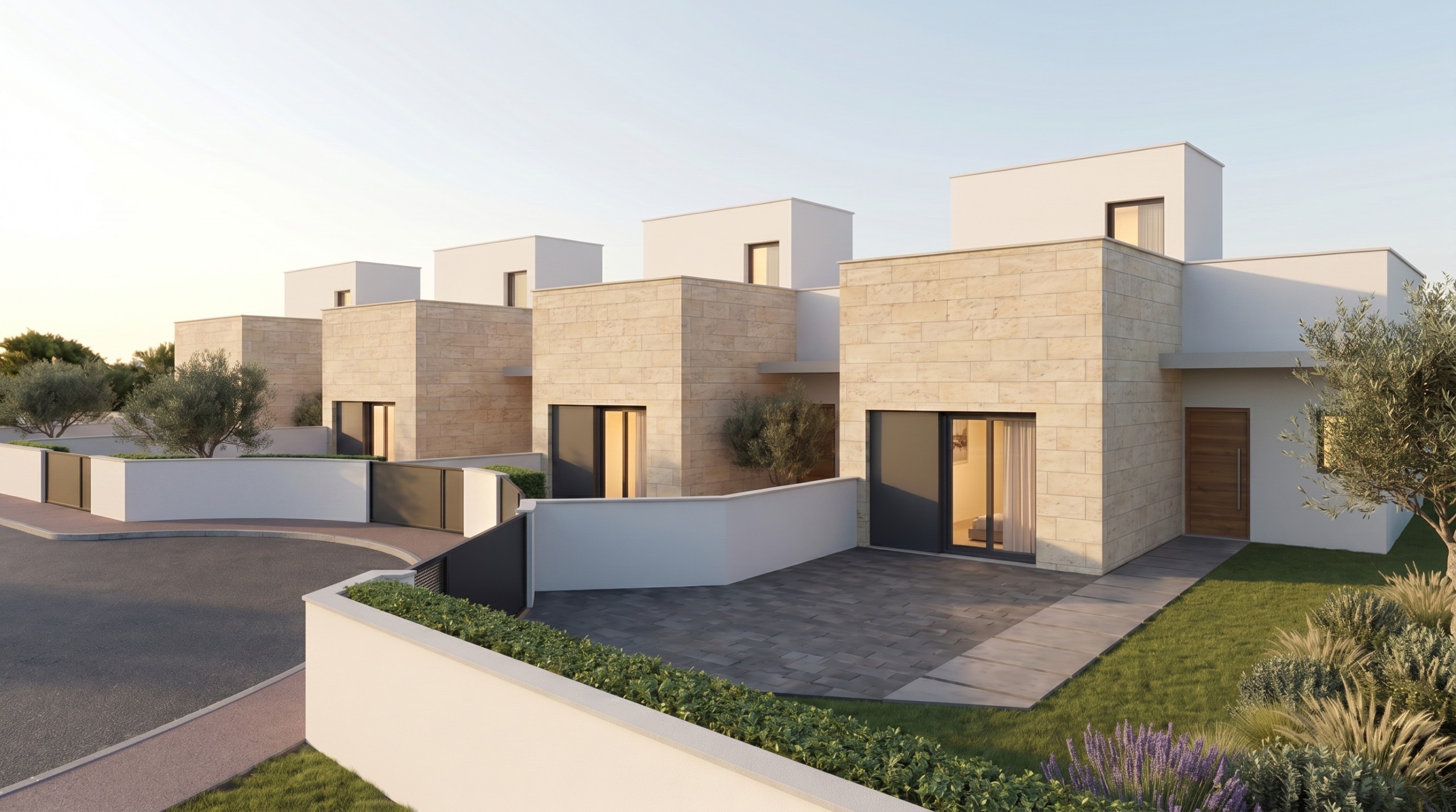
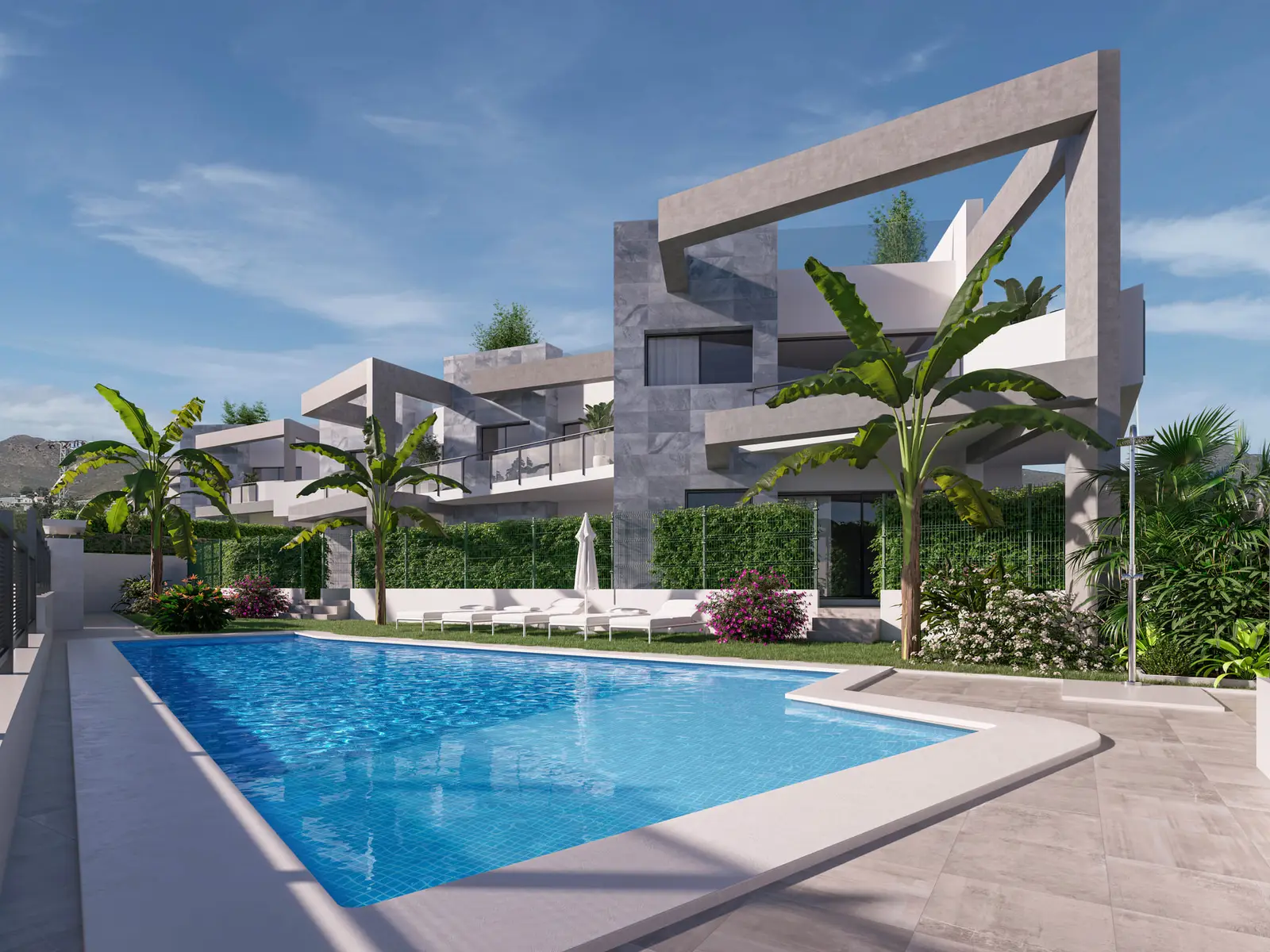
New-build projects in Mazarrón
View all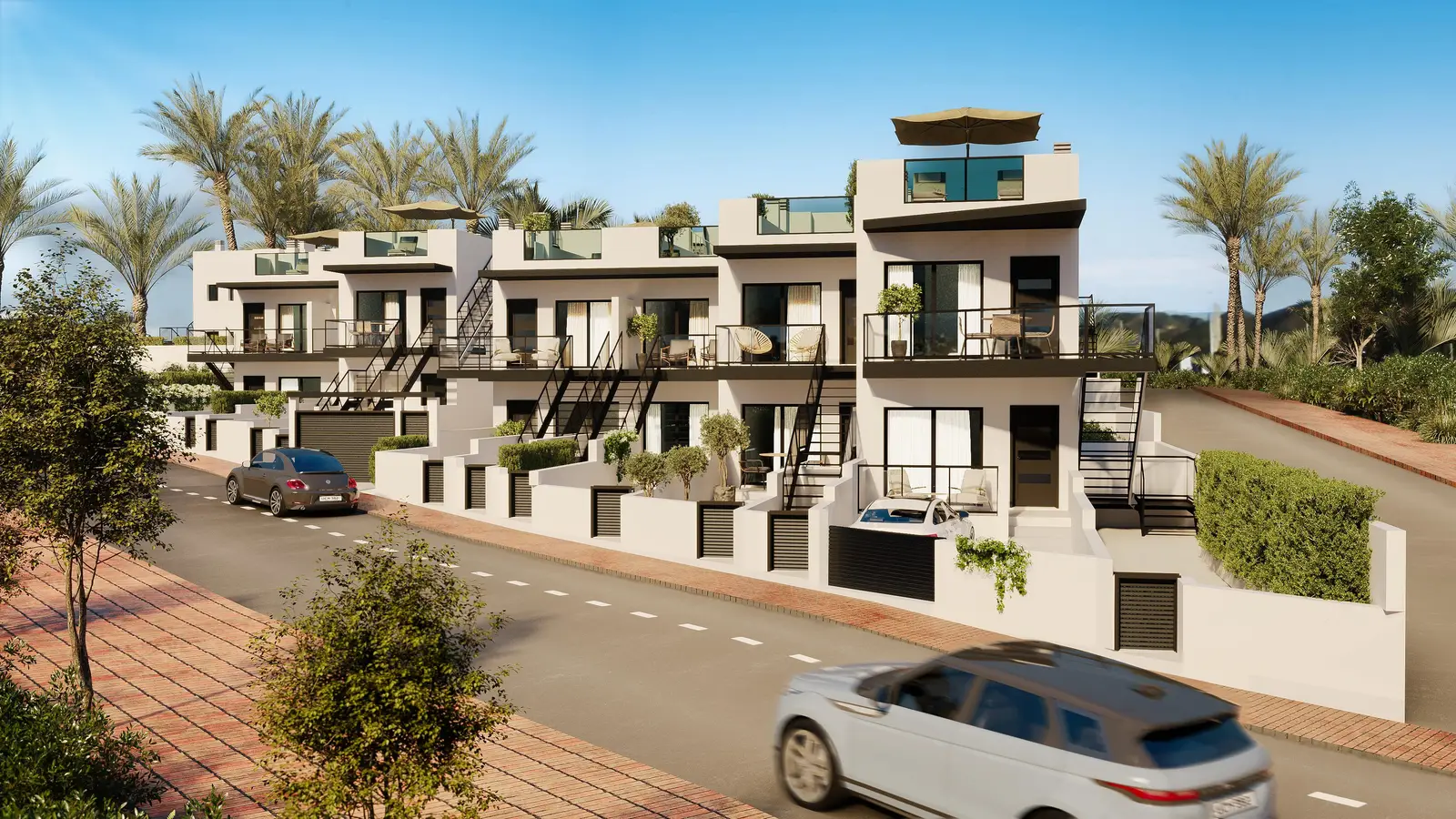
Frequently Asked Questions
Is Mazarrón a good place to invest in property?
↓
Mazarrón offers a relatively low entry price, with asking prices from €105,000 to €340,000 across the current market. veritySpain rates the analysed projects at a 7.3 average, suggesting solid quality without premium-market pricing. Buyers should weigh seasonal rental demand, resale liquidity driven by northern-European buyers, and ongoing supply from new development before committing.
What are typical property prices in Mazarrón?
↓
Based on veritySpain's live feed, current asking prices in Mazarrón range from €105,000 for smaller coastal apartments to €340,000 for villas with pools. Entry-level units tend to be one-bedroom apartments in established urbanisations, while the upper end reflects three-bedroom villas in more private settings inland or near the marina.
What rental yield can I expect from a Mazarrón property?
↓
Rental income in Mazarrón is highly seasonal, concentrated in July and August with some shoulder-season demand in June and September. Annualised yields depend heavily on occupancy modelling. Long-term residential lets offer more stability but at modest rent levels. Investors should request current occupancy data from local managing agents rather than applying national averages.
What taxes apply when buying property in Mazarrón?
↓
Resale property in Murcia attracts ITP (transfer tax) at a graduated rate. New-build purchases are subject to IVA instead. Additional costs include notary fees, land-registry charges, and solicitor fees. Annual holding costs cover IBI (local property tax) and community fees. Non-EU buyers also pay income tax on rental earnings at a different rate from EU residents.
How do I get a NIE as a foreign property buyer in Spain?
↓
A NIE (Número de Identificación de Extranjero) is required before completing any Spanish property purchase. EU citizens can apply at a Spanish consulate or the Foreigners' Office (Oficina de Extranjeros) in Spain. Non-EU citizens follow a similar process with additional documentation. Your Spanish solicitor can assist or apply on your behalf via power of attorney.
How does Mazarrón compare to other Costa Cálida towns for investment?
↓
Mazarrón sits in a mid-range position on the Costa Cálida. Águilas to the south-west offers a comparable price profile. Cartagena to the north-east has a larger urban rental market supported by university and naval employment. Murcia–San Javier Airport's low-cost routes sustain Mazarrón's northern-European buyer base, which supports resale liquidity relative to more remote coastal villages.
What is the resale market like in Mazarrón?
↓
Resale demand in Mazarrón is primarily driven by northern-European buyers from the UK, Germany, and Scandinavia, many of whom hold properties for the medium term. Liquidity is moderate rather than high. Transaction volumes published by sources such as Registradores de España provide context on activity trends. Buyers should factor in marketing timelines of several months when modelling an exit strategy.