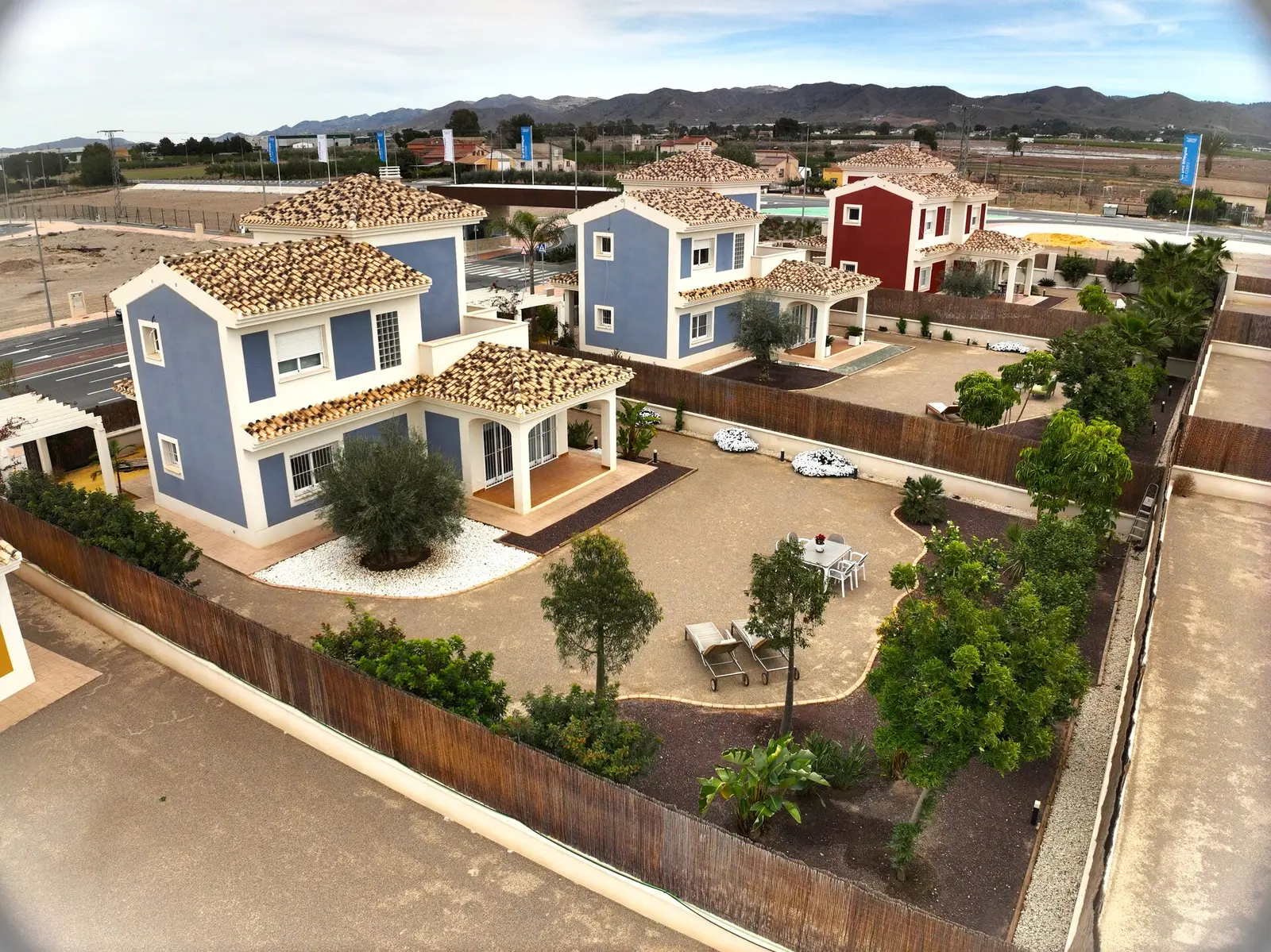
New build Purias: step-by-step guide for international buyers covering reservation, taxes, NIE, timelines and costs in Murcia's Costa Cálida hinterland.
Buying a new build in Purias puts you in a corner of inland Murcia where veritySpain has analysed one project, scoring it 7.2 out of 10, with pricing at €375,000. The municipality sits within the Costa Cálida hinterland, roughly 30 kilometres from the Mediterranean coast. International buyers are a growing share of property registrations across the Murcia region, a pattern documented in transaction data published by Registradores de España. The process from signing a reservation to collecting keys follows Spanish law uniformly, but a handful of Murcia-specific details, on rural land classification, notarial procedure, and tax rates, can catch foreign purchasers off guard. Understanding those details before you commit is the work this guide sets out to do.
Reservation and private purchase contract
A reservation contract fixes the property and typically requires a deposit of between 1 and 3 percent of the agreed price. That sum is non-refundable if the buyer withdraws without legal cause, so read the cancellation clauses before signing. Within a few weeks, both parties move to the contrato de arras or contrato privado de compraventa, where a further deposit, commonly 10 percent of the purchase price, changes hands. This stage is where the buyer's Spanish lawyer earns their fee: they check that the developer holds a valid building licence, confirm the property appears in the Registro de la Propiedad without encumbrances, and verify that the promotor's bank guarantee covers off-plan deposits. Murcia's notarial system is straightforward. The key is giving your lawyer enough time to carry out due diligence before you are pressed to sign.
Taxes and purchase costs
New-build purchases in Spain are subject to IVA (VAT) at 10 percent on the sale price, plus Impuesto sobre Actos Jurídicos Documentados (AJD), the stamp duty charged on notarised documents. AJD rates in Murcia are set by the regional government and are worth confirming with your fiscal adviser at the time of purchase, as they can change. On a property at €375,000, the IVA alone represents a material sum, and buyers should model the full acquisition cost, including notary fees, land registry fees, and lawyer costs, before deciding how much of their budget to allocate to the purchase price. Banco de España guidance on mortgage conditions for non-residents is publicly available and worth reviewing if financing is part of your structure. Total acquisition costs for a new build typically land in the range of 12 to 14 percent on top of the agreed price, though the precise figure depends on the AJD rate in force.
Timelines and key milestones
Off-plan new builds in Spain generally take between 18 and 36 months from licence issue to handover, though Purias, as a smaller market, may see shorter development cycles for single-phase projects. The developer is required by law to provide a projected completion date in the contract; delays are common in Spanish construction and the contract should specify remedies. At practical completion, the developer issues a certificate of habitation (licencia de primera ocupación or equivalente). Only after that certificate is issued should the buyer proceed to final notarial deed. The notarial signing, known as escritura pública de compraventa, is the moment legal title formally transfers. Budget several hours for the notary appointment and bring valid identification. Registration of the deed at the Registro de la Propiedad follows, typically within a few weeks of signing.
Financing and NIE requirements
Non-resident buyers need a Número de Identificación de Extranjero (NIE) before they can sign any Spanish property deed. The NIE application can be made at a Spanish consulate in the buyer's home country or at a Policía Nacional station in Spain; processing times vary, so apply early in the process. Spanish banks offer mortgages to non-residents, typically at lower loan-to-value ratios than for residents. An independent mortgage broker with experience in Murcia can be useful here, as product availability and documentation requirements differ by lender. Currency risk is relevant for buyers earning in sterling or another non-euro currency: the exchange rate between reservation and completion can materially affect the euro-denominated cost. Some buyers use a currency specialist rather than a retail bank to manage this exposure. All of these preparations are manageable with lead time.
Key takeaways
- The one veritySpain-analysed project in Purias scores 7.2 out of 10, with a price point of €375,000.
- Budget 12 to 14 percent on top of the purchase price for IVA, AJD, notary, registry, and legal fees.
- Obtain your NIE number early; it is required before any Spanish property deed can be signed.
- Your lawyer must verify the developer's bank guarantee covers off-plan deposits before you pay the 10 percent arras.
- Final deed signing should happen only after the developer holds a valid certificate of habitation for the property.
- Currency fluctuation between reservation and completion can affect real cost for non-euro buyers; plan accordingly.
- Transaction data from Registradores de España shows consistent activity in the wider Murcia region, though Purias itself is a small and emerging market.
The market in numbers
New-build projects in Purias
View all
Frequently Asked Questions
What taxes do I pay when buying a new build in Purias?
↓
New-build purchases in Purias are subject to IVA (VAT) at 10 percent of the sale price, plus AJD stamp duty at the Murcia regional rate. Add notary fees, land registry fees, and legal costs and the total acquisition overhead typically runs to 12 to 14 percent on top of the agreed purchase price.
Do I need an NIE number to buy property in Purias?
↓
Yes. A Número de Identificación de Extranjero (NIE) is mandatory before you can sign a Spanish property deed. You can apply at a Spanish consulate in your home country or at a Policía Nacional office in Spain. Apply early in the buying process, as processing times can take several weeks.
How long does it take to buy a new build in Purias from reservation to keys?
↓
Off-plan new builds in Spain generally take 18 to 36 months from building licence to completion. Smaller projects in a market like Purias may complete faster. The process from reservation to final notarial deed, once the property is ready, typically takes one to three months depending on mortgage and legal preparation.
What is the typical price of a new build property in Purias?
↓
Based on veritySpain data from the one analysed project in Purias, the price point is €375,000. The municipality is a small market with limited supply, so pricing reflects the specific project under analysis rather than a broad market average.
Is a bank guarantee required for off-plan purchases in Purias?
↓
Yes. Spanish law requires developers selling off-plan to hold a bank guarantee or insurance policy covering buyer deposits until the certificate of habitation is issued. Your lawyer should verify this guarantee exists and names you as a beneficiary before you pay any deposit beyond the initial reservation fee.
Can non-residents get a mortgage to buy in Purias?
↓
Spanish banks lend to non-residents, though loan-to-value ratios are typically lower than for Spanish residents. Documentation requirements vary by lender. An independent mortgage broker with experience in Murcia can help identify lenders active in the region and compare product terms efficiently.
What is the contrato de arras and why does it matter?
↓
The contrato de arras is the private purchase contract signed after the initial reservation, at which point the buyer typically pays 10 percent of the purchase price. If the buyer withdraws without legal grounds, this deposit is forfeited. If the seller withdraws, they must return double the amount. It is a binding commitment, so thorough legal due diligence must happen before signing.