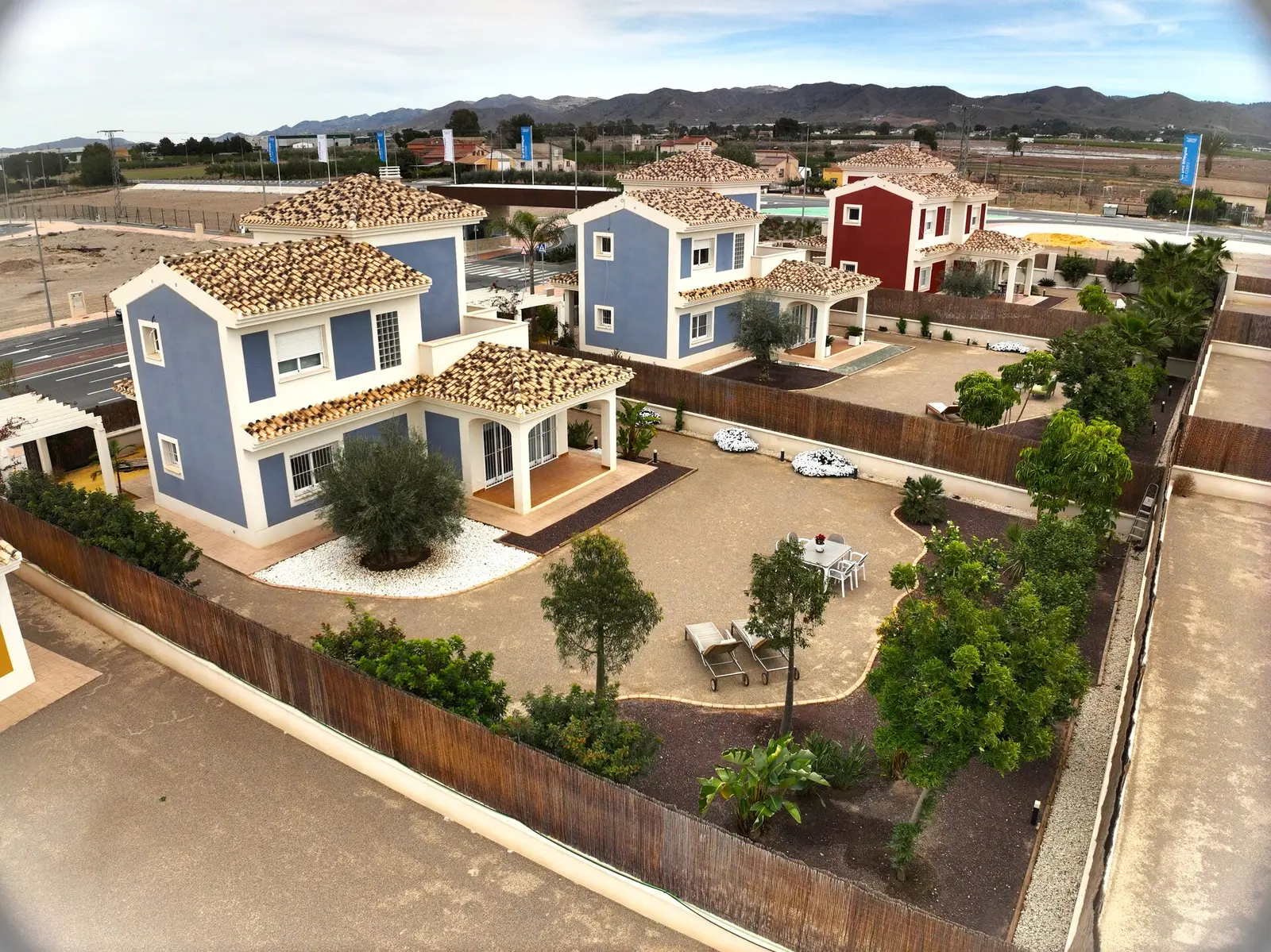
Living in Purias as an expat means a quiet inland Murcia lifestyle, 300+ sunshine days, and one veritySpain-rated project at €375,000. Here is what to expect.
Living in Purias as an expat puts you in a small agricultural municipality in the Lorca comarca of Murcia, where veritySpain has analysed one residential project and assigned it a score of 7.2/10, with asking prices at €375,000. Purias sits roughly 15 kilometres inland from the Costa Cálida coast, at an elevation that keeps summer heat a degree or two below the shore. The settlement is compact. Fewer than 2,000 residents call the pedanía home, which means daily life moves at a pace that suits people who have deliberately chosen to leave larger towns behind.
Climate and the rhythm of daily life
Murcia records more than 300 days of sunshine per year according to AEMET, the Spanish national meteorological agency. Purias sits within that same weather envelope, though its inland position produces cooler nights and occasional winter frost on the surrounding citrus groves. Summers are dry and warm rather than humid. That distinction matters: a working week spent outdoors is comfortable for much of the year. Rain falls mostly between October and March. Short winters mean outdoor markets, terraza culture, and walking routes through almond and lemon orchards are accessible year-round. Life here has a visible agricultural backbone. Harvest seasons punctuate the calendar. That is not a drawback; for expats seeking a grounded routine rather than a resort lifestyle, it is one of the main draws.
Cost of living and practical finances
Purias is not a benchmark municipality in the data published by INE (Instituto Nacional de Estadística), so broad cost-of-living indexes do not break out at this pedanía level. What the broader Murcia region does show, consistently in regional surveys, is that grocery prices, local services, and utility costs sit below the Madrid or Barcelona average. A household in rural Murcia can live meaningfully below the national urban average on most day-to-day categories. The one outlier is property: the €375,000 price point tracked by veritySpain reflects a higher-specification project likely targeting international buyers, not a floor-level rural price. Resale stock and older village homes exist at considerably lower entry points. Tax obligations follow standard Spanish rules: ITP (property transfer tax) applies on resale purchases, typically 8 percent in Murcia; IVA applies on new builds. An independent gestor in Lorca city can handle residency paperwork, annual tax filings, and NIE applications.
Healthcare and schools
The nearest hospital with a full emergency department is Hospital Rafael Méndez in Lorca, approximately 15 kilometres from Purias. Servicio Murciano de Salud (SMS) operates local health centres (centros de salud) throughout the comarca, and Purias residents register at the nearest assigned centro. Waiting times in rural Murcia are generally shorter than in major cities. Private health insurance is common among expats and costs significantly less than comparable UK or northern European premiums. For families with children, state schooling in the comarca is delivered in Spanish, with no English-medium public provision at the primary level. A small number of private and semi-private schools operate in Lorca city. Expat families who have chosen Purias tend to be either retired, or working remotely with older or home-educated children.
Expat community and social life
Purias does not have a structured expat association, but the wider Lorca area has a long-established international community, with British, German, and Scandinavian residents in particular concentrated in the surrounding villages. Local town hall (Ayuntamiento de Lorca) notices are published in Spanish, which makes conversational Spanish a practical necessity rather than a courtesy here. Internet connectivity has improved substantially across rural Murcia following regional infrastructure programmes. Fibre is available in Purias. Remote workers are present. The social scene is low-key: a few local bars, a weekend market in Lorca, and a calendar of fiestas tied to the agricultural and religious year. People who describe Purias positively consistently mention the same thing: they can concentrate. The absence of tourist infrastructure is the feature, not the gap.
Key takeaways
- veritySpain rates the one analysed project at 7.2/10 with a price point of €375,000.
- AEMET data confirms over 300 sunshine days per year in the Murcia region covering Purias.
- Healthcare is covered by Servicio Murciano de Salud; Hospital Rafael Méndez in Lorca handles emergencies.
- Cost of living in rural Murcia runs below the national urban average across most everyday categories.
- Conversational Spanish is a practical necessity; no English-medium public schooling exists at the local level.
The market in numbers
New-build projects in Purias
View all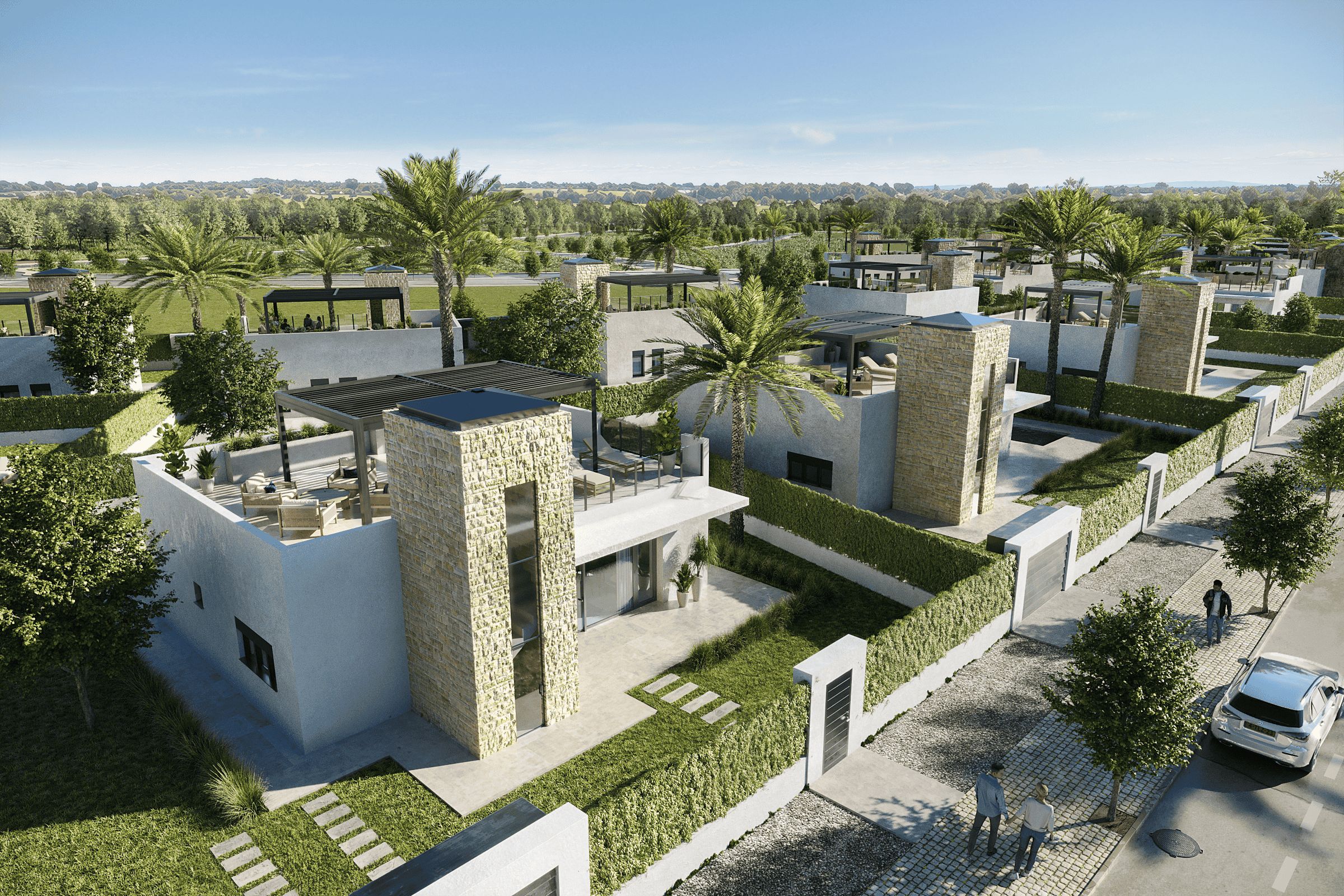
Frequently Asked Questions
Is Purias a good place to live as an expat?
↓
Purias suits expats who want a quiet, rural lifestyle in Murcia rather than a coastal resort. It has reliable sunshine, low day-to-day costs compared with Spanish cities, and access to Lorca for services. The trade-off is limited English-language infrastructure and a need for conversational Spanish in everyday life.
What is the cost of living in Purias, Spain?
↓
Purias is a small pedanía without its own cost-of-living index, but the broader Murcia region consistently records living costs below the national urban average for groceries, services, and utilities. Property prices vary widely; one project analysed by veritySpain is priced at €375,000, though older resale stock exists at lower levels.
What healthcare is available in Purias?
↓
Purias residents register with the Servicio Murciano de Salud and access a local centro de salud for routine care. The nearest full hospital is Hospital Rafael Méndez in Lorca, around 15 kilometres away. Many expats supplement state cover with private health insurance, which is notably affordable in Murcia compared with northern Europe.
How is the weather in Purias, Murcia?
↓
Purias sits inland from the Costa Cálida at moderate elevation, giving it more than 300 sunshine days per year as recorded across the Murcia region by AEMET. Summers are dry and warm, winters mild with occasional frost. The inland position makes nights cooler than coastal areas and keeps humidity lower through July and August.
Are there English-speaking schools near Purias?
↓
There are no English-medium state schools in the Lorca comarca. State primary and secondary education is delivered entirely in Spanish. A small number of private schools operate in Lorca city. Expat families in the area are typically retired or working remotely, often with older children or home-education arrangements already in place.
Is there a large expat community in Purias?
↓
Purias itself is small, with no formal expat association. The wider Lorca area has an established international community including British, German, and Scandinavian residents. Local civic life runs in Spanish. Expats who settle here tend to seek a low-profile, integrated lifestyle rather than an organised English-speaking social circuit.
What is the property market like in Purias?
↓
Purias is a small, emerging market with limited data. veritySpain has analysed one project, rated at 7.2/10, priced at €375,000. Resale properties in the surrounding area exist at lower price points. The municipality is not tracked in major national indices, so buyers should commission independent legal and valuation advice before purchasing.