Property investment in Santiago de la Ribera: one tracked project at €250,000, an 8.0/10 score, and an honest look at Mar Menor risks and rental seasonality.
Property investment in Santiago de la Ribera starts at €250,000 according to the single project currently tracked by veritySpain editorial data, which awarded that development an 8.0/10 score. The municipality sits on the Mar Menor lagoon in the Region of Murcia, a location that shapes both its demand profile and its risk factors. One project in the database is not a thin market. It is an under-monitored one. For buyers who understand the distinction, that difference can matter. Santiago de la Ribera attracts northern European retirees and domestic second-home buyers, two cohorts whose purchasing behaviour diverges markedly once interest rates move.
Market context and pricing
At €250,000 the entry price for tracked new-build in Santiago de la Ribera sits below the Murcia coastal average published in quarterly data from Registradores de España, which consistently places Costa Cálida new-build above that threshold in better-served municipalities such as Los Alcázares and San Pedro del Pinatar. That gap is informative. It reflects a combination of smaller floor areas, lower land costs, and the legacy of the Mar Menor's environmental pressures, which have weighed on buyer confidence since 2019. The lagoon's ecological fragility is a documented constraint. Buyers who treat the price discount as straightforwardly positive are pricing the environmental risk incorrectly. Transaction volumes in the broader Murcia coastal belt have held up through 2024, but the concentration of activity has shifted toward municipalities with cleaner water-quality records.
Rental demand and yield considerations
Short-term rental demand in Santiago de la Ribera peaks in July and August, driven by domestic Spanish tourism rather than the longer-stay northern European market that sustains yields in Javea or Torrevieja through shoulder months. The seasonality profile is compressed. A property that sits vacant for nine months generates carrying costs that erode any yield advantage. The Spanish national statistics institute INE publishes overnight-stay data by province; Murcia's coastal municipalities show strong July peaks but below-average occupancy rates from October through May. Investors targeting rental income should model a realistic 10-to-14-week gross season before applying any yield figure. Long-term residential rental is a separate calculation: demand is thinner than in larger coastal towns, which limits rent levels and re-letting speed when tenants exit.
Regulatory and fiscal framework
New-build purchases in Spain attract IVA at 10%, plus stamp duty (AJD) at the regional rate set by the Region of Murcia. Resale property attracts ITP instead of IVA. Those headline costs are not specific to Santiago de la Ribera but they are non-trivial: on a €250,000 purchase the combined IVA and AJD obligation exceeds €27,000 before notary, registry or legal fees. Non-resident owners are subject to annual imputed income tax on the property's cadastral value even when the property generates no rental income. Any active short-term letting triggers additional obligations under Murcia's tourist accommodation regulations, which require registration and compliance with occupancy and insurance rules. Buyers should verify current licensing requirements with a local gestor before completion, as regional rules have changed more than once in recent years.
Comparison with neighbouring municipalities
Los Alcázares, four kilometres north, has a larger stock of tracked new-build and more established rental infrastructure. San Pedro del Pinatar, further north still, benefits from proximity to the Salinas nature reserve and a slightly more active resale market. Both municipalities carry similar Mar Menor environmental exposure. Santiago de la Ribera's distinction is its compact town centre and direct beach frontage on the calmer lagoon side. For a buyer prioritising personal use over yield, those attributes have genuine weight. For a buyer prioritising return on capital, the limited transaction depth and compressed rental season make the case harder to close. The veritySpain score of 8.0/10 reflects editorial assessment of the tracked project's construction quality and location; it is not a prediction of capital appreciation or rental performance.
Key takeaways
- The only tracked new-build project in Santiago de la Ribera is priced at €250,000 and scores 8.0/10 on veritySpain's editorial scale.
- Mar Menor environmental pressures have affected buyer confidence since 2019 and represent a documented, ongoing risk factor for all lagoon-adjacent assets.
- Short-term rental seasons are compressed to roughly 10-14 weeks; model that window before assuming any yield figure is achievable.
- New-build purchase costs in Spain, including IVA and AJD, typically add over 10% on top of the headline price before professional fees.
- Neighbouring Los Alcázares and San Pedro del Pinatar offer more transaction depth; Santiago de la Ribera suits personal-use buyers more than yield-focused investors at present.
The market in numbers
New-build projects in Santiago de la Ribera
View all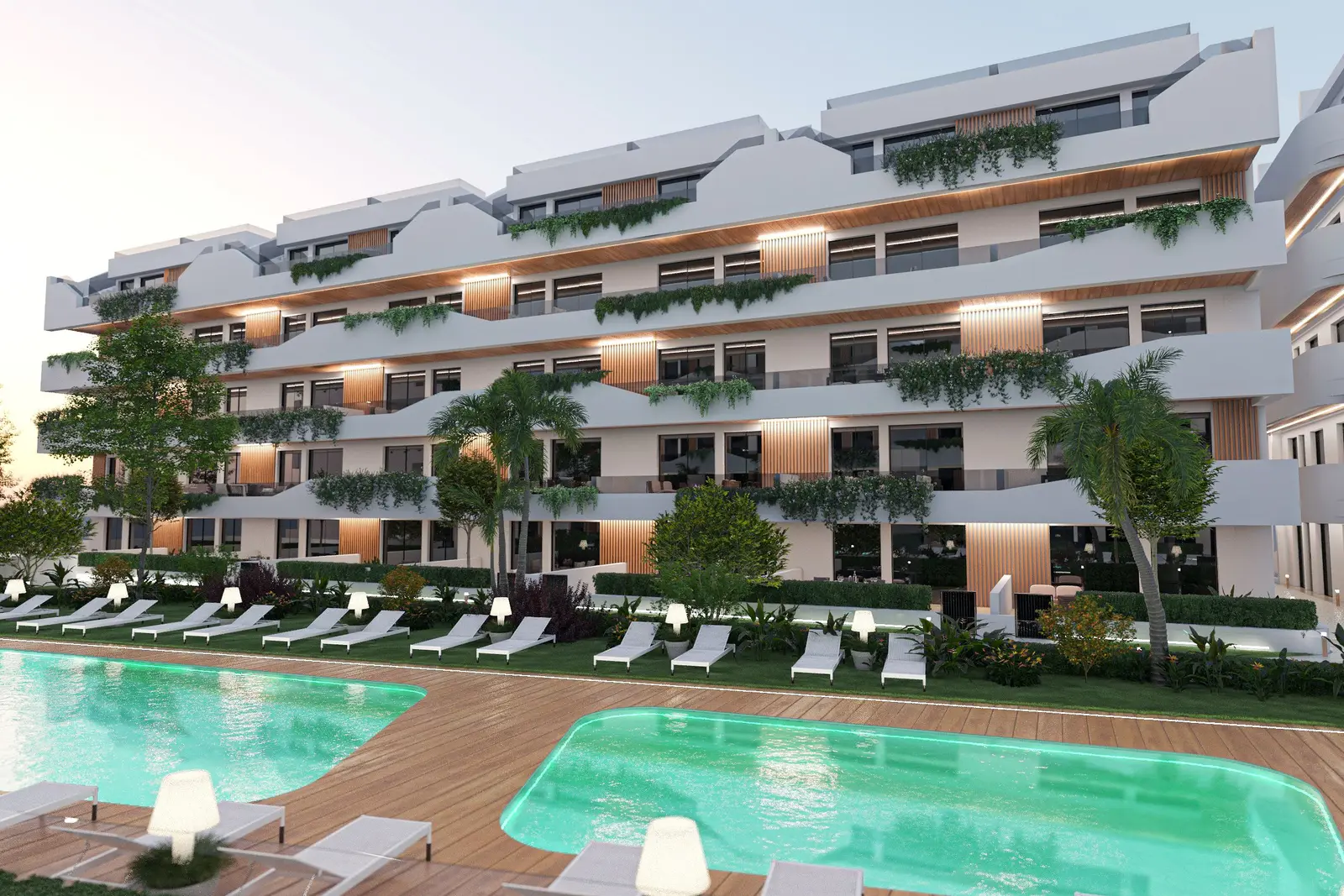
Frequently Asked Questions
What is the average property price in Santiago de la Ribera?
↓
Tracked new-build in Santiago de la Ribera starts at €250,000 based on the single project in the veritySpain database. That figure sits below the broader Murcia coastal new-build average reported by Registradores de España, reflecting smaller floor areas and the environmental pressures associated with the Mar Menor lagoon.
Is Santiago de la Ribera a good place to invest in property?
↓
Santiago de la Ribera suits buyers prioritising personal use over pure yield. The rental season is compressed to roughly 10-14 weeks, transaction depth is limited compared to Los Alcázares or San Pedro del Pinatar, and the Mar Menor's documented environmental fragility remains a pricing factor. The single tracked project scores 8.0/10 on construction quality.
What taxes apply when buying a new-build property in Santiago de la Ribera?
↓
New-build purchases in Spain attract IVA at 10% plus stamp duty (AJD) at the Murcia regional rate. On a €250,000 purchase those obligations exceed €27,000 before notary, registry and legal fees. Resale properties attract ITP instead of IVA. Non-resident owners also face annual imputed income tax on cadastral value.
How does Santiago de la Ribera compare to Los Alcázares for investment?
↓
Los Alcázares offers a larger tracked new-build stock and more established rental infrastructure, making it more suitable for yield-focused buyers. Santiago de la Ribera's advantage is its compact town centre and direct Mar Menor frontage. Both municipalities share similar lagoon environmental exposure, which affects long-term resale liquidity.
What are the risks of buying property near the Mar Menor?
↓
The Mar Menor lagoon has experienced documented ecological degradation since 2019, including algal blooms linked to agricultural runoff. This has affected buyer confidence and resale values in adjacent municipalities. Environmental risk is not resolved and should be factored into any purchase decision alongside the physical benefits of lagoon frontage.
Can I rent out my property in Santiago de la Ribera short-term?
↓
Short-term letting is permitted but regulated under the Region of Murcia's tourist accommodation rules, which require property registration, compliance with occupancy rules and adequate insurance. Requirements have changed in recent years. Buyers should verify current licensing conditions with a local gestor before completing a purchase intended for holiday rental.
How long is the rental season in Santiago de la Ribera?
↓
The realistic gross rental season is approximately 10-14 weeks, concentrated in July and August with limited shoulder-season demand. INE overnight-stay data for Murcia's coastal municipalities shows strong summer peaks but below-average occupancy from October through May. Investors should model this compressed window before projecting annual rental income.