
New build la cala buying guide: reservation to keys, stage payments, IVA costs, AJD tax and timelines for international buyers on the Costa Blanca.
New build la cala presents a focused opportunity: veritySpain currently tracks one active project in the municipality, with pricing at €275,000, and an editorial score of 7.6/10. La Cala is a small coastal settlement on the Costa Blanca, administratively part of Alicante province, and it sits firmly in the category of emerging rather than saturated markets. That means the buying process rewards careful preparation. International buyers working through a new-build purchase in Spain face a structured legal sequence, defined tax obligations, and developer-specific timelines. Getting each stage right determines both the completion experience and the legal standing of ownership. This guide walks through every step, from signing the reservation contract to collecting the keys, with the costs and typical timelines relevant to this region.
Step one: reservation contract and NIE registration
€5,000–€10,000 is a typical reservation deposit range for new-build properties in the Alicante region, though developers set this individually. The reservation contract (contrato de reserva) takes the property off the market for a fixed period, usually two to four weeks, giving you time to complete due diligence and instruct a solicitor. It is not a full purchase contract. Before signing anything, you must apply for a NIE (Número de Identificación de Extranjero), the tax identification number Spain requires of all non-resident buyers. You can apply at a Spanish consulate abroad or at a Comisaría de Policía in Spain. The NIE does not grant residency. Without it, you cannot sign notarial documents or open a Spanish bank account, both of which are required later in the process.
Step two: private purchase contract and stage payments
10% of the purchase price is the standard deposit paid at the private purchase contract (contrato privado de compraventa) stage in Spain. For a €275,000 property that means €27,500 held in escrow or paid directly to the developer. Spanish law requires the developer to protect stage payments via a bank guarantee (aval bancario) or insurance policy; ask to see this document before transferring funds. Stage payments are common in off-plan new-builds, where construction unfolds over 12 to 24 months. Each payment stage is tied to a construction milestone. Keep every transfer receipt. Your solicitor should also verify the developer's building licence (licencia de obras) and confirm the land is free of encumbrances through a Nota Simple from the Registro de la Propiedad. These checks are routine. They matter. Registradores de España maintains the public land registry through which ownership, charges, and restrictions can be verified by any instructed solicitor.
Step three: taxes and purchase costs
10% IVA (VAT) applies to all new residential property sales in Spain, as set by the Spanish tax authority (Agencia Tributaria). On a €275,000 purchase that adds €27,500. On top of IVA, buyers pay Actos Jurídicos Documentados (AJD), a stamp duty charged on the escritura (title deed); in the Valencia Community (which covers Alicante province) this rate is 1.5%. Notary fees and land registry inscription fees add further costs, typically calculated on a sliding scale and together running to a few thousand euros on a property at this price point. Legal fees for a good independent solicitor typically run between 1% and 1.5% of the purchase price. Budget a total acquisition cost of approximately 13–15% on top of the purchase price. That figure reflects IVA, AJD, notary, registry, and legal fees combined. Agencia Tributaria publishes the current IVA rate and AJD guidance, and buyers should confirm the prevailing Valencia Community AJD rate with their solicitor at the time of purchase.
Step four: completion at the notary and post-completion obligations
Completion takes place before a Spanish notary (notario), who reads the escritura de compraventa aloud and confirms both parties understand its terms. The full balance is paid, usually by banker's draft or bank transfer confirmed the same day. The notary registers the transaction and forwards the deed to the Registro de la Propiedad. You will receive the original escritura weeks later once registration is complete. Post-completion, foreign buyers who are non-residents must register for Modelo 210 (non-resident income tax) and pay an annual imputed income tax on the property. If you take out a Spanish mortgage, the bank will typically handle some of the registration paperwork, but the tax obligations remain your responsibility. La Cala being a small market means transaction volumes are modest, a point veritySpain data reflects in tracking just one project here. Post-completion, utility connections (electricity, water) are arranged with the developer handing over the cédula de habitabilidad (habitation certificate).
Key takeaways
- Obtain your NIE before signing any contract; it is required at every subsequent legal stage.
- Spanish law requires developers to secure stage payments with a bank guarantee or insurance policy.
- Budget 13–15% on top of the purchase price to cover IVA, AJD, notary, registry, and legal fees.
- Instruct an independent solicitor, not the developer's recommended lawyer, to conduct due diligence.
- Post-completion, non-resident owners must file annual Modelo 210 imputed income tax returns in Spain.
The market in numbers
New-build projects in La Cala
View all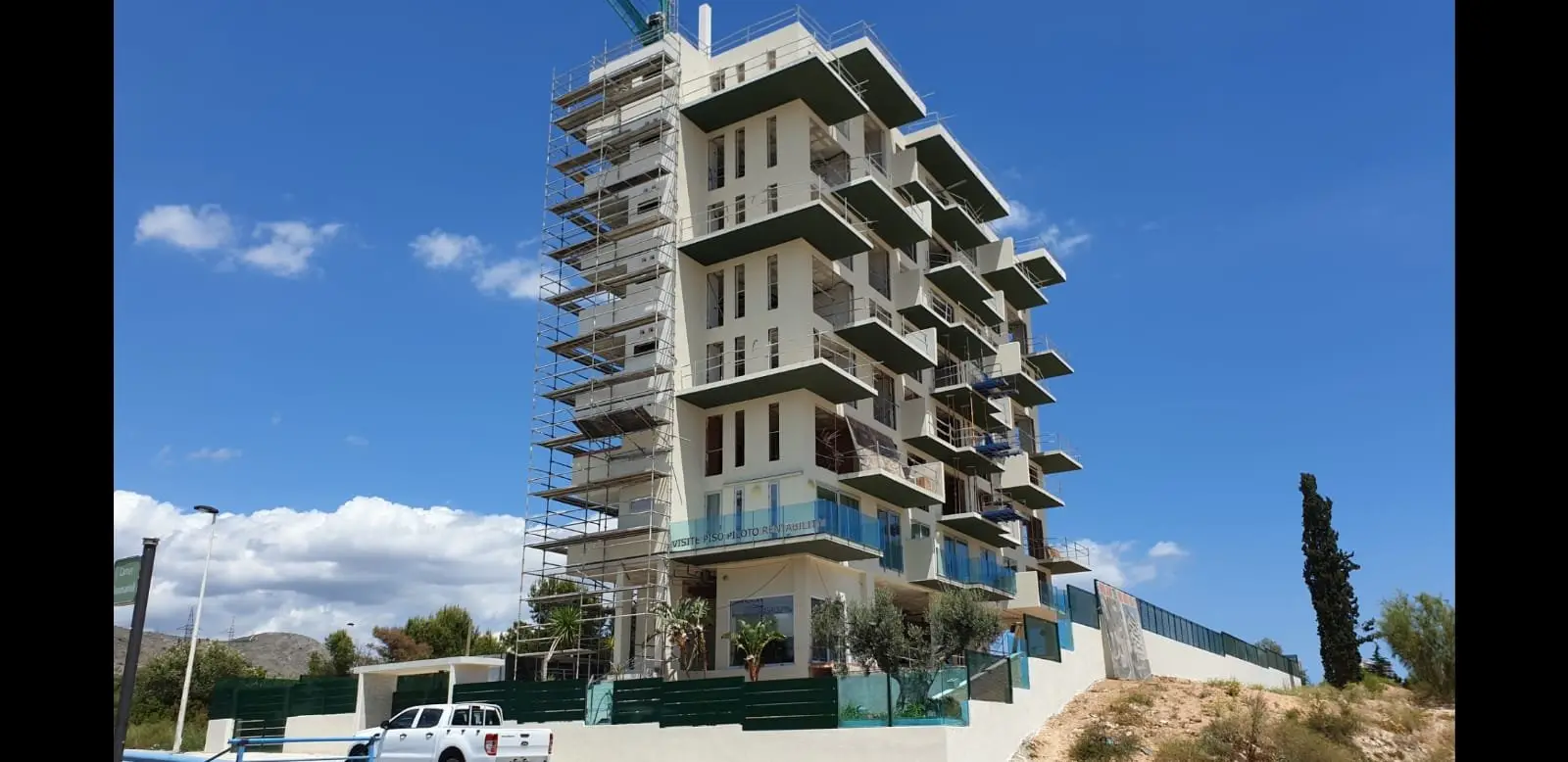
Frequently Asked Questions
What taxes do I pay when buying a new build in La Cala?
↓
New-build purchases in Spain attract 10% IVA (VAT) on the purchase price. Buyers in Alicante province also pay Actos Jurídicos Documentados (AJD) stamp duty at 1.5% of the escritura value. Notary and land registry fees add a further amount. Total acquisition costs including legal fees typically run to 13–15% above the purchase price.
Do I need a NIE to buy property in La Cala?
↓
Yes, a NIE (Número de Identificación de Extranjero) is required for all non-resident buyers in Spain. You must hold one before signing notarial documents or opening a Spanish bank account. Apply at a Spanish consulate in your country or at a police station in Spain. The NIE does not confer residency rights.
How are stage payments protected on a new build in Spain?
↓
Spanish law requires developers to protect all off-plan stage payments through a bank guarantee (aval bancario) or an insurance policy. Before transferring a deposit or stage payment, ask the developer to provide the relevant guarantee document. Your solicitor can verify its validity. Payments made without this protection carry significant risk if the developer fails.
How long does a new-build purchase take in La Cala?
↓
Off-plan new builds typically take 12 to 24 months from private purchase contract to completion, depending on where construction stands at the time of sale. The legal steps from reservation to completion of an already-built property can move in eight to twelve weeks. Developer timelines vary and should be written into the contract.
What is the role of the notary in a Spanish property purchase?
↓
The Spanish notario is a public official who formalises the purchase deed (escritura de compraventa). Both parties must attend or send a representative with power of attorney. The notary reads the deed aloud, confirms understanding, and registers the transaction. Notary fees are regulated by a national scale. The notary acts for the transaction, not for either party.
Are there ongoing tax obligations after buying a new build in La Cala?
↓
Non-resident owners must file Modelo 210 (imputed income tax on property) annually with the Spanish tax authority. The rate and calculation method depend on residency status and whether the property is rented. IBI (impuesto sobre bienes inmuebles), Spain's annual council tax equivalent, is also payable to the local municipality each year.
What score does veritySpain give to new-build projects in La Cala?
↓
veritySpain currently analyses one project in La Cala and assigns it an editorial score of 7.6 out of 10. Scores reflect data on project fundamentals including price, location, developer credentials, and planning status. Only projects scoring 6.0 or above are published on the platform. La Cala remains a small market with limited comparable data at this stage.