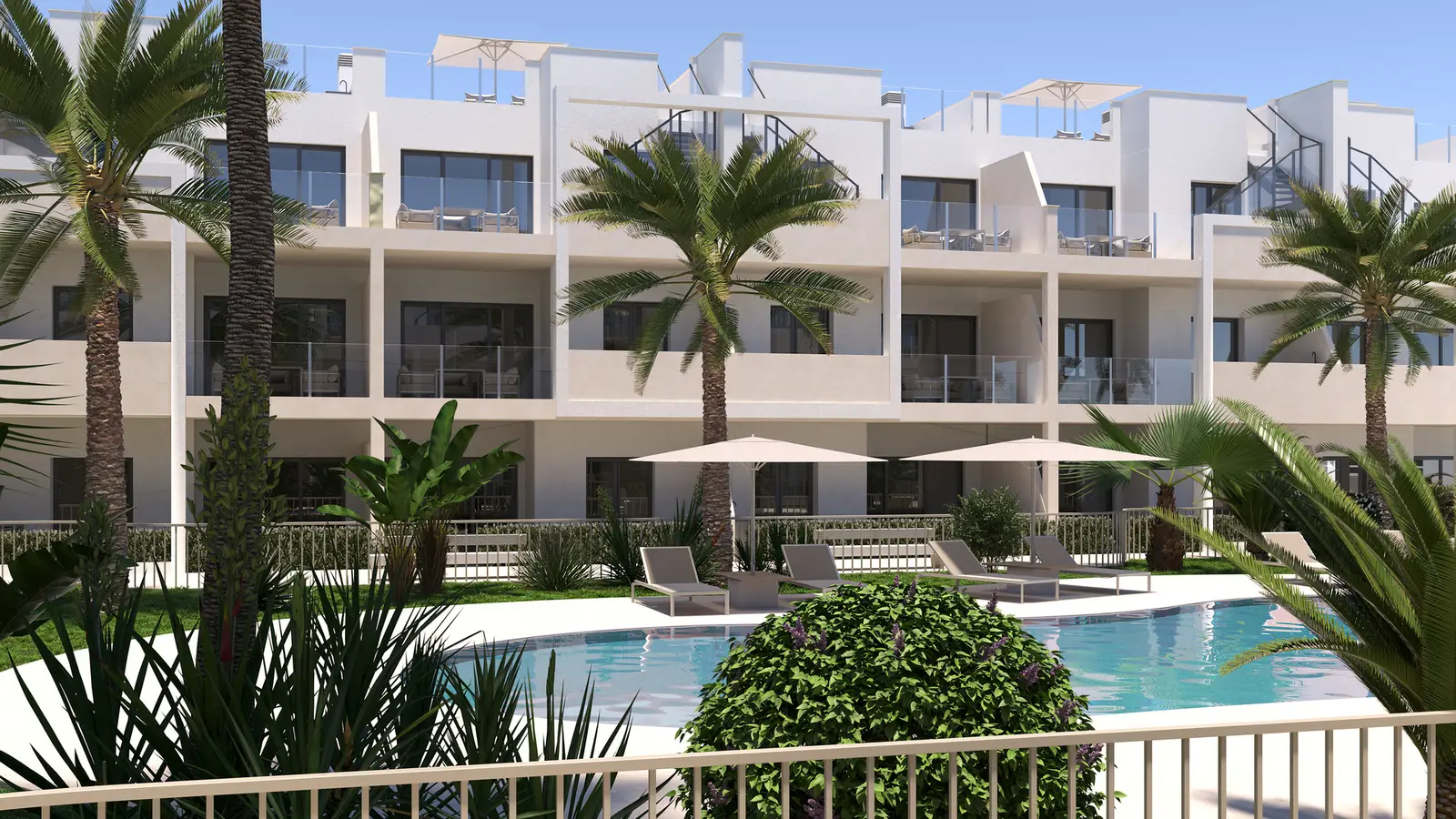
How to buy a new build in San Cayetano: reservation contracts, IVA costs, NIE, mortgages and completion. Data from veritySpain's analysis of the Murcia market.
New build san cayetano properties currently list at €227,000, and the single project analysed by veritySpain carries a score of 7.2 out of 10. That number is meaningful context: it places the development in the competent-but-not-outstanding tier, which is exactly the kind of honest signal international buyers rarely receive from agents. San Cayetano is a small coastal resort municipality in Murcia, part of the Costa Cálida coastline. The buying process here follows Spanish national law, with regional Murcia tax rules layered on top. Understanding those layers before you sign anything is the only way to avoid expensive surprises.
Reservation and private purchase contract
A reservation contract (contrato de reserva) typically requires a deposit of €3,000 to €6,000 to hold a new-build unit. Pay it only if you have verified the developer's licencia de obras (building permit). No permit, no reservation. The private purchase contract (contrato privado de compraventa) follows, usually within two to four weeks, and demands a further 10 per cent of the agreed price. On a €227,000 unit that means roughly €22,700 at this stage. Critically, the contract must include a bank guarantee (aval bancario) or insurance policy protecting your stage payments should the developer fail to complete. Registradores de España records show that disputes over missing bank guarantees remain among the most common causes of litigation for off-plan buyers in Spain. Read the penalty clauses for late completion before you countersign.
Taxes and purchase costs
New-build purchases in Spain attract IVA (VAT) at 10 per cent rather than the resale transfer tax (ITP). On €227,000 that is €22,700 in IVA alone. Stamp duty (Actos Jurídicos Documentados, AJD) adds 1.5 per cent in Murcia, or approximately €3,405. Notary and land-registry fees are set by a national scale and typically total €1,200 to €2,500 depending on transaction value. Legal representation costs a further €1,500 to €3,000 for a reputable independent solicitor. In total, budget 13 to 15 per cent on top of the purchase price. veritySpain data shows that buyers who skip independent legal advice at this stage most frequently encounter problems with community-charge calculations and cadastral values misaligned with the deed price.
NIE, bank account, and mortgage
Every foreign buyer needs a Número de Identificación de Extranjero (NIE) before completion. The process takes two to six weeks if handled in Spain; apply early. Open a Spanish bank account in parallel: completion funds, IVA, and all taxes must flow from a Spanish account in practice. If you require a mortgage, Spanish banks typically lend 60 to 70 per cent of the appraised value to non-residents. The appraisal (tasación) is commissioned by the bank and costs €300 to €600. New-build completions are tied to a construction milestone, so your mortgage offer must remain valid long enough to match. Fixed-rate offers have become more common since the European Central Bank rate cycle of 2022-2024; check current rates with at least two lenders. Banco de España publishes monthly mortgage statistics that give a reliable read on prevailing rates and lending conditions for non-residents.
Completion, snagging, and after-sales
Completion (escritura) takes place at a Spanish notary. The notary verifies the seller's title, confirms the absence of charges, and registers the new deed. Bring your NIE, passport, proof of funds, and bank transfer confirmation. Before signing, conduct a snagging inspection (inspección de defectos). A qualified surveyor costs €300 to €500 and is worth every euro: Spanish new-build developers are legally obliged to correct structural defects for ten years, finishing defects for one year, and habitability defects for three years, under the Ley de Ordenación de la Edificación. Document every defect in writing before the notary appointment. After keys are handed over, register for community fees, connect utilities, and file your annual non-resident income tax (Modelo 210) if you do not intend to rent the property. San Cayetano is a small market, with veritySpain currently tracking only one project, so resale liquidity is limited compared with larger Costa Blanca centres.
Key takeaways
- Budget 13 to 15 per cent over the purchase price for IVA, stamp duty, notary, and legal fees.
- Demand a bank guarantee or insurance policy protecting stage payments before signing any off-plan contract.
- Obtain your NIE and open a Spanish bank account at least six weeks before planned completion.
- Commission an independent snagging survey before the notary appointment; defect rights last up to ten years by law.
- San Cayetano is a small, emerging market: veritySpain tracks one project at €227k with a score of 7.2/10.
The market in numbers
New-build projects in San Cayetano
View allFrequently Asked Questions
What taxes do I pay when buying a new build in San Cayetano?
↓
New-build purchases attract IVA at 10 per cent of the purchase price, plus Murcia stamp duty (AJD) at 1.5 per cent. On a €227,000 property that totals roughly €26,105 in tax alone. You also pay notary and land-registry fees, which typically add €1,200 to €2,500 depending on the deed value. Budget 13 to 15 per cent above the purchase price in total acquisition costs.
Do I need a NIE number to buy property in San Cayetano?
↓
Yes. Every foreign buyer must hold a valid NIE (Número de Identificación de Extranjero) before the notary signs the completion deed. Applications take two to six weeks in Spain. Apply as soon as you have a serious purchase intention. Without a NIE the transaction cannot be registered in the land registry, and no Spanish bank will release mortgage funds.
How long does buying a new build in San Cayetano take?
↓
From reservation to keys, the timeline depends on the construction stage. If buying off-plan, completion may be 12 to 24 months after contract. A near-complete or finished development can complete in two to three months once contracts are signed. NIE applications, mortgage appraisals, and bank account opening all add lead time, so start those steps immediately after reserving.
Is a bank guarantee required for off-plan purchases in Spain?
↓
Yes. Spanish law requires developers selling off-plan to protect buyer deposits with either a bank guarantee (aval bancario) or a specific insurance policy. This covers your stage payments if the developer fails to deliver. Always verify the guarantee is in place and names you personally before transferring any money beyond the initial reservation deposit.
Can non-residents get a mortgage in San Cayetano?
↓
Yes. Spanish banks lend to non-residents, typically at 60 to 70 per cent of the appraised value. You will need proof of income, tax returns, and a clean credit history from your home country. The bank commissions an independent appraisal costing €300 to €600. Banco de España publishes monthly lending statistics that indicate prevailing rates and conditions for foreign buyers.
What defect rights do I have after buying a new build in Spain?
↓
Under the Ley de Ordenación de la Edificación, developers must correct structural defects for ten years, habitability defects for three years, and cosmetic finishing defects for one year after completion. Document all defects in writing before signing at the notary. A professional snagging survey, costing roughly €300 to €500, provides an independent record that strengthens any warranty claim.
How many new-build projects are available in San Cayetano?
↓
veritySpain currently tracks one new-build project in San Cayetano, priced at €227,000 and scoring 7.2 out of 10 on the veritySpain editorial index. The municipality is a small, emerging coastal resort in Murcia. Supply is limited compared with larger Costa Cálida centres, which affects both choice at purchase and resale liquidity over the medium term.