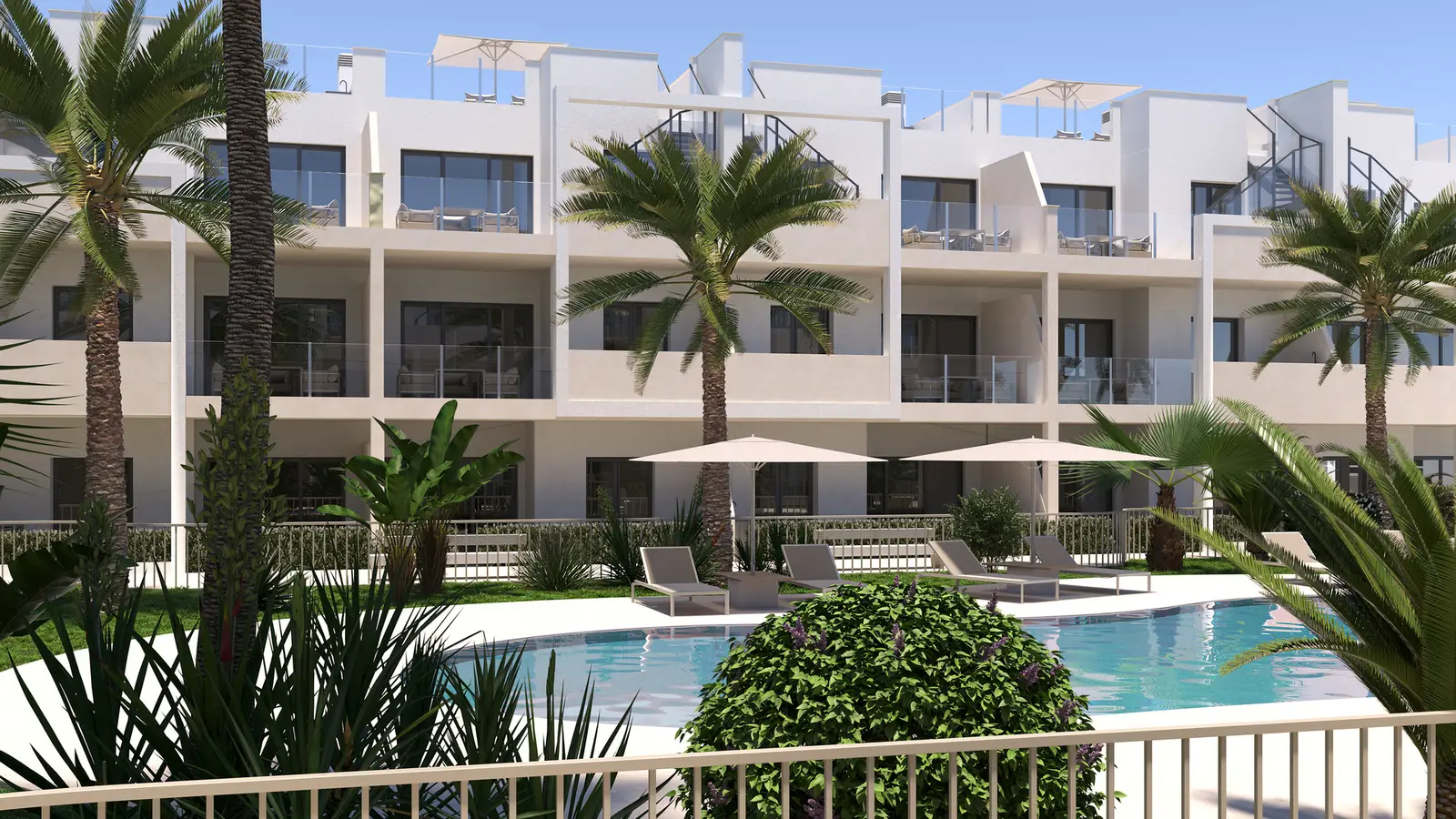
Living in San Cayetano as an expat: climate, cost of living, healthcare and schools. veritySpain score 7.2/10. Entry price from €227,000.
Living in San Cayetano as an expat starts from a price point of €227,000, the figure veritySpain recorded across the single project currently tracked in this small Murcian coastal town. The town sits on the Costa Cálida in the Region of Murcia, roughly midway between Cartagena and the Mar Menor, and it carries a veritySpain editorial score of 7.2 out of 10. That score reflects a trade-off: the climate and proximity to water are genuine assets, but the local amenity base is limited and the residential market remains thin enough that buyers should treat every price signal with caution. veritySpain data, 2025
Climate and daily outdoor life
Murcia receives more than 300 days of sunshine per year, a figure reported consistently in regional meteorological records. San Cayetano sits at sea level on a small bay, which moderates summer heat compared with the inland Murcian plain. July and August afternoon temperatures regularly exceed 33°C, but sea breezes make outdoor mornings viable. Winters are mild; frost is effectively unknown at the coast. Rain concentrates in October and November, often arriving as short, heavy convective events rather than prolonged drizzle. For residents who plan outdoor routines, the year divides practically into two: a long, dry season from April through September and a cooler, wetter corridor in late autumn. Cycling and walking routes connect to the wider Mar Menor coastal path, though infrastructure varies in quality and some stretches are informal tracks rather than maintained paths.
Cost of living and practical finances
Spain's general consumer price inflation, as measured by INE, moderated in 2024 after the 2022-2023 spike, but the Murcia region remains one of the more affordable parts of the country. Supermarket costs, utility bills and restaurant prices in small coastal towns like San Cayetano tend to track the regional average rather than the inflated prices found in tourist-heavy zones such as Marbella or Ibiza. Residents who shop at local mercadillos and use Spanish healthcare rather than private international plans typically report a comfortable standard of living at costs below north-western European equivalents. INE, Encuesta de Presupuestos Familiares data consistently shows Murcia households among the lower-spending regions in Spain. Property transaction costs are significant: buyers should budget for ITP (transfer tax, typically 8% in Murcia for resale property) plus notary, registry and legal fees of approximately 2-3% on top of the purchase price. These are well-established legal obligations, not estimates.
Healthcare and education
San Cayetano falls within the health catchment area served by the Centro de Salud in Los Alcázares, a town roughly six kilometres north. The Spanish public health system (SNS) provides coverage to registered residents, including EU citizens exercising free movement rights and non-EU residents who have completed the empadronamiento process and hold appropriate residency documentation. Wait times for specialist appointments in Murcia's public system have been a recurring concern in regional health authority reports. Private health insurance, widely available from Sanitas, Adeslas and Mapfre, is used by many expats to access faster consultations and English-speaking practitioners. For schooling, the nearest options are in Los Alcázares and San Javier. The latter hosts an international school serving English-medium families, which is a practical factor for families with children of school age. San Cayetano itself has no school within walking distance.
Community and social integration
The expat population in and around San Cayetano is predominantly northern European, with a strong British and German presence that has built up steadily since the early 2000s. Several resident associations operate in the wider Mar Menor area and publish bilingual newsletters covering local administration, planning updates and social events. Integration into Spanish community life is possible but requires effort: the permanent Spanish-speaking population in San Cayetano is small, and seasonal fluctuation means social networks can thin considerably outside the April-October window. Local government communication is conducted in Spanish, and navigating planning permissions, utility contracts and residency registration without at least basic Spanish, or a reliable gestor, adds practical friction. The town itself is quiet, which suits residents seeking low density; those wanting cultural programming, restaurants open year-round or a broader social scene will need to travel to Cartagena, Murcia city or the Mar Menor resorts.
Key takeaways
- San Cayetano's single tracked project is priced at €227,000, making entry costs lower than coastal Alicante equivalents.
- The veritySpain editorial score of 7.2/10 reflects strong climate and coastal access offset by thin local amenities.
- Public healthcare is accessible via SNS registration; many expats add private cover for faster specialist access.
- Schooling requires travel; San Javier's international school is the closest English-medium option for families.
- The market is small and data is limited, so professional legal and surveying advice carries more weight here than in larger markets.
The market in numbers
New-build projects in San Cayetano
View allFrequently Asked Questions
What is the cost of living in San Cayetano for expats?
↓
Costs in San Cayetano track Murcia regional averages, which INE data consistently places among the more affordable in Spain. Supermarket and utility bills run below north-western European equivalents. Property buyers should add ITP transfer tax (typically 8% in Murcia on resale property) plus notary and legal fees of roughly 2-3% on top of the purchase price.
Is healthcare available in San Cayetano?
↓
Healthcare for registered residents is provided through Spain's public SNS system, with the nearest Centro de Salud in Los Alcázares, approximately six kilometres away. Many expats supplement this with private insurance from providers such as Sanitas or Adeslas to reduce waiting times and access English-speaking doctors.
What is the climate like in San Cayetano?
↓
San Cayetano enjoys a semi-arid Mediterranean climate with over 300 days of sunshine annually. Summers are hot, regularly exceeding 33°C, but coastal breezes moderate conditions. Winters are mild with minimal frost risk. Rain falls mainly in October and November, usually as short, heavy episodes rather than sustained periods of wet weather.
Are there English-speaking schools near San Cayetano?
↓
San Cayetano has no school within the town itself. The nearest English-medium option is an international school in San Javier, roughly 15 kilometres north. Spanish-language state schools are available in Los Alcázares. Families with school-age children should factor in daily transport when choosing a property in this area.
What is the property price in San Cayetano?
↓
veritySpain currently tracks one project in San Cayetano, with an entry price of €227,000. The market is small and data is limited, so this single data point should not be treated as a broad market average. Buyers should seek independent valuations and legal advice before committing.
Is San Cayetano a good place for expats to retire?
↓
San Cayetano suits retirees who value a quiet coastal environment, a mild climate and lower costs than better-known Costa Blanca or Costa del Sol destinations. The town is small and amenities are limited year-round. Those needing regular access to hospitals, shops or cultural activities will rely on a car and nearby towns such as Los Alcázares and Cartagena.
How large is the expat community in San Cayetano?
↓
The expat population is predominantly northern European, with British and German residents the largest groups in the wider Mar Menor area. San Cayetano itself is small and seasonal: the permanent community thins noticeably outside the spring and summer months. Several bilingual resident associations in the Mar Menor region provide community support and local information.