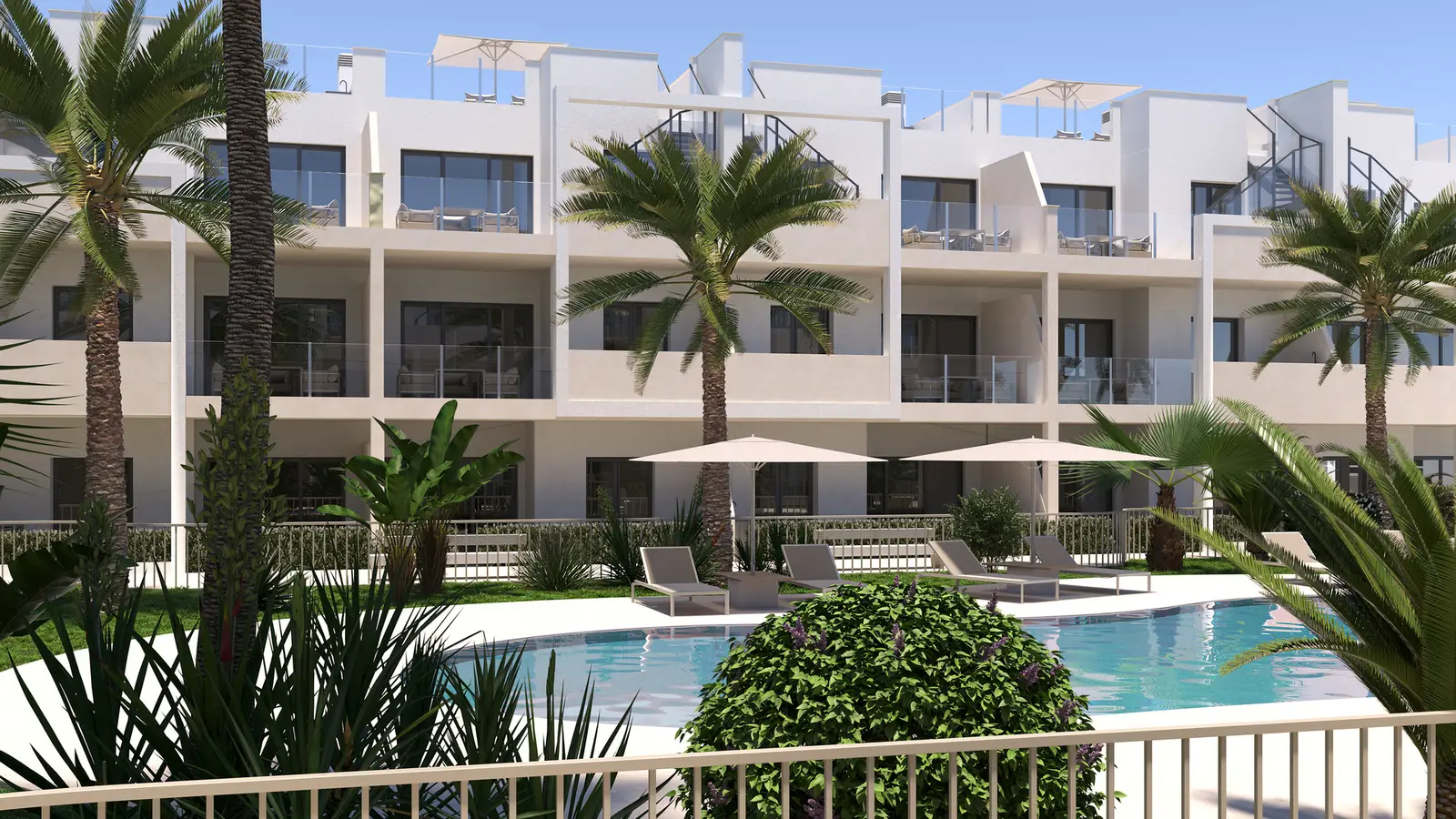
Property investment in San Cayetano from €227,000. veritySpain scores the market 7.2/10. Independent analysis of prices, rental context and regulatory costs.
Property investment in San Cayetano starts from €227,000, according to veritySpain data, which covers one analysed project and assigns the municipality a score of 7.2 out of 10. San Cayetano is a small coastal settlement in Murcia's Costa Cálida, roughly 50 kilometres south of the regional capital. That geography matters for investors: the area sits within the Torre-Pacheco municipality, where demand has historically been driven by Northern European second-home buyers rather than by domestic owner-occupiers. With only one project in the current data set, conclusions must be drawn carefully. What the data does confirm is a price point well below the Costa Blanca average, which makes the entry barrier lower than comparable coastal micro-markets.
Market context and price positioning
€227,000 is the single price point recorded in veritySpain data for San Cayetano at the time of this analysis. That figure places the market in the lower tier of new-build coastal Spain, where similar specification properties on the Costa del Sol routinely start above €350,000. Transaction volumes across Murcia's coastal belt have held up since 2022, a pattern consistent with data published by Registradores de España showing sustained foreign buyer activity in the region. San Cayetano itself is small. It is not a primary market. That distinction shapes the risk profile: lower entry cost, but also lower liquidity. An investor selling in three to five years will be targeting the same narrow buyer pool, mostly Northern European retirees and holiday-home seekers.
Rental market and yield considerations
Rental data for San Cayetano specifically is not available in the current veritySpain data set, so no yield figure can be stated with precision. The broader Costa Cálida context is instructive: seasonal holiday rental dominates the short-let market from June through September, with occupancy outside those months substantially lower. The Murcia International Airport, reopened as Región de Murcia International Airport in 2019, has improved year-round accessibility and supports a longer rental season than the area once achieved. Still, investors relying on rental income to service acquisition costs should model conservative occupancy. General guidance published by Banco de España on Spanish residential investment emphasises that coastal holiday markets carry higher vacancy risk than urban centres. That caveat applies directly here.
Regulatory and tax environment
New-build purchases in Spain attract IVA at 10 percent plus stamp duty (Actos Jurídicos Documentados), currently 1.5 percent in the Region of Murcia. Those acquisition costs are fixed by law and apply regardless of the specific property or municipality. Non-resident investors must also account for the annual Impuesto sobre la Renta de No Residentes, which applies to imputed rental income even if the property is not let. Spanish property law affords strong buyer protection through the notarial and land registry system, but off-plan purchases require a bank guarantee covering stage payments under Law 57/1968 and its successor framework. Verifying that guarantee before signing is not optional. The overall regulatory environment is transparent and well-documented by comparison with some other European markets.
Comparable towns and relative positioning
Los Alcázares, Mar Menor's established resort, sits approximately 15 kilometres north and offers a broader supply of resale stock alongside new-build. Prices there typically run higher than San Cayetano on a per-square-metre basis. Mazarrón, to the south-west, targets a similar buyer profile at comparable price points. Between these two reference points, San Cayetano occupies a position of relative obscurity: fewer amenities, a smaller permanent population, but a seafront location that commands a premium over inland Torre-Pacheco addresses. The veritySpain score of 7.2 reflects reasonable fundamentals within that limited context. It is not a score that suggests outperformance; it indicates a market that meets basic investment criteria without distinguishing itself strongly on any single dimension.
Key takeaways
- San Cayetano's single analysed project is priced at €227,000, placing it at the lower end of Costa Cálida new-build.
- The veritySpain editorial score of 7.2 out of 10 reflects adequate fundamentals for a small, emerging coastal market.
- Liquidity risk is higher than in established resorts; the buyer pool is narrow and predominantly foreign.
- Rental yields cannot be stated with precision; seasonal occupancy patterns and low winter demand must be modelled conservatively.
- Acquisition costs include 10% IVA plus 1.5% stamp duty; off-plan bank guarantees must be verified before any payment.
The market in numbers
New-build projects in San Cayetano
View allFrequently Asked Questions
What is the average property price in San Cayetano?
↓
New-build property in San Cayetano is priced at €227,000 in the current veritySpain data set, which covers one analysed project. This places the market at the lower end of Costa Cálida coastal new-build. Resale prices vary and are not captured in the current data. Buyers should obtain comparative valuations from a registered Spanish valuer before committing.
Is San Cayetano a good place to invest in property?
↓
veritySpain assigns San Cayetano a score of 7.2 out of 10, reflecting adequate fundamentals for a small coastal market. Entry prices are lower than on the Costa Blanca or Costa del Sol. Liquidity is limited due to the small buyer pool, and rental yields are seasonal. It may suit investors with a long time horizon and low leverage.
What taxes apply when buying property in San Cayetano?
↓
New-build purchases in Spain attract IVA at 10 percent. In the Region of Murcia, stamp duty (Actos Jurídicos Documentados) is currently 1.5 percent. Non-residents also pay annual Impuesto sobre la Renta de No Residentes on imputed income from the property, even when it is not rented out. A Spanish tax adviser should be consulted before purchase.
Can I get rental income from a property in San Cayetano?
↓
Holiday rental is the dominant income model in San Cayetano, concentrated in the June to September season. Year-round occupancy is lower than in urban markets. Specific yield figures for San Cayetano are not available in current veritySpain data. Banco de España guidance on coastal holiday markets highlights higher vacancy risk compared with urban residential investment.
How does San Cayetano compare with Los Alcázares or Mazarrón?
↓
Los Alcázares, about 15 kilometres north, offers a larger supply of both new-build and resale stock at generally higher per-square-metre prices. Mazarrón targets a similar buyer profile to San Cayetano at comparable price points. San Cayetano is smaller, has fewer amenities, and benefits from a seafront location. Each town has a narrow resale market by comparison with larger Costa Blanca resorts.
What protections exist for off-plan buyers in Spain?
↓
Off-plan purchases in Spain are governed by a framework derived from Law 57/1968 requiring developers to provide bank guarantees covering stage payments. These guarantees protect buyers if the developer fails to complete. Buyers must verify the guarantee is in place before making any payment. The notarial and land registry system provides additional title protection throughout the transaction.
What is the veritySpain score for San Cayetano and what does it mean?
↓
veritySpain scores San Cayetano 7.2 out of 10 based on its editorial analysis of the available project data. A score in this range indicates a market that meets basic investment criteria without standing out strongly on price growth, yield, or liquidity. It suggests reasonable fundamentals for a small coastal location rather than a high-conviction investment case.